1. General Information
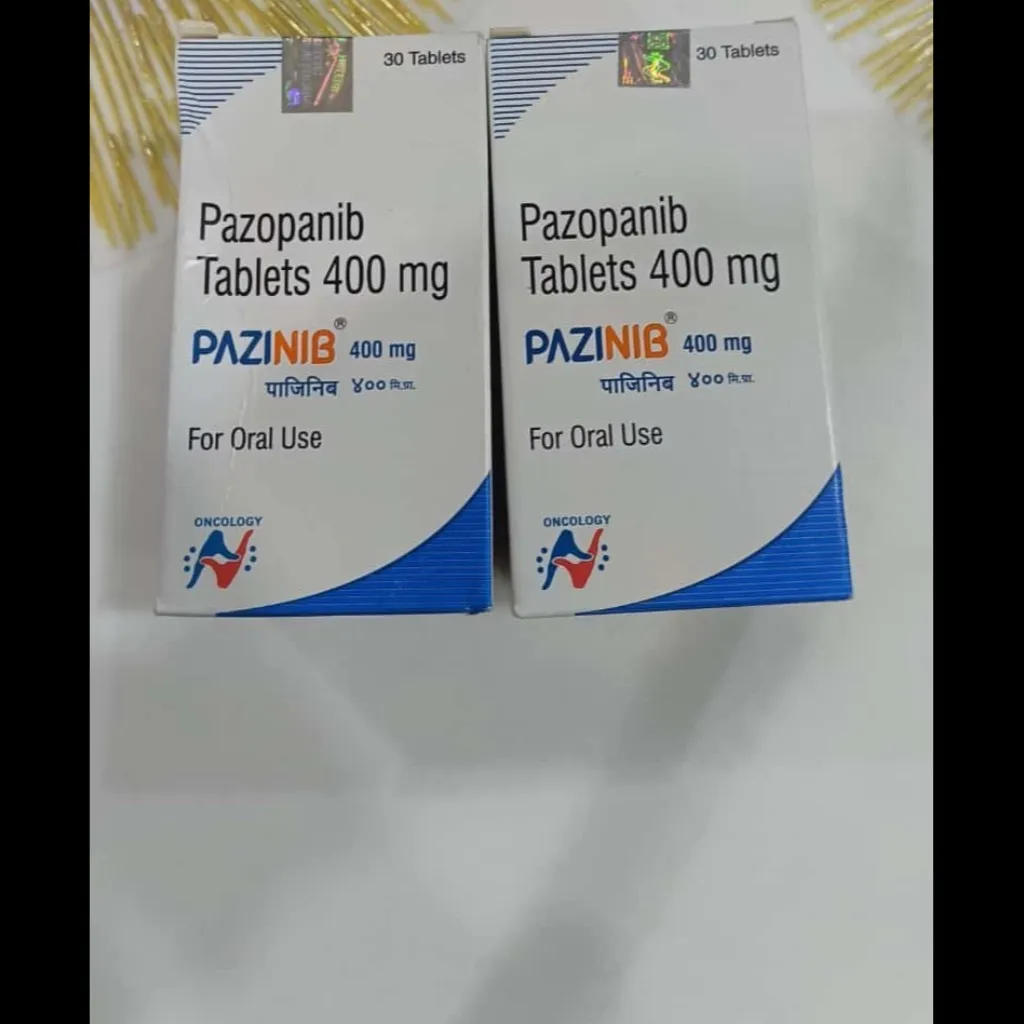
Pazinib 400 mg Tablets contain pazopanib, an oral tyrosine kinase inhibitor (TKI). It is an anticancer medicine used under medical supervision for certain advanced cancers. Pazopanib works by interfering with signaling pathways that help cancer cells grow and help tumors develop new blood vessels.
Pazopanib is used in adults with advanced renal cell carcinoma (RCC) and, under appropriate indications, advanced soft-tissue sarcoma (STS) after prior chemotherapy.
2. Product Information
- Product: Pazinib 400 mg Tablets
- Active ingredient: Pazopanib
- Strength: 400 mg
- Dosage form: Tablet
- Drug class: Tyrosine kinase inhibitor
- Therapeutic category: Anticancer / oncology medicine
- Route: Oral
- Prescription status: Prescription medicine
- Main approved uses: Advanced renal cell carcinoma and certain advanced soft-tissue sarcomas
- Administration: Generally taken once daily as prescribed, without food
The exact manufacturer, pack size and formulation should be verified from the product packaging and accompanying prescribing information.
3. Uses of Pazinib 400 mg
Pazopanib may be prescribed for:
- Advanced renal cell carcinoma (RCC), a type of kidney cancer.
- Advanced soft-tissue sarcoma (STS) in adults who have previously received chemotherapy, where appropriate.
- Other uses may occasionally be considered by specialists depending on the patient's cancer and treatment history.
Pazopanib should only be used for an indication and dosage determined by the treating oncologist.
4. Benefits of This Medicine
When appropriately prescribed, pazopanib may:
- Help slow the growth and progression of certain cancers.
- Inhibit signaling pathways involved in tumor growth.
- Reduce the formation of new blood vessels that tumors need to grow.
- Provide an oral treatment option for eligible patients.
- Be used as part of an individualized oncology treatment plan.
The response varies from patient to patient, and pazopanib is not a cure for cancer.
5. Side Effects of Pazinib 400 mg
Pazopanib can cause side effects, ranging from mild to potentially serious. Important risks include liver injury, high blood pressure, bleeding, heart-related problems, blood-clotting complications, gastrointestinal complications and impaired wound healing.
Seek urgent medical attention for symptoms such as:
- Yellowing of the skin or eyes
- Dark urine
- Severe or unusual tiredness
- Significant abdominal pain
- Unusual bleeding or bruising
- Chest pain
- Shortness of breath
- Severe headache or neurological symptoms
- Blood in stools, urine or vomit
- Coughing up blood
6. Common Side Effects
Possible side effects include:
- Diarrhea
- Constipation
- Nausea or stomach discomfort
- Changes in taste
- Hair loss or hair-color changes
- Rash
- Weakness or tiredness
- Muscle or joint pain
- Loss of appetite or weight loss
- Hand-foot skin reactions
- High blood pressure
Not every patient experiences these effects, and their severity can vary.
7. How to Use Pazinib 400 mg
Take Pazinib exactly as prescribed by your oncologist.
General administration guidance for pazopanib includes:
- Usually taken once daily.
- Take it on an empty stomach, at least 1 hour before or 2 hours after food.
- Swallow the tablet whole with water.
- Do not crush, chew or split the tablet unless specifically instructed by a healthcare professional.
- Take it at approximately the same time each day.
- Do not change the dose or discontinue treatment without consulting your doctor.
If a dose is missed, follow your prescribing information; MedlinePlus advises skipping a missed dose when it is within 12 hours of the next scheduled dose rather than doubling the dose.
8. How Pazinib Works
Pazopanib is a multi-target tyrosine kinase inhibitor. It blocks several kinase pathways involved in cancer development, including pathways associated with vascular endothelial growth factor (VEGF) signaling.
By inhibiting these pathways, pazopanib can interfere with:
- Cancer-cell growth signaling.
- Formation of new blood vessels supplying tumors.
- Tumor growth and progression.
This anti-angiogenic activity is an important part of how pazopanib works against certain cancers.
9. Safety Advice
- Use only under the supervision of an oncologist.
- Liver function should be monitored because pazopanib can cause severe or potentially life-threatening liver injury.
- Blood pressure should be monitored regularly; significant hypertension can occur during treatment.
- Tell your doctor about all prescription medicines, OTC medicines, vitamins and herbal supplements.
- Avoid grapefruit and grapefruit juice during treatment unless your doctor specifically advises otherwise.
- Inform your doctor about heart disease, high blood pressure, bleeding problems, liver disease or previous stroke.
- Tell your doctor before planned surgery or dental procedures because pazopanib can affect wound healing.
- Pazopanib can harm an unborn baby; discuss effective contraception and pregnancy plans with your doctor.
- Do not breastfeed without discussing it with your healthcare professional.
- Acid-reducing medicines can interact with pazopanib, so discuss their use with your doctor or pharmacist.
10. FAQs
Q1. What is Pazinib 400 mg used for?
Pazinib contains pazopanib and is used for certain advanced cancers, including renal cell carcinoma and selected soft-tissue sarcomas.
Q2. Is Pazinib 400 mg a chemotherapy medicine?
It is an anticancer medicine, but it belongs to the targeted therapy/tyrosine kinase inhibitor class rather than traditional cytotoxic chemotherapy.
Q3. Can Pazinib 400 mg be taken with food?
Pazopanib is generally taken on an empty stomach—at least 1 hour before or 2 hours after eating.
Q4. Can I stop Pazinib if I feel better?
No. Do not stop or change treatment without consulting your oncologist.
Q5. Can Pazinib affect the liver?
Yes. Liver injury is an important safety concern, so liver-function monitoring is required during treatment.
Q6. Can Pazinib cause high blood pressure?
Yes. Hypertension is a recognized adverse effect and blood pressure should be monitored during treatment.
Q7. Can I take grapefruit juice with Pazinib?
Grapefruit and grapefruit juice should be avoided while taking pazopanib.
Q8. Is 400 mg always the correct dose?
No. The appropriate dose depends on the patient's cancer, response, other medicines and side effects. A 400 mg tablet strength does not necessarily mean 400 mg is the standard daily dose.
11. Substitute for Pazinib 400 mg
The appropriate substitute depends on the cancer type, treatment line, previous therapies, patient condition and local approval. Possible alternatives in some treatment settings may include other targeted oncology medicines such as:
- Sunitinib
- Axitinib
- Cabozantinib
- Lenvatinib
- Sorafenib
These medicines are not automatically interchangeable with pazopanib. A qualified oncologist should select any alternative based on the individual treatment plan.
12. SEO Keywords
- Pazinib 400 mg Tablets
- Pazopanib 400 mg Tablets
- Pazinib 400 mg exporter
- Pazopanib 400 mg medicine exporter
- Pazinib Tablets exporter from India
- Pazopanib Tablets supplier India
- Pazinib 400 mg pharmaceutical exporter
- Pazopanib oncology medicine supplier
- Pazinib 400 mg tablets supplier
- Pazopanib cancer medicine exporter
- Pazinib 400 mg exporter from Nagpur India
- Pazopanib medicine exporter from Nagpur
- Buy Pazinib 400 mg Tablets from India
- Pazopanib 400 mg export supplier
- Pazinib 400 mg international pharmaceutical supplier
- Pazopanib renal cancer medicine
- Pazopanib soft tissue sarcoma medicine
- Pazinib 400 mg for renal cell carcinoma
- Pazopanib targeted cancer therapy
- Pazopanib tyrosine kinase inhibitor
- Pazinib 400 mg exporter from India to USA
- Pazinib 400 mg exporter from India to UK
- Pazinib 400 mg exporter from India to Australia
- Pazinib 400 mg exporter from India to Singapore
- Pazinib 400 mg exporter from India to Canada
- Pazinib 400 mg exporter from India to South Korea
- Pazinib 400 mg exporter from India to UAE
- Phoenix Exim Pazinib 400 mg exporter
- Phoenix Exim Pazopanib supplier India
- Trusted pharmaceutical exporter from India
Keywords