1. General Information
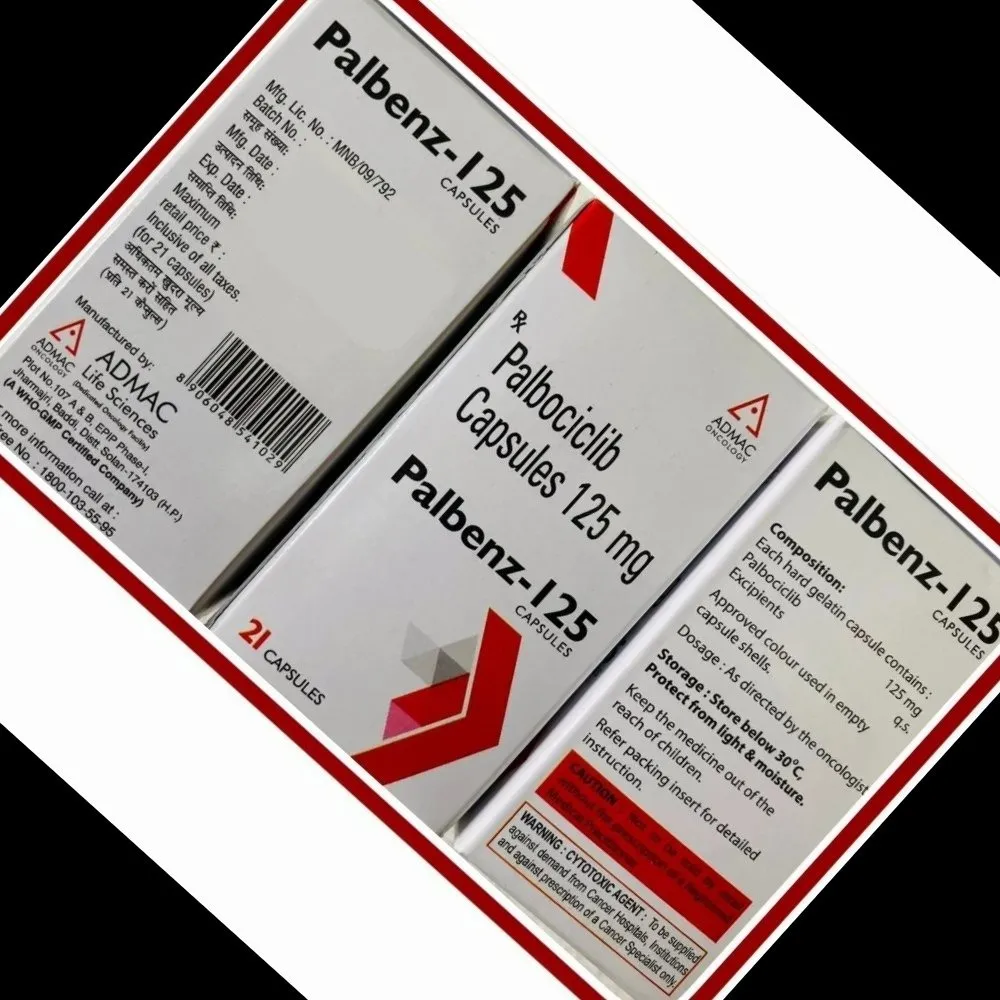
PALBENZ 125 mg Tablets contain palbociclib, an oral targeted anticancer medicine. Palbociclib is generally used together with appropriate endocrine or other anticancer therapy rather than as a standalone treatment. Current U.S. labeling includes indications for specific HR-positive breast cancers, with treatment combinations depending on the patient's cancer characteristics and previous treatment.
Generic name: Palbociclib
Strength: 125 mg
Dosage form: Tablet
Drug class: CDK4/6 inhibitor
Therapeutic area: Oncology / Breast Cancer
2. Product Information
PALBENZ 125 mg is a palbociclib 125 mg tablet. The standard palbociclib regimen is 125 mg once daily for 21 consecutive days, followed by 7 days without treatment, making one 28-day cycle. Dose interruptions or reductions may be required depending on blood counts, adverse effects, drug interactions, or other clinical factors.
3. Uses of PALBENZ 125 mg
Palbociclib is used in adults with certain forms of hormone receptor-positive (HR-positive) breast cancer, including advanced or metastatic disease.
Depending on the clinical situation, it may be prescribed:
- With an aromatase inhibitor as initial endocrine-based therapy.
- With fulvestrant following progression on endocrine therapy.
- With inavolisib and fulvestrant for certain endocrine-resistant, PIK3CA-mutated HR-positive/HER2-negative advanced or metastatic breast cancers.
- With trastuzumab, with or without pertuzumab, and endocrine therapy as maintenance treatment for certain HR-positive/HER2-positive locally advanced or metastatic breast cancers following induction treatment.
4. Benefits of This Medicine
When appropriately prescribed, palbociclib can provide several therapeutic benefits:
- Helps inhibit cancer-cell proliferation.
- Can delay disease progression in appropriate patients.
- Can be combined with endocrine therapy to provide a targeted treatment approach.
- Provides an oral treatment option for eligible patients.
- May help maintain disease control when used in approved treatment combinations.
The benefits depend on the patient's cancer subtype, treatment history and combination therapy. It should therefore be used only under specialist supervision.
5. Side Effects of PALBENZ 125 mg
Palbociclib can cause side effects, and some require medical monitoring. Important adverse effects include:
- Neutropenia or reduced neutrophil count
- Leukopenia or reduced white blood cell count
- Anemia
- Thrombocytopenia
- Infections
- Fatigue
- Nausea
- Diarrhea
- Stomatitis/mouth sores
- Hair loss
- Changes in liver-function tests
- Increased creatinine
Rare but serious complications include interstitial lung disease/pneumonitis, which can be severe or fatal.
6. Common Side Effects
Commonly reported effects include:
- Low white blood cell counts
- Low neutrophil counts
- Low hemoglobin
- Low platelet counts
- Infections
- Fatigue
- Nausea
- Diarrhea
- Mouth sores
- Decreased appetite
- Hair loss
- Abnormal liver-function tests
The exact frequency and severity can vary according to the treatment combination being used.
7. How to Use PALBENZ 125 mg
Palbociclib should be taken exactly as prescribed by the treating oncologist.
The commonly recommended starting schedule is:
125 mg once daily for 21 consecutive days, followed by 7 days off, forming a 28-day cycle. Tablets may be taken with or without food and should be taken at approximately the same time each day.
Swallow the tablet whole. Do not chew, crush or split it. If a dose is missed or vomiting occurs after taking it, patients should generally not take an additional dose and should follow their healthcare professional's instructions for the next dose.
8. How PALBENZ Works
Palbociclib is a CDK4/6 inhibitor. CDK4 and CDK6 are enzymes involved in controlling progression of the cell cycle.
By inhibiting CDK4/6 activity, palbociclib helps prevent certain cancer cells from progressing from the G1 phase into the S phase of the cell cycle. This can slow the proliferation of susceptible cancer cells.
9. Safety Advice
- Use PALBENZ only under the supervision of an oncologist.
- Regular complete blood counts (CBCs) are important because neutropenia is a major adverse effect.
- Report fever, chills, signs of infection or unusual weakness promptly.
- Seek urgent medical attention for new or worsening cough, breathing difficulty or shortness of breath because of the risk of ILD/pneumonitis.
- Tell your doctor about all prescription medicines, OTC medicines, supplements and herbal products.
- Strong CYP3A inhibitors and inducers can interact with palbociclib and may require avoidance or dose adjustment.
- Palbociclib can cause fetal harm; appropriate contraception and pregnancy precautions should be discussed with the treating physician. Breastfeeding is not recommended during treatment.
- Do not change the dose or treatment schedule without medical advice.
10. Frequently Asked Questions (FAQs)
Q1. What is PALBENZ 125 mg?
PALBENZ 125 mg is a palbociclib 125 mg tablet used as part of combination treatment for certain breast cancers.
Q2. What is the active ingredient?
The active ingredient is palbociclib 125 mg.
Q3. What type of cancer is palbociclib used for?
It is used for specific types of HR-positive breast cancer and, under current U.S. labeling, certain HR-positive/HER2-negative and HR-positive/HER2-positive locally advanced or metastatic breast cancers.
Q4. How often is palbociclib taken?
The standard starting regimen is once daily for 21 days followed by 7 days off, although the treating physician may modify the dose or schedule.
Q5. Can PALBENZ 125 mg be taken with food?
Palbociclib tablets may be taken with or without food.
Q6. Does PALBENZ cure breast cancer?
It is not appropriate to describe palbociclib as a guaranteed cure. Its purpose is to help control certain cancers and delay disease progression when used in an appropriate treatment regimen.
Q7. Does palbociclib require blood tests?
Yes. Regular blood-count monitoring is important, particularly because palbociclib can cause neutropenia and other blood-cell abnormalities.
Q8. Can the dose be reduced?
Yes. Physicians may interrupt treatment or reduce the dose according to tolerability, blood counts and other safety considerations.
11. Substitute for PALBENZ 125 mg
Possible alternatives are other palbociclib 125 mg products or other CDK4/6 inhibitors, but a substitute should not be selected solely on the basis of the strength.
Examples of medicines in the same therapeutic class include:
- Palbociclib 125 mg — equivalent active ingredient, depending on the specific product and regulatory approval.
- Ribociclib — another CDK4/6 inhibitor.
- Abemaciclib — another CDK4/6 inhibitor.
The appropriate alternative depends on the patient's diagnosis, biomarkers, previous treatment, concomitant medicines, organ function and oncologist's treatment plan. Do not substitute without medical approval.
12. Keywords
PALBENZ 125 mg Tablets, PALBENZ 125 mg, Palbociclib 125 mg Tablets, Palbociclib Tablets, Palbociclib 125 mg exporter, Palbociclib medicine exporter India, PALBENZ exporter from India, PALBENZ supplier India, PALBENZ 125 mg pharmaceutical exporter, Palbociclib oncology medicine supplier, Palbociclib breast cancer medicine, CDK4/6 inhibitor tablets, breast cancer treatment medicine, Palbociclib tablets exporter from Nagpur, pharmaceutical exporter Nagpur India, oncology medicine exporter India, generic Palbociclib supplier, Palbociclib 125 mg wholesale supplier, PALBENZ 125 mg international supplier, Palbociclib medicine supplier for USA, Palbociclib supplier UK, Palbociclib supplier Australia, Palbociclib supplier Singapore, Palbociclib supplier Canada, Palbociclib supplier South Korea, Palbociclib supplier UAE, Phoenix Exim pharmaceutical exporter, Phoenix Exim Nagpur, PALBENZ 125 mg supplier Phoenix Exim.
Keywords