1. General Information
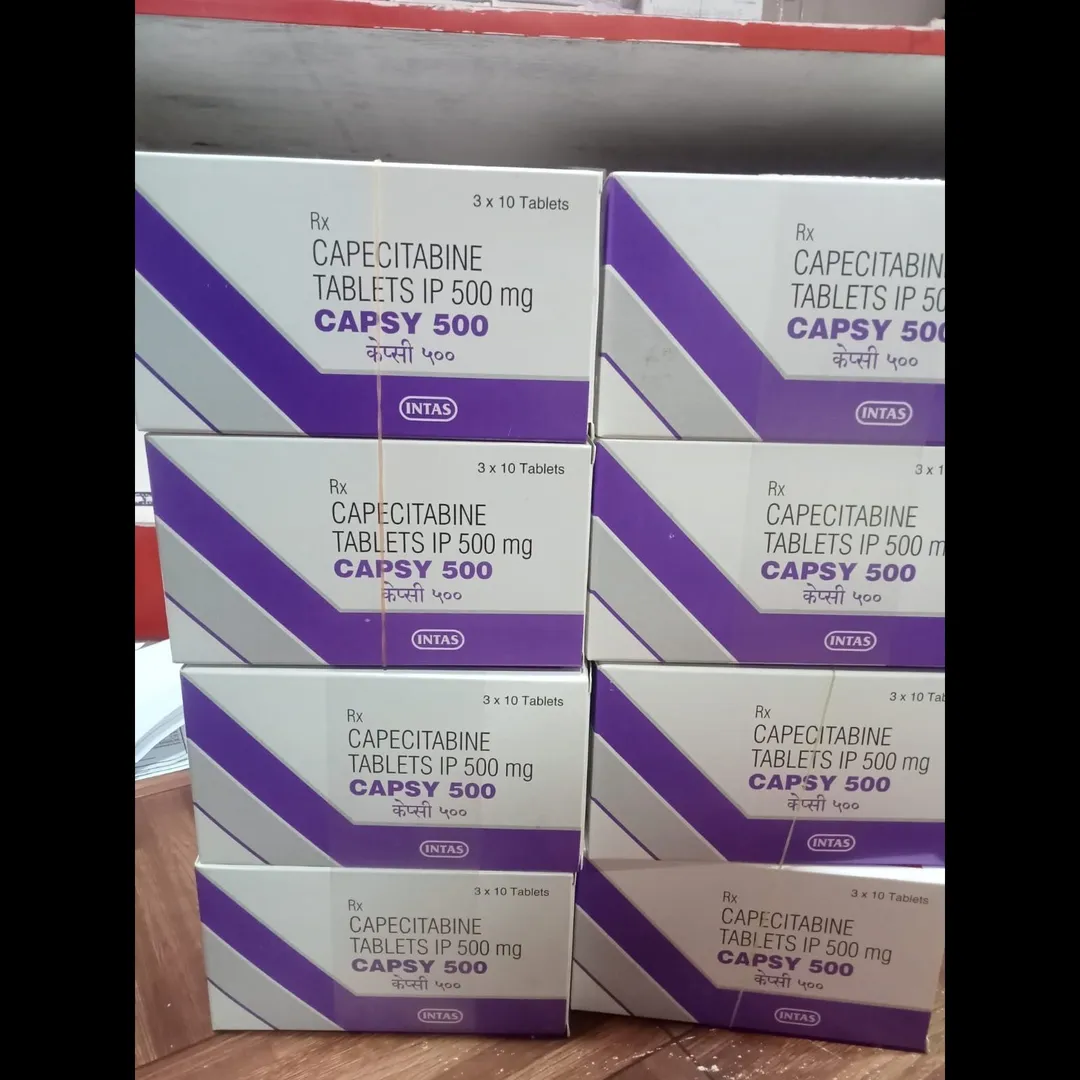
Capsy 500 mg Tablet is an oral anticancer medicine containing Capecitabine 500 mg as its active ingredient. Capecitabine belongs to the antimetabolite class of chemotherapy medicines. It is converted in the body into an active substance related to 5-fluorouracil (5-FU), which interferes with the growth and multiplication of cancer cells.
Capsy 500 mg is a prescription medicine and should only be used under the supervision of a qualified oncologist or healthcare professional.
Brand: Capsy 500 mg
Active ingredient: Capecitabine 500 mg
Dosage form: Tablet
Therapeutic category: Antineoplastic / chemotherapy
Route: Oral
Manufacturer/Marketer: Intas Pharmaceuticals Ltd., India
Country of origin: India
2. Product Information
Capsy 500 mg Tablet contains capecitabine, an oral chemotherapy medicine. The tablet is generally supplied in blister packaging, with pack sizes depending on the manufacturer and market.
The exact dose, treatment schedule and duration vary according to the type of cancer, treatment protocol, body surface area, kidney function, other medicines being used and the patient's overall health.
Capsy 500 mg is commonly prescribed either alone or together with other anticancer medicines.
3. Uses of Capsy 500 mg
Capsy 500 mg Tablet may be prescribed for certain types of:
- Colorectal cancer
- Colon cancer
- Rectal cancer
- Breast cancer
- Gastric/stomach cancer in appropriate treatment protocols
- Other cancers where capecitabine is included in the oncologist's treatment plan
It may be used alone or as part of combination chemotherapy. The exact indication depends on the patient's diagnosis and the treating physician's protocol.
4. Benefits of Capsy 500 mg
Capsy 500 mg provides the anticancer activity of capecitabine in an oral tablet formulation.
Potential therapeutic benefits include:
- Helps slow the growth of certain cancer cells.
- May help control cancer progression as part of an appropriate treatment regimen.
- Can be used in combination with other chemotherapy medicines when clinically indicated.
- Provides an oral form of capecitabine, which can be incorporated into prescribed chemotherapy cycles.
The expected benefit depends on the cancer type, stage, treatment combination and individual response. It should not be considered a cure for cancer by itself.
5. Side Effects of Capsy 500 mg
Capecitabine can cause side effects because chemotherapy medicines can affect both cancer cells and some healthy rapidly dividing cells.
Possible adverse effects include:
- Diarrhea
- Nausea
- Vomiting
- Abdominal discomfort or pain
- Loss of appetite
- Weakness or tiredness
- Mouth sores
- Changes in taste
- Hair loss
- Skin rash
- Hand-foot syndrome
- Changes in blood-cell counts
- Dehydration
Some reactions can be serious. Severe diarrhea, significant vomiting, fever, infection symptoms, chest pain, unusual bleeding, severe skin reactions or other concerning symptoms require prompt medical attention.
6. Common Side Effects
Frequently reported side effects may include:
- Diarrhea
- Nausea
- Vomiting
- Abdominal pain or discomfort
- Weakness
- Loss of appetite
- Mouth ulcers or inflammation
- Changes in taste
- Skin reactions
- Hand-foot syndrome
- Fatigue
Not every patient experiences these effects, and their severity can vary.
7. How to Use Capsy 500 mg
Capsy 500 mg should be taken only according to the oncologist's prescription.
General administration guidance includes:
- Take the tablet orally with water.
- It is generally taken with food or shortly after eating.
- Swallow the tablet as directed rather than changing the prescribed dose yourself.
- Follow the exact chemotherapy cycle prescribed by the doctor.
- Do not take extra tablets to compensate for a missed dose unless specifically instructed by your healthcare professional.
- Do not stop chemotherapy without consulting the treating oncologist.
The dose and treatment cycle are individualized and may require adjustment according to kidney function, side effects and treatment response.
8. How Capsy 500 mg Works
Capsy 500 mg contains capecitabine, which is converted inside the body into 5-fluorouracil (5-FU) and related active metabolites.
These active substances interfere with processes required for the production of DNA and RNA. Cancer cells that are rapidly dividing can therefore have their growth and multiplication inhibited.
This mechanism helps reduce or control the growth of susceptible cancer cells.
9. Safety Advice for Capsy 500 mg
Capsy 500 mg is a prescription chemotherapy medicine and requires appropriate medical supervision.
Important safety points
- Use only under the supervision of an oncologist.
- Tell your doctor about all medicines, vitamins and supplements you take.
- Kidney and liver function may need monitoring.
- Blood counts may be monitored during treatment.
- Tell your doctor if you have previously experienced severe reactions to fluoropyrimidine medicines.
- Capecitabine can interact significantly with certain medicines, including anticoagulants such as warfarin.
- Brivudine must not be taken together with capecitabine because of the risk of severe or potentially life-threatening toxicity; appropriate separation is required according to medical guidance.
- Inform your doctor immediately about severe diarrhea, persistent vomiting, mouth sores, fever, unusual bleeding, chest pain or severe skin reactions.
- Pregnancy and breastfeeding require specific medical advice because anticancer treatment may pose risks to the fetus or infant.
- Store the medicine according to the product label and keep it away from children.
10. Frequently Asked Questions (FAQs)
Q1. What is Capsy 500 mg Tablet?
Capsy 500 mg Tablet is an oral anticancer medicine containing capecitabine 500 mg.
Q2. What is Capsy 500 mg used for?
It is used for certain cancers, particularly colorectal and breast cancers, and may be used for other cancers according to the oncologist's treatment protocol.
Q3. Is Capsy 500 mg a chemotherapy medicine?
Yes. Capecitabine is an oral antineoplastic chemotherapy medicine.
Q4. What is the active ingredient in Capsy 500 mg?
The active ingredient is capecitabine 500 mg.
Q5. Can Capsy 500 mg be taken without a prescription?
No. It is a prescription anticancer medicine and should be taken only under appropriate medical supervision.
Q6. How should Capsy 500 mg be taken?
It should be taken exactly as prescribed, generally with food or shortly after a meal. The oncologist determines the individual dose and treatment cycle.
Q7. Can Capsy 500 mg cause diarrhea?
Yes. Diarrhea is a commonly reported adverse effect and can sometimes become serious. Persistent or severe diarrhea should be reported promptly to the treating doctor.
Q8. Can Capsy 500 mg affect blood counts?
Yes. Capecitabine treatment can affect blood-cell counts, so the doctor may order regular blood tests during treatment.
Q9. Can Capsy 500 mg interact with other medicines?
Yes. It can interact with certain medicines, including warfarin and brivudine. Patients should provide their healthcare professional with a complete list of medicines they are taking.
Q10. Can Capsy 500 mg be used during pregnancy?
Capecitabine may pose a risk to pregnancy. Patients who are pregnant, planning pregnancy or breastfeeding should discuss treatment with their oncologist before taking it.
Q11. Is Capsy 500 mg suitable for every cancer patient?
No. The suitability depends on the cancer type, stage, previous treatment, kidney/liver function and other clinical factors.
Q12. Who should decide the dosage?
The treating oncologist or qualified healthcare professional should determine the dosage and treatment schedule.
11. Substitute for Capsy 500 mg
Capsy 500 mg contains capecitabine 500 mg. Possible alternatives may include other capecitabine 500 mg products, but a substitute should only be selected after confirming the active ingredient, strength, formulation and suitability for the patient's treatment plan.
Examples of capecitabine products may vary by country and availability. A doctor or pharmacist should confirm the appropriate equivalent before substitution.
Do not substitute Capsy 500 mg with another chemotherapy medicine simply because it has a similar indication.
12. SEO Keywords for Phoenix Exim
High-Intent Product Keywords
- Capsy 500 mg Tablet supplier
- Capsy 500 mg Tablet exporter from India
- Capsy 500 mg Tablet wholesale supplier
- Capsy 500 mg Tablet pharmaceutical exporter
- Capsy 500 mg Tablet distributor India
- Capsy 500 mg Tablet international supplier
- Capsy 500 mg Tablet bulk supplier
- Capsy 500 mg Capecitabine supplier
- Capecitabine 500 mg Tablet exporter India
- Capecitabine 500 mg pharmaceutical supplier
- Capecitabine 500 mg wholesale exporter
- Capecitabine 500 mg tablets supplier India
- Capsy 500 mg oncology medicine exporter
- Capsy 500 mg cancer medicine supplier
- Capsy 500 mg chemotherapy medicine exporter
Phoenix Exim / Nagpur Keywords
- Capsy 500 mg Tablet exporter from Nagpur India
- Capsy 500 mg supplier in Nagpur India
- Capecitabine 500 mg exporter from Nagpur
- Nagpur pharmaceutical exporter Capsy 500 mg
- Phoenix Exim Capsy 500 mg supplier
- Phoenix Exim Capecitabine 500 mg exporter
- Phoenix Exim oncology medicine exporter India
- Phoenix Exim cancer medicine supplier Nagpur
- Capsy 500 mg international pharmaceutical supplier from India
- Capsy 500 mg medicine exporter Nagpur India
International B2B Keywords
- Capsy 500 mg Tablet supplier USA
- Capsy 500 mg Tablet exporter UK
- Capsy 500 mg Tablet supplier Australia
- Capsy 500 mg Tablet supplier Singapore
- Capsy 500 mg Tablet supplier Canada
- Capsy 500 mg Tablet supplier South Korea
- Capsy 500 mg Tablet supplier UAE
- Capecitabine 500 mg exporter to USA
- Capecitabine 500 mg exporter to UK
- Capecitabine 500 mg exporter to Australia
- Capecitabine 500 mg exporter to Singapore
- Capecitabine 500 mg exporter to Canada
- Capecitabine 500 mg exporter to South Korea
- Capecitabine 500 mg exporter to UAE
- Capsy 500 mg international medicine export supplier
Keywords