1. General Information
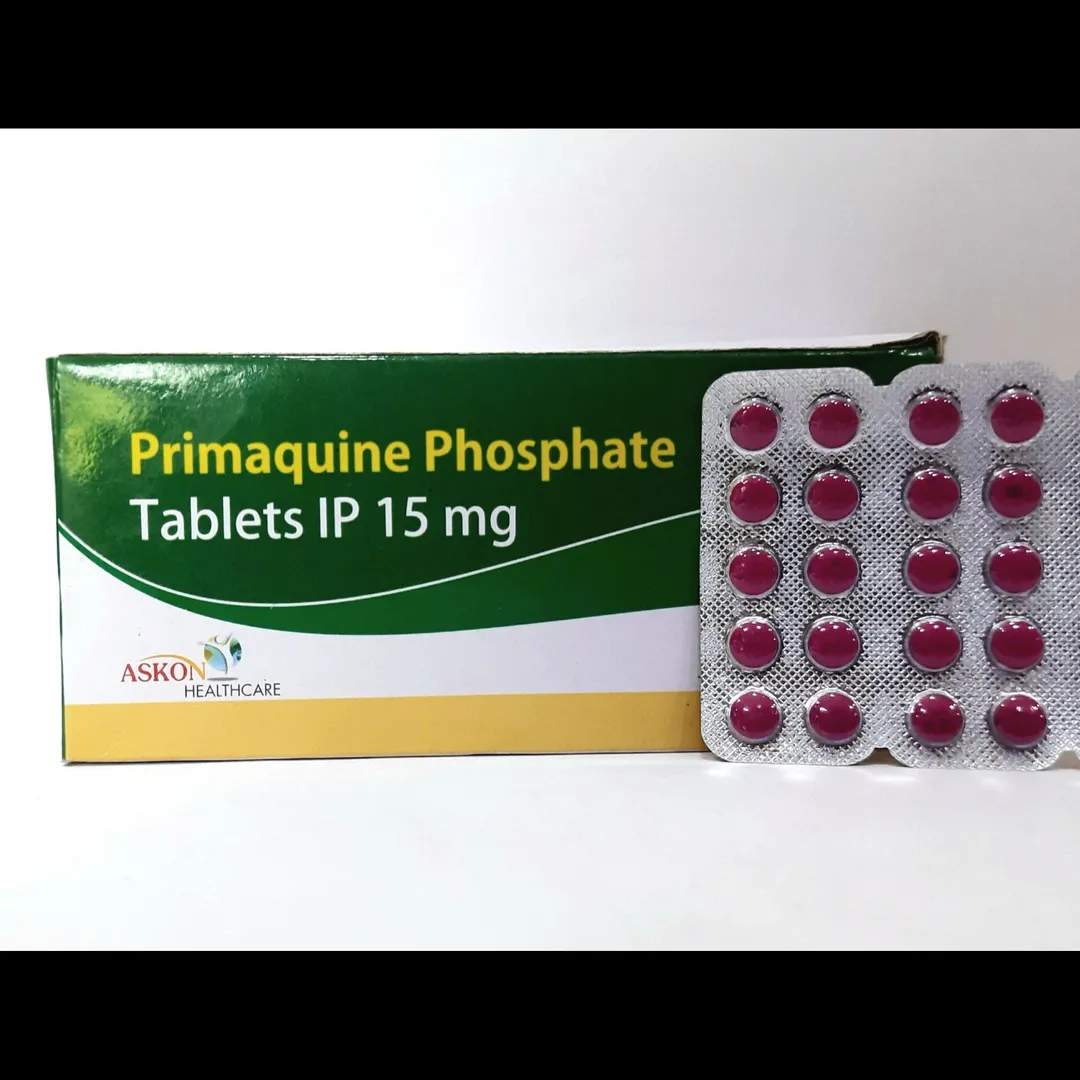
Primaquine Phosphate 15 mg is an antimalarial medicine belonging to the 8-aminoquinoline class. It is particularly important in the management of Plasmodium vivax malaria because it targets dormant liver-stage parasites, known as hypnozoites, which can cause malaria to return after the initial infection has been treated.
Primaquine is generally used as part of an appropriate malaria treatment or prevention regimen rather than as a replacement for medicines that treat the blood-stage infection.
Important: A quantitative G6PD test is required before primaquine treatment, because the medicine can cause potentially serious hemolytic anemia in people with G6PD deficiency.
2. Product Information
- Product: Primaquine Phosphate 15 mg
- Active ingredient: Primaquine phosphate
- Medicine class: Antimalarial
- Therapeutic class: 8-aminoquinoline
- Dosage form: Tablet
- Primary role: Prevention of relapse in P. vivax malaria
- Administration: Oral
- Prescription status: Generally prescription medicine; requirements vary by country
A key point regarding strength labeling is that some products describe the amount as 15 mg primaquine base, while others express the corresponding amount as primaquine phosphate salt. For example, U.S. labeling describes tablets containing 26.3 mg primaquine phosphate equivalent to 15 mg primaquine base. Product labeling should therefore be checked carefully before prescribing or dispensing.
3. Uses of Primaquine Phosphate 15 mg
Primaquine may be used for:
- Radical cure of Plasmodium vivax malaria by eliminating dormant liver-stage parasites and reducing the possibility of relapse.
- Prevention of relapse following appropriate treatment of P. vivax malaria.
- Treatment of P. ovale malaria in appropriate clinical circumstances, particularly to address liver-stage parasites.
- Malaria prevention in selected travelers, particularly when P. vivax is the predominant malaria species, when prescribed according to current travel-medicine guidance.
- Terminal prophylaxis after prolonged exposure to areas where P. vivax or P. ovale occurs, when clinically appropriate.
Primaquine is not a universal treatment for every type of malaria and should be selected according to the infecting species, geographic resistance patterns, patient characteristics, and local treatment guidelines.
4. Benefits of This Medicine
Potential clinical benefits include:
- Helps eliminate dormant liver-stage P. vivax parasites.
- Helps reduce the risk of recurrent malaria caused by relapse.
- Provides an important component of radical cure for P. vivax malaria.
- Can be useful for selected malaria-prevention strategies.
- Available as an oral medicine, making administration convenient when prescribed appropriately.
CDC guidance notes that P. vivax and P. ovale can relapse because of dormant liver-stage parasites, and primaquine is one of the medicines used to target these hypnozoites.
5. Side Effects of Primaquine Phosphate 15 mg
Primaquine can cause adverse effects, and the risk of serious toxicity is particularly important in people with G6PD deficiency.
Possible adverse effects include:
- Hemolytic anemia
- Abdominal discomfort
- Nausea
- Vomiting
- Abdominal pain
- Headache
- Dizziness
- Weakness or fatigue
- Dark-colored urine in cases of hemolysis
Seek urgent medical attention if symptoms suggest significant hemolysis, such as severe weakness, unusual shortness of breath, marked pallor, jaundice, or dark urine.
The FDA labeling warns that moderate-to-severe hemolytic reactions may occur in people with G6PD deficiency.
6. Common Side Effects
Gastrointestinal upset is among the more commonly reported problems with primaquine. Taking it with food can help reduce gastrointestinal discomfort.
Common or relatively frequent effects may include:
- Nausea
- Stomach discomfort
- Abdominal pain
- Vomiting
- Headache
- Dizziness
Not everyone experiences side effects. If symptoms are persistent, severe, or unusual, medical advice should be obtained.
7. How to Use Primaquine Phosphate 15 mg
Primaquine should be taken only according to the dosage and duration prescribed by a qualified healthcare professional.
The exact regimen depends on:
- Malaria species
- Patient age
- Body weight
- Treatment purpose
- G6PD activity
- Previous malaria treatment
- Geographic region where infection was acquired
For example, current CDC guidance for adult anti-relapse treatment of P. vivax generally uses 30 mg primaquine base once daily for 14 days, with weight-based adjustments for people ≥70 kg.
Therefore, a 15 mg tablet should not automatically be interpreted as one tablet per day. The strength and formulation must be matched to the prescribed dose.
Take the medicine with food if recommended to minimize stomach upset, and complete the prescribed course unless your healthcare professional instructs otherwise.
8. How This Medicine Works
Primaquine is an 8-aminoquinoline antimalarial.
Its important role in P. vivax and P. ovale malaria is its activity against liver-stage hypnozoites. These dormant parasites can remain in the liver after the blood-stage infection has been treated and can later reactivate, producing a relapse.
Primaquine helps eliminate these dormant parasites, which is why it is used for radical cure and relapse prevention.
9. Safety Advice
G6PD testing is essential
Before taking primaquine, patients should have a quantitative G6PD test. Primaquine can cause hemolytic anemia in people with G6PD deficiency, potentially becoming life-threatening.
Pregnancy
Primaquine should not be used during pregnancy, because of the risk of hemolysis in a G6PD-deficient fetus.
Breastfeeding
Breastfeeding requires special consideration. Current labeling advises against use when the breastfed infant is G6PD-deficient or when the infant's G6PD status is unknown.
Anemia
Tell the healthcare professional about any history of anemia, hemolytic anemia, or favism before treatment.
Drug interactions
Inform your doctor about all prescription medicines, OTC medicines, and supplements you take. In particular, current U.S. labeling identifies quinacrine as contraindicated with primaquine because it can increase toxicity.
Medical supervision
Do not self-medicate with primaquine based only on malaria symptoms. Correct malaria diagnosis and species identification are important for selecting appropriate therapy.
10. Frequently Asked Questions
Q1. What is Primaquine Phosphate 15 mg used for?
It is an antimalarial medicine primarily used to prevent relapse of Plasmodium vivax malaria by targeting dormant liver-stage parasites.
Q2. Is Primaquine used for malaria prevention?
Yes. Primaquine can be used for selected malaria-prevention regimens, particularly in areas where P. vivax predominates, provided the patient has appropriate G6PD testing and meets prescribing criteria.
Q3. Is G6PD testing required before taking primaquine?
Yes. A quantitative G6PD assessment should be documented before primaquine is prescribed because of the risk of hemolytic anemia.
Q4. Can pregnant women take primaquine?
No. Primaquine is contraindicated during pregnancy because of the potential risk to a G6PD-deficient fetus.
Q5. Can primaquine treat all malaria infections?
No. Primaquine has a specific role in malaria treatment and relapse prevention and does not replace appropriate blood-stage therapy for malaria.
Q6. Can Primaquine 15 mg be taken without a prescription?
It should be used only under appropriate medical supervision. Prescription and dispensing requirements differ by country.
Q7. What happens if someone with G6PD deficiency takes primaquine?
Primaquine can cause potentially severe hemolytic anemia in people with G6PD deficiency. Urgent medical assessment is required if significant symptoms develop.
Q8. Should Primaquine be taken with food?
Taking primaquine with food can help reduce gastrointestinal upset.
11. Substitute for Primaquine Phosphate 15 mg
There is no single universal substitute because the appropriate alternative depends on the indication, malaria species, G6PD status, patient age, pregnancy status, and local treatment guidelines.
For anti-relapse treatment of P. vivax, tafenoquine is an alternative in selected patients, but it also requires quantitative G6PD testing and has specific eligibility restrictions.
Other antimalarial medicines such as chloroquine or artemisinin-based combination therapies may be used for the blood-stage infection, depending on the malaria species and resistance pattern, but they should not automatically be considered substitutes for primaquine's liver-stage activity.
Patients should not switch from primaquine to another antimalarial without medical advice.
12. SEO Keywords
Primary Keywords
- Primaquine Phosphate 15 mg
- Primaquine 15 mg Tablets
- Primaquine Phosphate Tablets
- Primaquine Tablets Exporter
- Primaquine Medicine Exporter India
- Primaquine Phosphate Supplier India
- Primaquine 15 mg Exporter
- Antimalarial Medicine Exporter
- Malaria Medicine Supplier India
- Primaquine Pharmaceutical Exporter
Long-Tail B2B Keywords
- Buy Primaquine Phosphate 15 mg from India
- Primaquine Phosphate 15 mg tablets exporter from Nagpur India
- Trusted Primaquine medicine exporter from India
- Primaquine 15 mg pharmaceutical supplier India
- Primaquine Phosphate tablets wholesale supplier
- Primaquine 15 mg international pharmaceutical exporter
- Primaquine malaria medicine supplier India
- Primaquine Phosphate 15 mg B2B pharmaceutical supplier
- Primaquine tablets export from India to UK
- Primaquine tablets export from India to USA
- Primaquine tablets export from India to Australia
- Primaquine tablets export from India to Canada
- Primaquine tablets export from India to Singapore
- Primaquine tablets export from India to South Korea
- Primaquine tablets export from India to UAE
- Primaquine Phosphate 15 mg supplier for international markets
- Primaquine antimalarial tablets wholesale exporter
- Indian pharmaceutical exporter for Primaquine Phosphate
- Primaquine medicine sourcing from India
- Primaquine Phosphate 15 mg global pharmaceutical supplier
Keywords