1. General Information
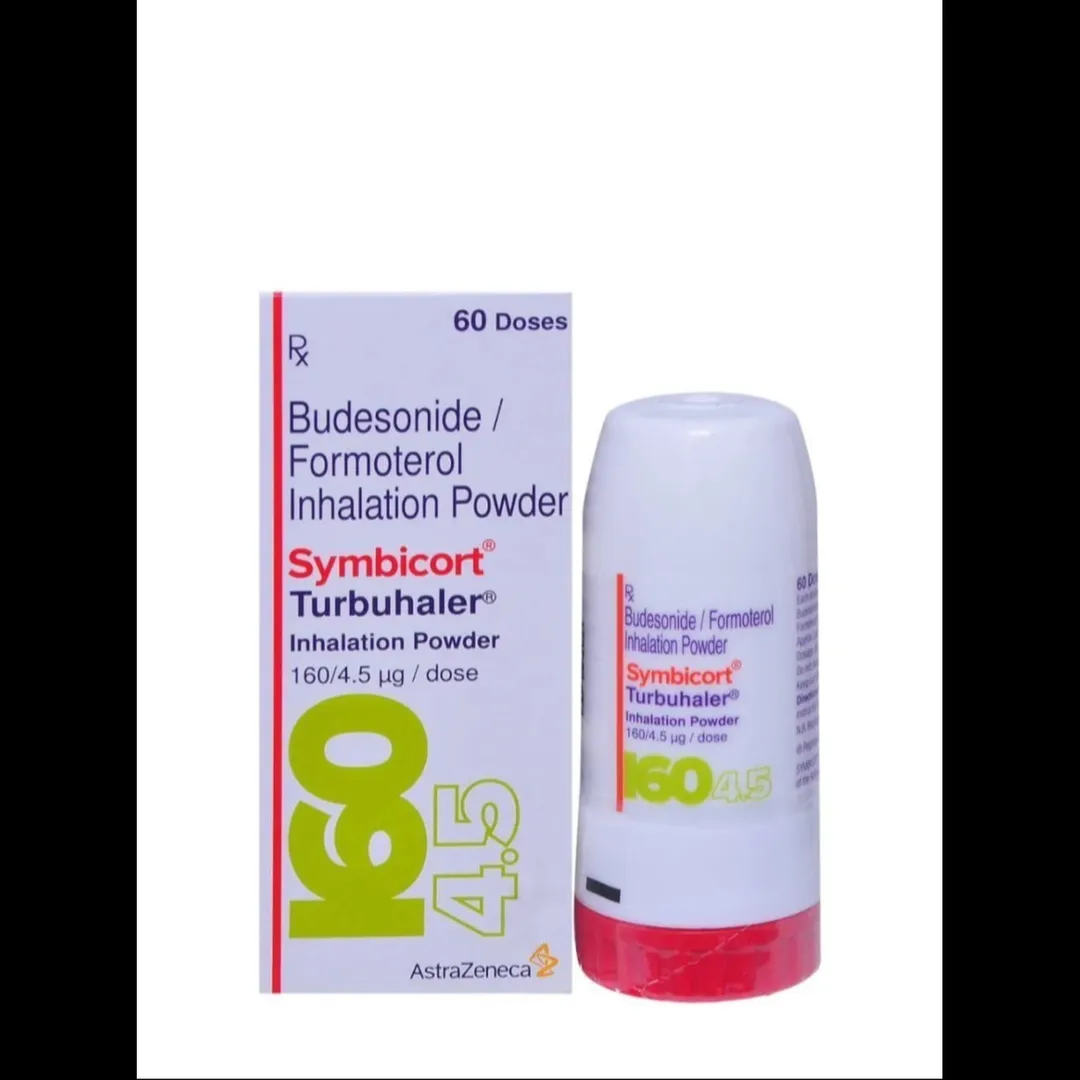
Symbicort Turbuhaler 160/4.5 mcg is a dry-powder inhaler containing two active ingredients: budesonide 160 mcg and formoterol fumarate dihydrate 4.5 mcg per delivered inhalation. Budesonide is an inhaled corticosteroid that helps reduce inflammation in the airways, while formoterol is a long-acting bronchodilator that relaxes airway muscles and helps improve airflow.
It is a prescription medicine used mainly for the long-term management of asthma and, in appropriate adults, chronic obstructive pulmonary disease (COPD).
2. Product Information
Brand: Symbicort Turbuhaler
Strength: 160/4.5 mcg per delivered dose
Active ingredients: Budesonide 160 mcg + Formoterol fumarate dihydrate 4.5 mcg
Dosage form: Dry powder for inhalation
Route: Oral inhalation
Device: Turbuhaler multidose inhaler
Manufacturer: AstraZeneca
Prescription status: Prescription-only medicine in markets such as Singapore.
The Turbuhaler is breath-actuated, meaning the medicine is drawn into the airways when the patient inhales correctly through the mouthpiece.
3. Uses of Symbicort Turbuhaler
Symbicort Turbuhaler may be prescribed for:
Long-term treatment and control of asthma.
Reducing asthma symptoms and the risk of exacerbations when prescribed according to an appropriate treatment regimen.
Maintenance treatment of COPD in eligible adults.
Improving airflow and reducing airway inflammation associated with these respiratory conditions.
The exact treatment approach and dose depend on the patient's condition and the prescribing country's approved labeling.
4. Benefits of This Medicine
When appropriately prescribed and used correctly, Symbicort can provide several therapeutic benefits:
Reduces airway inflammation: Budesonide helps control inflammation and swelling in the airways.
Relaxes airway muscles: Formoterol helps open narrowed airways.
Improves breathing: The combination can improve airflow and respiratory symptoms.
Helps maintain asthma control: Regular treatment can help reduce symptoms and exacerbations.
Supports COPD management: In appropriate patients, it can improve respiratory symptoms and help reduce COPD exacerbations.
5. Side Effects
Like other medicines, Symbicort may cause side effects. Not everyone experiences them, and the severity can vary.
Possible adverse effects include:
Headache
Tremor or shakiness
Palpitations or awareness of heartbeat
Throat irritation
Hoarseness
Cough
Oral or throat fungal infection (thrush)
Nausea
Muscle cramps
Changes in potassium or blood glucose levels
Rare but serious reactions can include severe allergic reactions, paradoxical bronchospasm, or significant cardiovascular effects. Seek urgent medical attention if severe breathing difficulty, swelling of the face/throat, or other serious symptoms occur.
6. Common Side Effects
Some commonly reported effects associated with budesonide/formoterol include:
Headache
Tremor
Palpitations
Hoarseness
Throat irritation
Oral thrush
Cough
Muscle cramps
Rinsing the mouth with water after using a maintenance dose can help reduce the risk of oral thrush.
7. How to Use Symbicort Turbuhaler
Use Symbicort exactly as prescribed by your doctor.
General Turbuhaler technique:
Remove the protective cover.
Hold the inhaler upright.
Load a dose according to the device instructions.
Breathe out gently away from the mouthpiece.
Place the mouthpiece between your teeth and close your lips around it.
Breathe in forcefully and deeply through the mouthpiece.
Remove the inhaler and breathe normally.
Replace the cover.
If using it as a maintenance inhaler, rinse your mouth with water after inhalation and spit the water out.
The Turbuhaler should not be shaken, and you should never breathe out through the mouthpiece because this can affect the dose delivery.
Important: The number of inhalations and frequency depend on the prescribed treatment regimen. For example, some fixed-dose regimens use 1–2 inhalations twice daily, while other approved regimens use Symbicort differently. Follow the specific prescription and local product leaflet rather than changing the dose yourself.
8. How This Medicine Works
Symbicort combines two complementary medicines:
Budesonide: This inhaled corticosteroid reduces inflammation and swelling in the airways, helping control the underlying inflammatory component of asthma and respiratory disease.
Formoterol: This long-acting beta-2 agonist relaxes the muscles surrounding the airways. This causes the airways to widen and makes breathing easier.
Together, these medicines provide both anti-inflammatory activity and bronchodilation.
9. Safety Advice
Use Symbicort only according to your doctor's prescription.
Do not stop regular treatment suddenly without medical advice.
Symbicort is not universally intended as a rescue inhaler; whether it can be used for symptom relief depends on the treatment regimen prescribed and the local product labeling.
Do not exceed the prescribed number of inhalations.
Seek medical advice if symptoms are getting worse or you need increasingly frequent reliever medication.
Rinse your mouth after maintenance inhalation to help reduce oral thrush.
Tell your doctor about heart problems, high blood pressure, diabetes, thyroid disorders, low potassium, liver disease, or other significant medical conditions.
Tell your doctor or pharmacist about all medicines and supplements you take because interactions are possible.
Do not use it if you have previously had a serious allergic reaction to budesonide, formoterol, or relevant ingredients.
Keep the inhaler dry and follow the storage instructions supplied with the product.
Symbicort should not be started as treatment for an acutely deteriorating asthma or COPD episode without appropriate medical assessment, and some approved formulations explicitly state that it is not indicated for acute bronchospasm.
10. FAQs
Q1. What is Symbicort Turbuhaler 160/4.5 used for?
It is used for the management of asthma and, in appropriate adults, COPD.
Q2. What are the active ingredients?
It contains budesonide 160 mcg and formoterol fumarate dihydrate 4.5 mcg per delivered inhalation.
Q3. Is Symbicort a steroid?
It contains an inhaled corticosteroid, budesonide, plus the long-acting bronchodilator formoterol.
Q4. Can Symbicort be used every day?
Some treatment regimens use it regularly as maintenance therapy. Use it according to your doctor's instructions.
Q5. Should I rinse my mouth after using Symbicort?
Yes. Rinsing and spitting out the water after maintenance inhalation can help reduce the risk of oral thrush.
Q6. Can I stop Symbicort when I feel better?
Do not change or stop your prescribed treatment without consulting your doctor.
Q7. Can children use Symbicort Turbuhaler 160/4.5?
Age indications vary by country and treatment regimen. The Australian product information, for example, lists this strength for asthma in adults and adolescents aged 12 years and older.
Q8. Is Symbicort available internationally?
The product is registered in multiple countries, but specific strengths, indications, packaging, prescription requirements, and regulatory status vary by country. Singapore's National Drug Formulary lists Symbicort Turbuhaler 160/4.5 mcg/dose as a prescription-only medicine.
11. Substitute for Symbicort Turbuhaler 160/4.5
Potential alternatives belong to the same ICS/LABA (inhaled corticosteroid/long-acting beta-2 agonist) class, but the appropriate substitute depends on the patient's diagnosis, required dose, inhaler device, and local availability.
Examples of medicines that may be considered by a healthcare professional include:
Budesonide/formoterol inhalers from other manufacturers
Other approved inhaled corticosteroid + long-acting bronchodilator combinations
Separate budesonide and formoterol inhalers, when clinically appropriate
Do not substitute an inhaler solely based on the strength printed on the package. Different devices can have different metered and delivered doses, and treatment regimens are not necessarily interchangeable. A doctor or pharmacist should select and dose the alternative.
12. Keywords
Primary keywords:
Symbicort Turbuhaler 160/4.5 mcg
Symbicort 160/4.5 inhaler
Symbicort Turbuhaler exporter
Symbicort 160/4.5 medicine exporter
Budesonide Formoterol inhaler
Budesonide 160 mcg Formoterol 4.5 mcg
Symbicort Turbuhaler supplier from India
Symbicort medicine exporter from India
Symbicort pharmaceutical exporter
Symbicort Turbuhaler wholesale supplier
Long-tail B2B keywords:
Symbicort Turbuhaler 160/4.5 mcg exporter from Nagpur India
Symbicort 160/4.5 mcg pharmaceutical supplier from India
Budesonide Formoterol 160/4.5 mcg inhaler exporter India
Symbicort Turbuhaler 160/4.5 international medicine supplier
Symbicort 160/4.5 mcg inhalation powder exporter
Symbicort Turbuhaler supplier for international pharmaceutical markets
Symbicort 160/4.5 mcg wholesale pharmaceutical exporter India
Budesonide Formoterol inhaler global pharmaceutical supplier
Symbicort Turbuhaler exporter to USA UK Australia Canada
Symbicort Turbuhaler exporter to Singapore South Korea UAE
Keywords