1. General Information
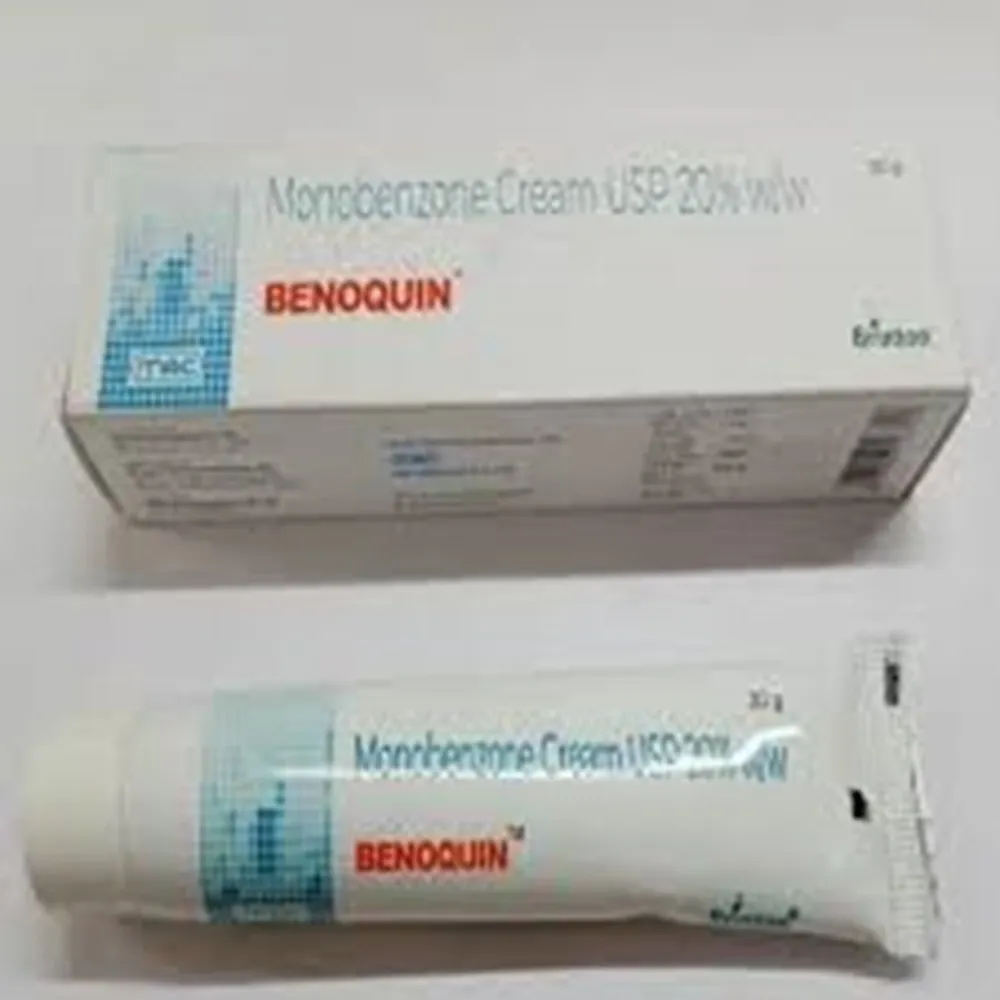
Benoquin Cream contains Monobenzone, a topical depigmenting agent. It is generally used in patients with extensive or widespread vitiligo when permanent depigmentation of the remaining pigmented skin is medically considered appropriate.
Because monobenzone can produce irreversible loss of pigmentation, treatment should be undertaken only under the guidance of a qualified dermatologist or healthcare professional.
2. Product Information
- Brand: BENOQUIN Cream
- Pack Size: 30GM
- Active Ingredient: Monobenzone
- Strength: 20% w/w
- Dosage Form: Topical cream
- Route: External/topical application
- Therapeutic Category: Depigmenting agent
- Primary Medical Use: Permanent depigmentation in extensive vitiligo
- Storage: Store as directed on the product packaging; commonly below 30°C and protected from excessive heat and sunlight.
3. Uses of BENOQUIN Cream
Benoquin Cream is used for permanent depigmentation of normally pigmented skin in people with extensive vitiligo. By reducing the remaining pigmentation, it can help create a more uniform overall appearance where large areas of skin have already lost pigment.
It is not intended for ordinary cosmetic whitening, freckles, age spots, melasma, sun damage, or other pigmentation conditions unrelated to extensive vitiligo.
4. Benefits of BENOQUIN Cream
When appropriately prescribed, potential benefits include:
- Helps permanently depigment remaining normally pigmented skin.
- Can reduce the visible contrast between vitiligo patches and surrounding pigmented skin.
- May help create a more uniform skin appearance in extensive vitiligo.
- Provides a topical option for medically selected patients requiring permanent depigmentation.
Important: The benefit is permanent depigmentation, not restoration of the skin's natural pigment.
5. Side Effects of BENOQUIN Cream
Possible adverse effects may include:
- Skin irritation
- Redness
- Burning or stinging sensation
- Itching
- Dryness
- Peeling or flaking
- Increased sensitivity to sunlight
- Uneven or unintended depigmentation
Severe burning, blistering, significant swelling, or symptoms of an allergic reaction should be reported to a healthcare professional promptly.
6. Common Side Effects
The more commonly reported local effects are:
- Mild redness
- Itching
- Dryness
- Mild burning or irritation
- Skin peeling/flaking
These effects can be more noticeable during the early stages of treatment. If irritation becomes severe or persistent, medical advice should be obtained.
7. How to Use BENOQUIN Cream
Use Benoquin only according to the dermatologist's instructions.
General application guidance includes:
- Clean and completely dry the area before application.
- Apply a thin layer only to the areas specified by your healthcare professional.
- Gently rub the cream into the skin.
- Wash your hands before and after application unless the hands are the treatment area.
- Avoid contact with the eyes, mouth and mucous membranes.
- Do not apply more frequently or in larger quantities than prescribed.
- Protect treated skin from sunlight.
Some product information describes application 2–3 times daily, but the appropriate frequency and treatment duration should be determined by the prescribing doctor.
8. How BENOQUIN Cream Works
Benoquin contains monobenzone, which acts on melanocytes—the cells responsible for producing melanin, the pigment that gives skin its colour. Monobenzone and its metabolites can damage melanocytes, resulting in progressive and often permanent depigmentation.
Because the effect can be irreversible, monobenzone is reserved for carefully selected cases of extensive vitiligo rather than ordinary skin-lightening purposes.
9. Safety Advice
- Prescription use: Use only under appropriate medical supervision.
- Sun protection: Depigmented skin can be considerably more vulnerable to sunburn. Use protective clothing and appropriate sunscreen when outdoors.
- Avoid cosmetic use: Do not use Benoquin simply to lighten normal skin.
- Avoid damaged skin: Do not apply to open wounds or severely irritated skin.
- Eyes: Avoid contact with eyes and mucous membranes.
- Pregnancy/breastfeeding: Consult your doctor before use.
- Children: Use in children only when specifically recommended by a healthcare professional.
- Other topical products: Tell your doctor about other creams, retinoids, exfoliants or dermatological treatments you are using.
- Permanent effect: Understand that the depigmentation may be irreversible.
- Allergy: Do not use if you have a known allergy to monobenzone or any formulation ingredient.
10. Frequently Asked Questions (FAQs)
Q1. What is BENOQUIN Cream 30GM used for?
It is used for permanent depigmentation of remaining normally pigmented skin in selected patients with extensive vitiligo.
Q2. What is the active ingredient in Benoquin Cream?
The active ingredient is Monobenzone 20% w/w.
Q3. Is Benoquin a normal skin-whitening cream?
No. Monobenzone is intended for medically supervised depigmentation in extensive vitiligo and is not a routine cosmetic whitening treatment.
Q4. Is the effect of Benoquin permanent?
Yes. Monobenzone generally causes irreversible destruction/loss of melanocytes in treated skin, so its use requires careful medical consideration.
Q5. Can Benoquin be used without a doctor's advice?
It should not be self-used. Medical assessment and supervision are important because the depigmentation can be permanent.
Q6. Does Benoquin make the skin sensitive to sunlight?
Yes. Depigmented skin has much less natural melanin protection and can be more susceptible to sunburn, so sun protection is important.
Q7. Can Benoquin be used for freckles or melasma?
No. Monobenzone is not intended for freckles, melasma, sun damage, age spots, or other non-vitiligo pigmentation disorders.
Q8. How long does depigmentation take?
The response varies between individuals. Complete depigmentation can take several months, and treatment should be monitored by a healthcare professional.
11. Substitute for BENOQUIN Cream
There is no universally interchangeable substitute for Benoquin because monobenzone is specifically used for permanent depigmentation in extensive vitiligo.
Products containing Monobenzone 20% may be considered alternatives depending on the manufacturer and local availability, but substitution should be confirmed by a doctor or pharmacist. Do not substitute Benoquin with hydroquinone, kojic acid, corticosteroid creams, or other pigmentation products without professional advice, because their purposes and effects are different.
12. SEO Keywords
Primary Keywords:
- BENOQUIN Cream 30GM
- Benoquin 20% Cream
- Benoquin Monobenzone Cream
- Monobenzone 20% Cream
- Benoquin Cream exporter
- Benoquin Cream supplier from India
- Benoquin Cream wholesale supplier
- Benoquin 30GM exporter from India
- Monobenzone Cream exporter India
- Vitiligo depigmentation cream
Long-Tail B2B Keywords:
- BENOQUIN Cream 30GM exporter from Nagpur India
- Monobenzone 20% Cream wholesale supplier India
- BENOQUIN Cream pharmaceutical exporter India
- BENOQUIN Cream supplier for international markets
- Monobenzone Cream exporter to USA
- BENOQUIN Cream exporter to UK
- BENOQUIN Cream exporter to Australia
- BENOQUIN Cream exporter to Singapore
- BENOQUIN Cream exporter to Canada
- BENOQUIN Cream exporter to South Korea
- BENOQUIN Cream exporter to UAE
- BENOQUIN 30GM medicine supplier from India
- Genuine BENOQUIN Cream pharmaceutical supplier
- BENOQUIN Monobenzone 20% wholesale exporter
- Monobenzone 20% W/W Cream international supplier
Keywords