1. General Information
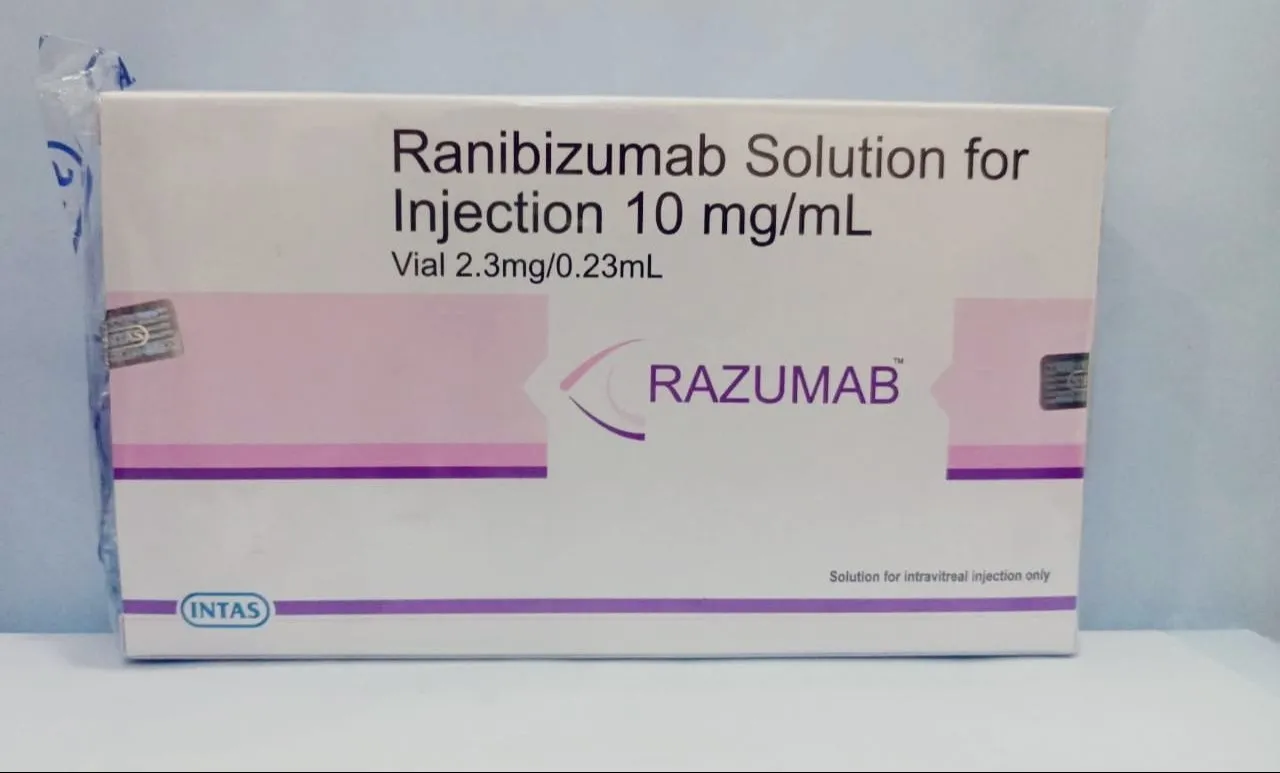
Razumab Injection is a prescription ophthalmic medicine containing ranibizumab, a recombinant humanized monoclonal antibody fragment. It belongs to the anti-VEGF (vascular endothelial growth factor) class and is administered directly into the eye by a qualified ophthalmologist.
It is primarily used for retinal disorders in which excessive VEGF contributes to abnormal blood-vessel formation and retinal fluid leakage.
For Phoenix Exim, Razumab can be described as a pharmaceutical product supplied from Nagpur, India, with export enquiries for markets including the USA, UK, Australia, Singapore, Canada, South Korea and UAE, subject to the applicable prescription, import and regulatory requirements of the destination country.
2. Product Information
- Brand: Razumab Injection
- Active ingredient: Ranibizumab
- Strength: 10 mg/mL
- Common supplied vial: 2.3 mg/0.23 mL
- Route: Intravitreal injection
- Therapeutic class: Anti-VEGF / ophthalmic agent
- Manufacturer/Marketer: Intas Pharmaceuticals Ltd.
- Storage: Refrigerate at 2°C–8°C; do not freeze and protect from light.
3. Uses of Razumab Injection
Razumab may be prescribed for conditions including:
- Wet age-related macular degeneration (wAMD)
- Diabetic macular edema (DME)
- Macular edema following retinal vein occlusion (RVO)
- Choroidal neovascularization associated with pathological myopia
- Certain other retinal conditions where ranibizumab is specifically indicated by the treating ophthalmologist.
4. Benefits of Razumab Injection
When appropriately prescribed, Razumab may:
- Reduce abnormal blood-vessel growth in the retina.
- Reduce leakage of fluid from abnormal retinal blood vessels.
- Help decrease retinal swelling and macular edema.
- Help stabilize or improve vision in eligible patients.
- Help manage vision impairment associated with several VEGF-related retinal diseases.
5. Side Effects of Razumab Injection
Like other intravitreal medicines, Razumab can cause adverse effects. Important possible reactions include:
- Eye pain
- Eye redness
- Eye inflammation
- Increased intraocular pressure
- Conjunctival hemorrhage
- Vitreous floaters
- Retinal hemorrhage
- Vitreous changes
Rare but serious complications can include endophthalmitis, retinal detachment, cataract and thromboembolic events.
6. Common Side Effects
Some commonly reported ocular effects include:
- Mild eye discomfort or pain
- Redness of the eye
- Eye irritation
- Floaters
- Temporary increase in eye pressure
- Conjunctival bleeding
- Eye inflammation
Patients should promptly contact their ophthalmologist if they develop significant eye pain, worsening redness, sudden vision changes, flashes/floaters, or other unusual symptoms.
7. How to Use Razumab Injection
Razumab must not be self-administered.
It is given as an intravitreal injection by a qualified ophthalmologist experienced in administering injections into the eye. The official product information describes a commonly recommended ranibizumab dose of 0.5 mg (0.05 mL of a 10 mg/mL solution), with the treatment interval determined by the patient's condition and ophthalmologist.
The vial is intended for appropriate single-use administration and should be handled under sterile conditions.
8. How Razumab Works
Razumab contains ranibizumab, which targets VEGF-A, a protein involved in abnormal blood-vessel formation and vascular leakage.
By binding to VEGF-A, ranibizumab prevents VEGF from interacting with its receptors. This reduces abnormal blood-vessel growth and leakage, helping decrease retinal swelling and potentially stabilize or improve vision.
9. Safety Advice
- Use Razumab only under the supervision of an ophthalmologist.
- Do not attempt to inject it yourself.
- Do not use it if there is an active infection in or around the eye unless the treating specialist determines otherwise.
- Tell your doctor about previous eye conditions, eye procedures, inflammation, stroke or cardiovascular history.
- Inform your doctor about all medicines and supplements you use.
- Seek urgent medical attention for severe eye pain, increasing redness, sudden reduction in vision, flashes, new floaters or marked sensitivity to light.
- Maintain the required cold chain at 2°C–8°C.
- Do not freeze or shake the product and protect it from light.
10. Frequently Asked Questions (FAQs)
Q1. What is Razumab Injection?
Razumab is a ranibizumab-containing anti-VEGF injection used for certain retinal disorders.
Q2. What is the generic name of Razumab?
The active ingredient is ranibizumab.
Q3. What is Razumab 10 mg/mL used for?
It is used for conditions such as wet AMD, diabetic macular edema, macular edema associated with retinal vein occlusion and myopic choroidal neovascularization.
Q4. Can I inject Razumab myself?
No. It must be administered by a qualified ophthalmologist.
Q5. How should Razumab be stored?
It should generally be refrigerated at 2°C–8°C, protected from light and not frozen.
Q6. Can Razumab improve vision?
Depending on the underlying retinal condition, treatment can help stabilize or improve vision by reducing abnormal blood-vessel growth and leakage.
Q7. Is Razumab a prescription medicine?
Yes. It requires professional medical assessment and administration.
Q8. What should I do if my vision suddenly becomes worse after the injection?
Contact your ophthalmologist or seek urgent medical attention, particularly if the change is accompanied by severe eye pain, redness or other acute symptoms.
11. Substitute for Razumab Injection
Potential alternatives containing ranibizumab include brands such as Lucentis, Accentrix and Oceva, depending on the country and local availability. However, a substitute should not be selected solely on the basis of brand or price. The ophthalmologist should determine whether another ranibizumab product or a different anti-VEGF medicine is appropriate.
12. Keywords
Razumab Injection, Razumab 10 mg Injection, Razumab 10 mg/mL, Ranibizumab Injection, Ranibizumab 10 mg/mL, Ranibizumab Injection exporter, Razumab exporter India, Razumab supplier India, Razumab pharmaceutical exporter, Razumab Injection supplier, anti-VEGF injection, retinal eye medicine, diabetic macular edema treatment, wet AMD treatment, macular edema injection, retinal vein occlusion treatment, choroidal neovascularization treatment, ophthalmic injection supplier, eye injection exporter from India, pharmaceutical medicine exporter Nagpur, pharma exporter Nagpur India, genuine Razumab supplier, Razumab wholesale supplier, Razumab export from India, Ranibizumab supplier India, Ranibizumab exporter from India, Razumab supplier USA, Razumab supplier UK, Razumab supplier Australia, Razumab supplier Singapore, Razumab supplier Canada, Razumab supplier South Korea, Razumab supplier UAE, cold-chain pharmaceutical exporter, prescription ophthalmic medicine exporter.
Keywords