1. General Information
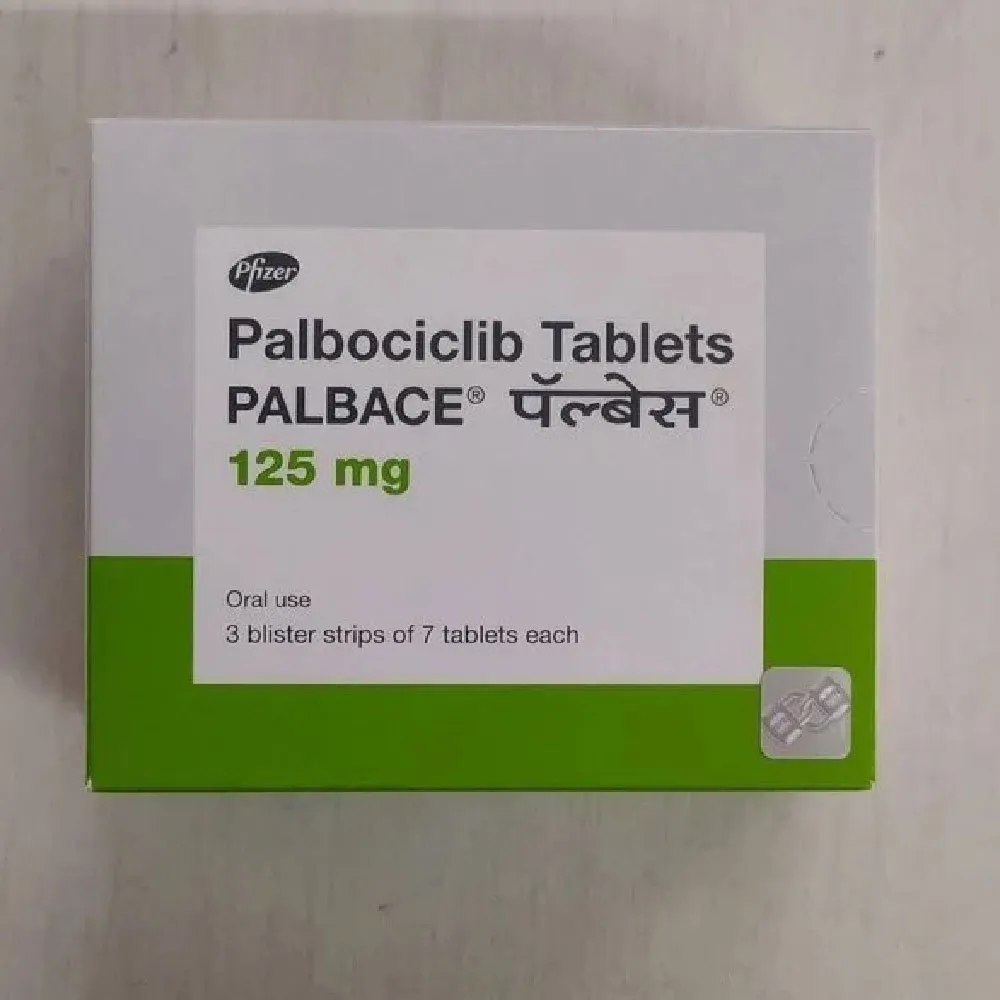
PALBACE 125 mg is an oral oncology medicine containing palbociclib, a selective cyclin-dependent kinase 4 and 6 (CDK4/6) inhibitor. It is primarily used as part of combination therapy for certain types of advanced or metastatic breast cancer.
It is a prescription-only medicine and should be used under the supervision of an oncologist or other qualified healthcare professional.
2. Product Information
- Brand: PALBACE
- Active ingredient: Palbociclib
- Strength: 125 mg
- Dosage form: Film-coated tablet
- Therapeutic class: Antineoplastic / CDK4/6 inhibitor
- Pack presentation: PALBACE 125 mg is available in packs containing 21 tablets in the Indian product information.
- Manufacturer/brand owner: Pfizer
- Route: Oral
PALBACE is also available in 75 mg and 100 mg strengths.
3. Uses of PALBACE 125 mg
PALBACE (palbociclib) is indicated for certain patients with:
- HR-positive, HER2-negative locally advanced breast cancer
- HR-positive, HER2-negative metastatic breast cancer
- Treatment in combination with an aromatase inhibitor
- Treatment with fulvestrant in patients who have previously received endocrine therapy.
For premenopausal or perimenopausal women, endocrine therapy is combined with an LHRH agonist according to the prescribing information.
4. Benefits of PALBACE 125 mg
When appropriately prescribed and combined with endocrine therapy, palbociclib can:
- Help slow the growth and progression of certain HR-positive/HER2-negative breast cancers.
- Help control advanced or metastatic disease.
- Delay disease progression in appropriate patients.
- Provide a targeted treatment approach by inhibiting CDK4/6 activity.
The expected benefit varies according to the patient's cancer characteristics and overall treatment plan.
5. Side Effects
PALBACE can cause side effects, and some can be serious. Important adverse reactions include:
- Neutropenia
- Leukopenia
- Anemia
- Infections
- Fatigue
- Nausea and vomiting
- Diarrhea
- Stomatitis
- Hair loss
- Thrombocytopenia
- Rash
- Increased liver enzymes
Important warnings include neutropenia, serious infections, interstitial lung disease/pneumonitis, and embryo-fetal toxicity.
6. Common Side Effects
Some commonly reported side effects include:
- Low white blood cell count/neutropenia
- Leukopenia
- Anemia
- Fatigue
- Nausea
- Vomiting
- Diarrhea
- Stomatitis or mouth sores
- Hair loss
- Reduced appetite
- Infections
- Rash or dry skin
Not every patient experiences these effects, and their severity can vary.
7. How to Use PALBACE 125 mg
The standard recommended palbociclib schedule is:
125 mg once daily for 21 consecutive days, followed by 7 days without treatment, making one 28-day cycle.
Important points:
- Take the medicine exactly as prescribed by the oncologist.
- Take it at approximately the same time each day.
- Do not change the dose or treatment schedule without medical advice.
- Dose interruptions or reductions may be required if significant adverse reactions occur.
- Blood counts are monitored during treatment because palbociclib can cause neutropenia.
8. How PALBACE Works
Palbociclib works by inhibiting cyclin-dependent kinases 4 and 6 (CDK4/6).
These proteins are involved in regulating the cell cycle. By inhibiting CDK4/6, palbociclib helps prevent cancer cells from progressing through the cell cycle and multiplying rapidly. This can slow the growth of certain breast cancer cells.
9. Safety Advice
- Prescription use only: Use PALBACE only under qualified medical supervision.
- Blood monitoring: Regular blood tests are important because the medicine can reduce blood-cell counts.
- Infection risk: Contact a healthcare professional promptly if fever or signs of infection occur.
- Pregnancy: Palbociclib can cause fetal harm; pregnancy precautions should be discussed with the treating physician.
- Lung symptoms: Report new or worsening cough, breathing difficulty, or other respiratory symptoms promptly because interstitial lung disease/pneumonitis has been reported.
- Drug interactions: Tell your doctor about all prescription medicines, OTC medicines, supplements, and herbal products before starting treatment.
- Storage: Store in the original package below 30°C and protect it from moisture.
- Do not use damaged or tampered packaging.
10. FAQs
Q1. What is PALBACE 125 mg used for?
PALBACE 125 mg is used with appropriate endocrine therapy for certain HR-positive, HER2-negative advanced or metastatic breast cancers.
Q2. What is the active ingredient in PALBACE 125 mg?
The active ingredient is palbociclib 125 mg.
Q3. Is PALBACE a chemotherapy medicine?
It is an anticancer targeted therapy, specifically a CDK4/6 inhibitor. It is generally used in combination with endocrine therapy for appropriate breast cancer patients.
Q4. How often is PALBACE 125 mg taken?
The standard schedule is once daily for 21 days followed by 7 days off, forming a 28-day cycle. The treating oncologist may modify the dose or schedule when medically necessary.
Q5. Can PALBACE be taken without a prescription?
No. It is a prescription oncology medicine and should be used under medical supervision.
Q6. What happens if I miss a dose?
Follow the instructions provided by the treating healthcare professional or the product information. Do not take an extra dose to compensate unless specifically instructed.
Q7. Does PALBACE require blood tests?
Yes. Blood-cell counts are monitored because palbociclib can cause significant decreases in neutrophils and other blood cells.
Q8. Can PALBACE cause hair loss?
Hair loss/alopecia is among the adverse reactions reported with palbociclib.
Q9. What are the main strengths of PALBACE?
PALBACE is available in 75 mg, 100 mg, and 125 mg strengths in the referenced Indian prescribing information.
Q10. Can PALBACE be substituted on my own?
No. Any substitution or dose change should be approved by the treating oncologist.
11. Substitute for PALBACE 125 mg
Potential therapeutic alternatives may include other CDK4/6 inhibitors, such as:
- Ribociclib
- Abemaciclib
However, these are not automatically interchangeable with PALBACE. The appropriate alternative depends on the patient's cancer type, previous treatment, medical history, concomitant medicines, and the oncologist's treatment plan.
A generic or alternative palbociclib 125 mg product may also be considered where legally approved and available, but substitution should be made by a qualified healthcare professional.
12. Keywords
Primary Keywords:
- PALBACE 125 mg Tablets
- Palbace 125 mg
- Palbociclib 125 mg Tablets
- Palbociclib Tablets
- PALBACE Palbociclib
- Palbociclib 125 mg supplier
- Palbociclib 125 mg exporter
- PALBACE 125 mg exporter from India
- PALBACE 125 mg medicine exporter
- Palbociclib oncology medicine
B2B / Export Keywords:
- PALBACE 125 mg Tablets exporter from India
- Palbociclib 125 mg pharmaceutical exporter India
- PALBACE 125 mg medicine supplier India
- Palbociclib 125 mg wholesale supplier India
- PALBACE 125 mg export supplier from Nagpur
- Palbociclib medicine exporter Nagpur India
- Genuine PALBACE 125 mg pharmaceutical supplier
- PALBACE 125 mg international medicine supplier
- Palbociclib 125 mg bulk supplier India
- PALBACE 125 mg global pharmaceutical exporter
- PALBACE 125 mg supplier to USA
- PALBACE 125 mg supplier to UK
- PALBACE 125 mg supplier to Australia
- PALBACE 125 mg supplier to Singapore
- PALBACE 125 mg supplier to Canada
- PALBACE 125 mg supplier to South Korea
- PALBACE 125 mg supplier to UAE
- Palbociclib 125 mg export from India to USA
- Palbociclib 125 mg export from India to UK
- Palbociclib 125 mg export from India to Australia
- Palbociclib 125 mg export from India to Canada
- Palbociclib 125 mg export from India to UAE
Keywords