1. General Information
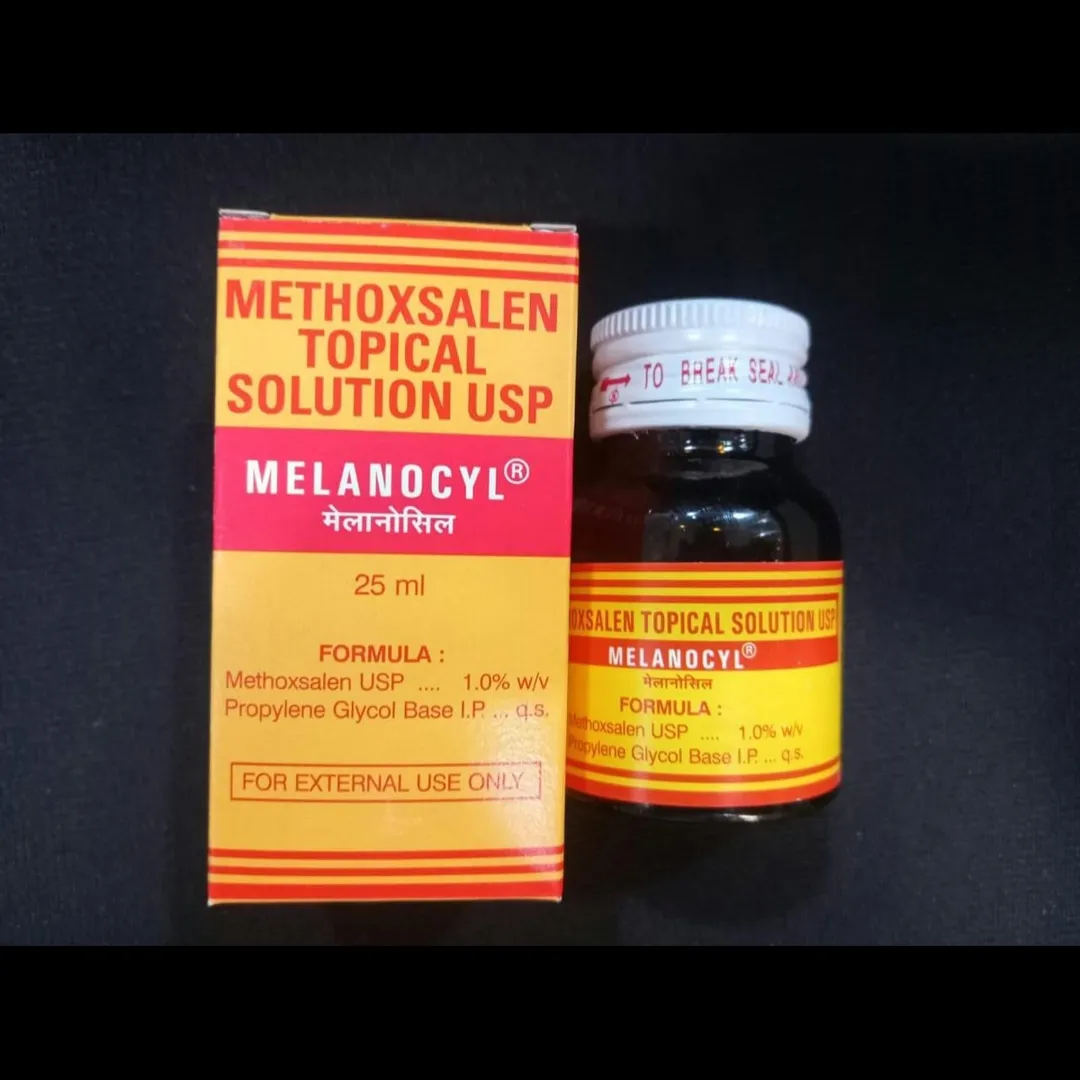
Melanocyl Solution is a topical dermatological medicine containing Methoxsalen 1% w/v. It belongs to the psoralen group of medicines and is used together with controlled ultraviolet-A (UVA) light therapy in the management of certain skin disorders, particularly vitiligo and psoriasis.
It is intended for external use only and should generally be used under the supervision of a qualified dermatologist because methoxsalen increases the skin's sensitivity to UVA and sunlight.
Phoenix Exim, a pharmaceutical exporter from Nagpur, India, supplies a wide range of pharmaceutical products for international markets including the USA, UK, Australia, Singapore, Canada, South Korea and UAE, subject to applicable import and regulatory requirements.
2. Product Information
| Product | Melanocyl Solution |
|---|---|
| Active Ingredient | Methoxsalen |
| Strength | 1% w/v |
| Dosage Form | Topical Solution |
| Route | External/Topical |
| Therapeutic Category | Psoralen / Dermatological medicine |
| Common Pack | 25 ml |
| Manufacturer/Marketer | Franco-Indian Pharmaceuticals Pvt. Ltd. |
| Main Uses | Vitiligo and psoriasis |
| Storage | Store below 30°C, according to product information |
The commonly listed Melanocyl Solution contains methoxsalen 1% w/v.
3. Uses of Melanocyl Solution
Melanocyl Solution may be prescribed as part of controlled phototherapy for:
- Vitiligo – to assist repigmentation of depigmented areas.
- Psoriasis – as part of PUVA treatment to help control excessive skin-cell growth.
- Certain other dermatological conditions may be treated with methoxsalen-based photochemotherapy under specialist supervision.
It should not be used as a substitute for professional diagnosis or prescribed phototherapy.
4. Benefits of Melanocyl Solution
Potential therapeutic benefits include:
- Helps make affected skin responsive to controlled UVA treatment.
- Can support repigmentation in vitiligo when appropriately combined with phototherapy.
- May help reduce excessive skin-cell proliferation associated with psoriasis.
- Provides a localized topical treatment approach.
- Can be incorporated into dermatologist-supervised PUVA treatment.
The response varies between patients and depends on the underlying condition, treatment schedule and response to UVA therapy.
5. Side Effects
Possible adverse effects can include:
- Skin redness
- Burning or irritation
- Itching
- Dryness
- Increased pigmentation
- Blistering
- Peeling
- Skin tenderness
- Swelling
- Increased sensitivity to sunlight/UVA
Prolonged methoxsalen/PUVA treatment can also contribute to premature skin ageing and is associated with an increased long-term risk of skin cancer, so appropriate medical monitoring is important.
6. Common Side Effects
Commonly reported local reactions include:
- Itching
- Redness
- Burning sensation
- Skin irritation
- Dryness
- Mild swelling
More serious reactions such as significant blistering, peeling, severe burning or pronounced swelling require medical attention.
7. How to Use Melanocyl Solution
Use Melanocyl Solution only according to your dermatologist's instructions.
General guidance includes:
- Clean and dry the affected area before application.
- Apply only to the area and in the quantity directed by your doctor.
- Methoxsalen topical treatment is generally used in conjunction with controlled UVA exposure.
- Do not expose treated skin to uncontrolled sunlight or tanning lamps.
- Wash the treated area after the prescribed UVA exposure when instructed.
- Wash your hands after application unless your hands are the treatment area.
- Avoid contact with the eyes and mucous membranes.
Do not increase the amount or frequency yourself. Excessive exposure to UVA/sunlight can cause severe burns and blistering.
8. How Melanocyl Solution Works
Melanocyl Solution contains methoxsalen, a photosensitizing compound.
After application, methoxsalen makes the treated skin more sensitive to UVA. Under controlled phototherapy, the activated medicine interacts with cellular DNA and affects skin-cell activity. In psoriasis, this can help reduce excessive skin-cell proliferation. In vitiligo, methoxsalen-assisted phototherapy can help stimulate pigment-producing melanocytes and support repigmentation.
9. Safety Advice
- Sun exposure: Avoid unnecessary direct sunlight and tanning beds because methoxsalen can considerably increase photosensitivity.
- Protective clothing: Use appropriate protective clothing and sun protection as directed by your doctor.
- Eyes: Avoid getting the solution in the eyes.
- Skin cancer: Tell your doctor if you have a history of skin cancer or suspicious skin lesions.
- Pregnancy: Inform your doctor if you are pregnant, planning pregnancy or breastfeeding before treatment.
- Children: Use in children only when specifically recommended by a healthcare professional.
- Existing medical conditions: Tell your doctor about liver, kidney, eye or other significant medical conditions.
- Phototherapy: UVA exposure should be carefully controlled by a qualified healthcare professional.
- Storage: Follow the product label for storage conditions; commonly listed product information recommends storage below 30°C.
10. Frequently Asked Questions (FAQs)
Q1. What is Melanocyl Solution used for?
Melanocyl Solution is used with controlled UVA/PUVA therapy for skin conditions including vitiligo and psoriasis.
Q2. What is the active ingredient in Melanocyl Solution?
It contains Methoxsalen 1% w/v.
Q3. Can Melanocyl Solution be used without UVA therapy?
It is generally intended to be used as part of a medically supervised phototherapy regimen. Follow your dermatologist's instructions.
Q4. Can Melanocyl Solution cause sun sensitivity?
Yes. Methoxsalen can significantly increase sensitivity to sunlight and UVA, increasing the risk of burns.
Q5. Can Melanocyl Solution be used for vitiligo?
Yes. Methoxsalen-containing topical preparations may be used with controlled UVA therapy to assist repigmentation in vitiligo.
Q6. Can it be used for psoriasis?
Yes, methoxsalen can be used with UVA as part of PUVA treatment for psoriasis under medical supervision.
Q7. What should I do if I experience severe burning or blisters?
Stop further exposure and contact your healthcare professional promptly, particularly if the reaction is severe.
Q8. Is Melanocyl Solution for external use?
Yes. It is a topical solution and should not be swallowed.
11. Substitutes for Melanocyl Solution
Potential alternatives depend on the condition being treated, strength, formulation and phototherapy plan. Methoxsalen is available in other formulations, including other topical preparations and oral formulations, but these should not be considered automatically interchangeable with Melanocyl Solution.
For example, Melanocyl Ointment is a different formulation containing methoxsalen 0.75% w/w plus aminobenzoic acid 2%, so it should not be substituted dose-for-dose for the 1% solution.
A dermatologist or pharmacist should select an appropriate substitute based on the patient's diagnosis and treatment plan.
12. SEO Keywords
Primary keywords:
- Melanocyl Solution
- Melanocyl Solution 1%
- Melanocyl 1% Solution
- Methoxsalen Solution
- Methoxsalen 1% Solution
- Melanocyl Solution supplier
- Melanocyl Solution exporter
- Melanocyl Solution pharmaceutical exporter
- Melanocyl Solution from India
- Melanocyl Solution manufacturer India
Long-tail B2B/SEO keywords:
- Buy Melanocyl Solution from India
- Melanocyl Solution pharmaceutical exporter from Nagpur
- Melanocyl Solution supplier from India
- Methoxsalen 1% Solution exporter India
- Melanocyl Solution wholesale supplier India
- Melanocyl Solution bulk pharmaceutical supplier
- Melanocyl Solution international pharma exporter
- Melanocyl Solution export supplier Nagpur India
- Melanocyl Solution supplier for USA
- Melanocyl Solution supplier for UK
- Melanocyl Solution supplier for Australia
- Melanocyl Solution supplier for Canada
- Melanocyl Solution supplier for Singapore
- Melanocyl Solution supplier for South Korea
- Melanocyl Solution supplier for UAE
Keywords