Hydroquinone 3% Cream for Melasma, Dark Spots & Hyperpigmentation | Phoenix Exim – Pharmaceutical Exporter from Nagpur, India
✦ Heading Information
Hyde 3% Cream – Hydroquinone 3% for Melasma, Dark Spots & Hyperpigmentation | Pharmaceutical Exporter from Nagpur, India to USA, UK, Australia, Singapore, Canada, South Korea & UAE
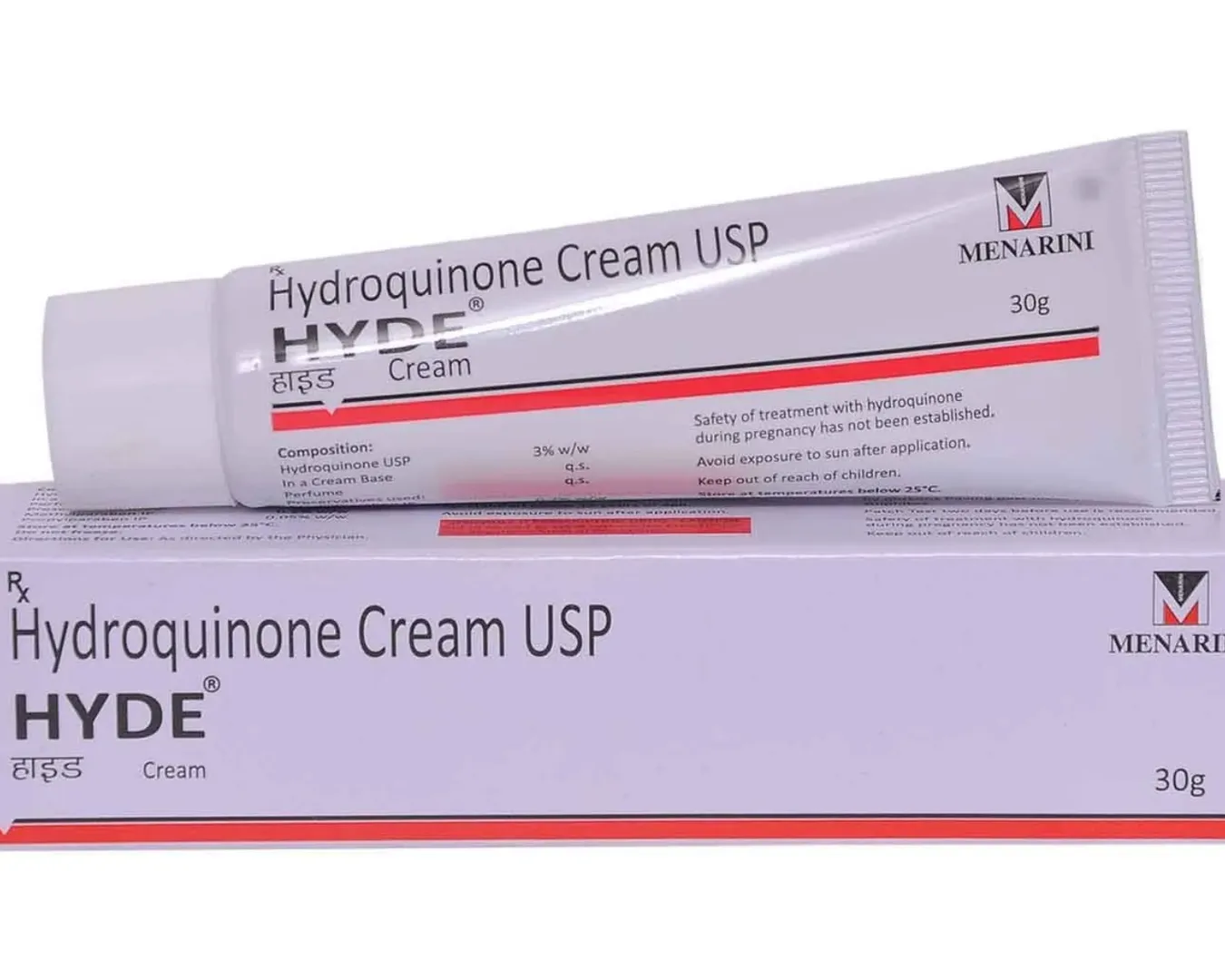
Hyde 3% Cream contains Hydroquinone 3% w/w, a topical depigmenting medicine used to gradually reduce excessive skin pigmentation, including melasma and certain dark spots.
Phoenix Exim, based in Nagpur, India, supplies pharmaceutical and dermatological products for international B2B requirements, subject to applicable prescription, import, registration, labeling, and regulatory requirements in destination markets.
💎 Product Information
Hyde 3% Cream is a topical dermatological formulation containing Hydroquinone 3% w/w.
Product Highlights
Brand: Hyde
Active Ingredient: Hydroquinone
Strength: 3% w/w
Dosage Form: Cream
Common Pack Size: 30 g
Therapeutic Category: Dermatology / Depigmenting Agent
Route: Topical / External Use
Primary Application: Melasma and hyperpigmentation
Manufacturer: A. Menarini India Pvt. Ltd.
Country of Origin: India
Supply Base: Nagpur, Maharashtra, India
🎯 Uses of Hyde 3% Cream
Hyde 3% Cream is primarily used for hyperpigmented skin conditions.
• Melasma
It may be prescribed to help lighten the dark, uneven patches associated with melasma.
• Dark Spots
Hydroquinone can help reduce the appearance of certain localized areas of excess pigmentation.
• Freckles
It may be used under professional guidance for selected pigmentation concerns such as freckles.
• Post-Inflammatory Hyperpigmentation
A dermatologist may recommend hydroquinone for certain dark marks that develop after inflammation, acne, or skin injury.
• Other Hyperpigmentation
It may be used for selected forms of excessive pigmentation associated with sun exposure, hormonal changes, or other causes.
⭐ Benefits of Hyde 3% Cream
When appropriately prescribed and used, Hyde 3% Cream may provide several benefits:
✔ Helps reduce excessive pigmentation
✔ Helps lighten certain dark patches and spots
✔ Supports management of melasma
✔ May improve the appearance of freckles
✔ Helps create a more even-looking skin tone
✔ Reduces melanin production in treated areas
✔ Provides targeted topical depigmenting action
✔ Can be incorporated into a dermatologist-supervised pigmentation-care routine
Individual results vary according to the underlying cause of pigmentation, skin type, treatment duration, and sun exposure.
⚠️ Side Effects of Hyde 3% Cream
Some people may experience local skin irritation, especially when beginning treatment.
Possible side effects include:
Burning or stinging
Redness
Dryness
Itching
Peeling
Skin irritation
Swelling at the application site
Increased sensitivity to sunlight
🔹 Common Side Effects
Potential local reactions include:
Burning • Stinging • Redness • Dryness • Itching • Peeling • Mild Irritation
These reactions may improve as the skin adjusts to treatment. Persistent or worsening irritation should be discussed with a healthcare professional.
📋 How to Use Hyde 3% Cream
Use Hyde 3% Cream according to your dermatologist's or healthcare professional's instructions.
General Application Guidelines
Clean the affected area gently.
Pat the skin completely dry.
Apply a thin layer to the affected pigmented area.
Avoid the eyes, lips, corners of the mouth, nose, and mucous membranes.
Wash your hands after application unless your hands are the treatment area.
Follow the prescribed frequency and duration.
Do not apply excessive amounts in an attempt to obtain faster results.
Use suitable sun protection during treatment.
⚙️ How Does Hyde 3% Cream Work?
Hyde 3% Cream contains Hydroquinone, a topical depigmenting agent.
Hydroquinone works primarily by inhibiting tyrosinase, an enzyme involved in the production of melanin, the pigment responsible for skin coloration.
By reducing melanin production in the treated area, hydroquinone gradually decreases excessive pigmentation and can make dark patches appear lighter.
The depigmenting effect is generally reversible, meaning pigmentation can return after treatment, particularly if the underlying cause remains or with continued UV exposure.
🛡️ Safety Advice
External Use Only
Hyde 3% Cream is intended only for topical application. Do not swallow.
Avoid Eye & Mouth Contact
Do not apply directly to the eyes, mouth, lips, or other mucous membranes. If accidental contact occurs, rinse thoroughly with water.
Sun Protection
Limit excessive sunlight exposure and use appropriate broad-spectrum sunscreen and protective clothing. Sun exposure can worsen melasma and other pigmentation conditions.
Patch Test
A small-area test may help identify sensitivity before regular application. Stop use if excessive itching, swelling, or an allergic reaction develops.
Avoid Damaged Skin
Do not apply to cuts, open wounds, infected areas, or severely irritated skin.
Avoid Harsh Products
Harsh soaps, bleaching products, alcohol-containing preparations, and other irritating skincare products may increase irritation while using hydroquinone.
Treatment Duration
Do not use hydroquinone continuously or indefinitely without medical supervision. Follow the treatment duration recommended by your healthcare professional.
Pregnancy
Consult a qualified healthcare professional before using Hyde 3% Cream during pregnancy.
Breastfeeding
Discuss use with your healthcare professional before treatment while breastfeeding, particularly if applying near the breast.
Children
Current product information does not recommend use in children below 12 years because adequate safety and efficacy information is unavailable.
Unusual Skin Darkening
Stop use and seek medical advice if significant blue-black or unusual darkening of the treated skin develops.
Storage
Store according to the manufacturer's instructions, protected from excessive heat, moisture, and direct sunlight, and keep out of reach of children.
❓ Frequently Asked Questions
Q1. What is Hyde 3% Cream?
Hyde 3% Cream is a topical formulation containing Hydroquinone 3% w/w, primarily used for melasma and certain forms of hyperpigmentation.
Q2. What is Hyde 3% Cream used for?
It may be used to manage melasma, dark patches, freckles, and certain forms of excessive skin pigmentation.
Q3. Does Hyde 3% contain Hydroquinone?
Yes. Hyde 3% Cream contains Hydroquinone 3% w/w.
Q4. Can Hyde 3% help with acne marks?
Hydroquinone does not treat acne itself. However, a dermatologist may recommend it for certain dark marks left after acne.
Q5. Can Hyde 3% Cream cause dryness?
Yes. Dryness, redness, burning, stinging, itching, and peeling may occur, especially when treatment is initially started.
Q6. Does Hyde 3% permanently lighten skin?
No. Hydroquinone produces a reversible reduction in pigmentation, rather than permanent overall skin lightening.
Q7. Is sunscreen necessary while using Hyde 3%?
Yes. Sun exposure can worsen pigmentation and may interfere with treatment. Appropriate sun protection is an important part of managing melasma and hyperpigmentation.
Q8. Can Hyde 3% be used continuously for a long time?
Hydroquinone should not be used continuously for an extended period without medical supervision. Follow your dermatologist's recommended treatment duration.
Q9. Can Hyde 3% be combined with other pigmentation creams?
Some combinations may be prescribed by dermatologists. However, combining several active skincare or prescription products without professional guidance may increase irritation.
Q10. Can Hyde 3% Cream be exported internationally?
International regulations differ by country. Buyers should verify product registration, prescription requirements, import permissions, labeling, documentation, customs requirements, and destination-country regulations before purchasing.
🔄 Substitutes for Hyde 3% Cream
The closest alternatives are products containing Hydroquinone, ideally at the same concentration where an equivalent product is approved and available.
Potential alternatives may include:
Other approved Hydroquinone 3% Creams
Other hydroquinone topical formulations
Dermatologist-recommended treatments for melasma
Other medically appropriate treatments for hyperpigmentation
Some substitute listings may contain different hydroquinone strengths, such as 4%, so they should not automatically be considered dose-equivalent to Hyde 3%. Formulation, excipients, manufacturer, availability, and regulatory status can also differ.
🌍 Phoenix Exim – International Pharmaceutical Supply
Hyde 3% Cream from Nagpur, India
Phoenix Exim is a pharmaceutical exporter based in Nagpur, India, offering pharmaceutical and dermatological products for international B2B requirements.
🌎 Target Export Markets
🇺🇸 USA
🇬🇧 UK
🇦🇺 Australia
🇸🇬 Singapore
🇨🇦 Canada
🇰🇷 South Korea
🇦🇪 UAE
International buyers should verify product availability, import permissions, required documentation, product registration, prescription controls, labeling requirements, customs procedures, and destination-country regulations before purchasing.
🔎 Product Search Keywords
Hyde 3% Cream | Hyde 3% Cream Exporter India | Hydroquinone 3% Cream Supplier | Hydroquinone 3% Cream Exporter | Melasma Cream Supplier India | Hyperpigmentation Cream Exporter | Dark Spot Cream Supplier | Hydroquinone Medicine Supplier India | Dermatology Product Exporter Nagpur | B2B Pharmaceutical Exporter India
Keywords