1. General Information
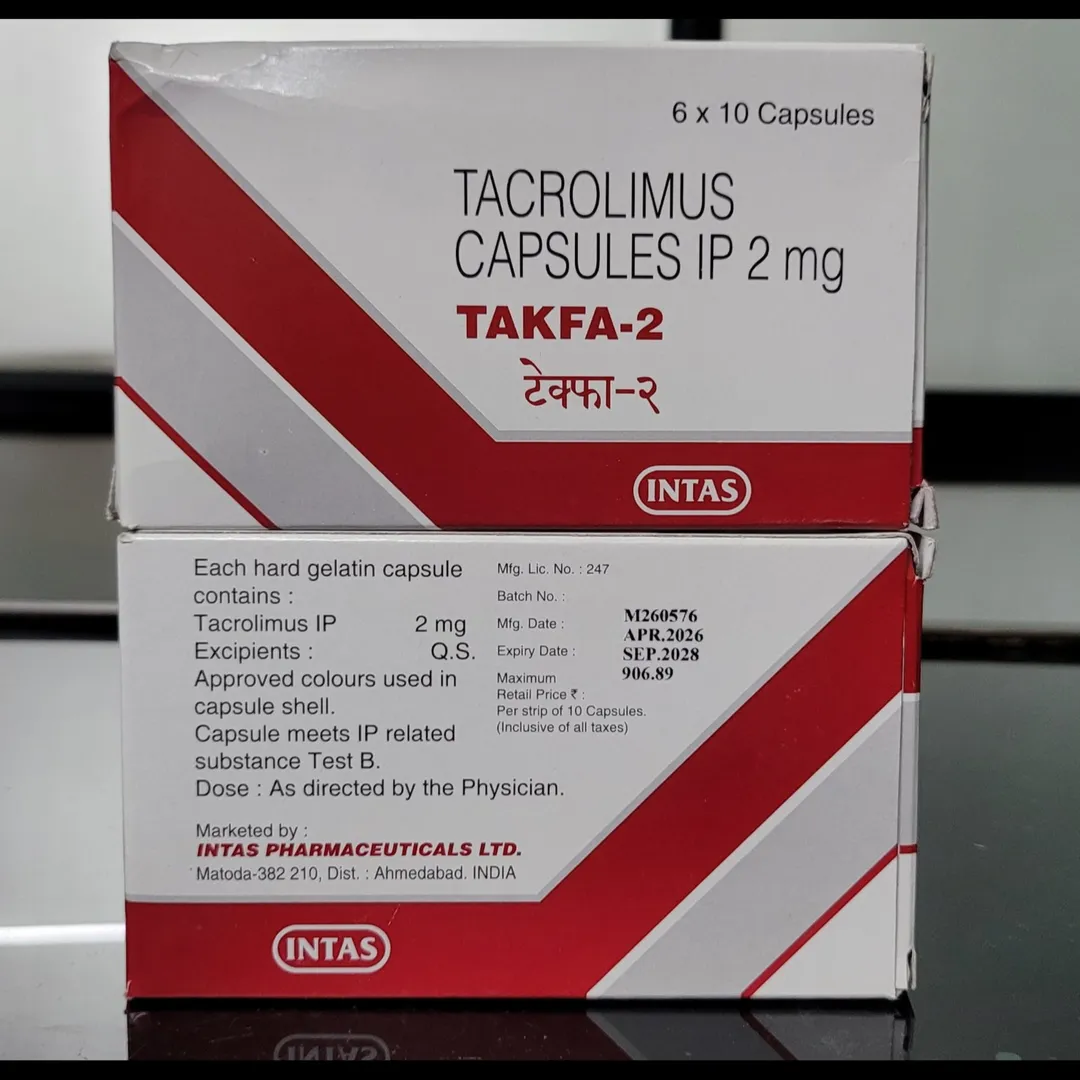
TAKFA 2mg Capsule is an oral immunosuppressant containing Tacrolimus 2 mg. Tacrolimus belongs to the calcineurin-inhibitor class of medicines and reduces excessive immune-system activity. It is mainly prescribed after organ transplantation to reduce the risk of the body rejecting the transplanted organ.
Because tacrolimus has a narrow therapeutic range, treatment generally requires regular medical supervision and appropriate blood-level monitoring. The dose is individualized according to the type of transplant, body weight, other medicines, and clinical response.
2. Product Information
- Brand: TAKFA 2mg Capsule
- Active ingredient: Tacrolimus
- Strength: 2 mg
- Dosage form: Capsule
- Route: Oral
- Drug class: Immunosuppressant / Calcineurin inhibitor
- Manufacturer/Marketer: Intas Pharmaceuticals Ltd.
- Typical pack: 10 capsules per strip
- Prescription status: Prescription medicine
- Storage: Store below 30°C and protect from unsuitable environmental conditions.
3. Uses of TAKFA 2mg Capsules
TAKFA 2mg is primarily used to prevent organ rejection following transplantation. It may be prescribed as part of a combination immunosuppressive regimen after:
- Kidney transplantation
- Liver transplantation
- Heart transplantation
- Certain other transplant situations when specifically prescribed by a transplant specialist
The medicine reduces immune-system activity so that immune cells are less likely to recognize and attack the transplanted organ.
4. Benefits of TAKFA 2mg Capsules
When appropriately prescribed, tacrolimus can:
- Help reduce the risk of transplanted-organ rejection.
- Suppress immune activity responsible for attacking a transplanted organ.
- Support long-term transplant management when used with other prescribed immunosuppressants.
- Help the body tolerate a transplanted organ more effectively.
Important: The benefit depends on maintaining the appropriate tacrolimus exposure. Patients should not change the dose or discontinue treatment without consulting their transplant specialist.
5. Side Effects of TAKFA 2mg Capsules
Because tacrolimus suppresses the immune system and affects several body systems, side effects can occur. Possible adverse effects include:
- Headache
- Nausea
- Diarrhoea
- Constipation
- Increased blood pressure
- Increased blood glucose
- Kidney-related problems
- Tremor or nervous-system symptoms
- Increased susceptibility to infections
- Electrolyte abnormalities
Some side effects may require medical evaluation, particularly symptoms suggesting kidney dysfunction, serious infection, or significant changes in blood pressure or blood glucose.
6. Common Side Effects
Commonly reported effects can include:
- Headache
- Nausea
- Diarrhoea
- Constipation
- Abdominal discomfort
- Tremor
- Insomnia or sleep disturbance
- Increased blood pressure
- Increased blood sugar
Not everyone experiences these effects, and the severity can vary between individuals.
7. How to Use TAKFA 2mg Capsules
- Take TAKFA 2mg exactly as prescribed by your doctor.
- Swallow the capsule whole with water.
- Do not crush, open, or chew the capsule.
- Take it consistently in relation to meals; follow your transplant team's specific instructions.
- Take it at the same times each day whenever possible.
- Do not stop treatment suddenly, even if you feel well.
- If you miss a dose, follow your doctor's instructions rather than taking an extra dose yourself.
The appropriate dose and frequency vary according to the transplant type, individual patient factors, other medicines, and tacrolimus blood concentrations.
8. How TAKFA 2mg Works
TAKFA contains Tacrolimus, which suppresses the activity of certain immune cells, particularly T lymphocytes. This reduces the immune response that could otherwise recognize a transplanted organ as foreign and attack it.
By decreasing this immune response, tacrolimus helps the body accept the transplanted organ and lowers the risk of rejection.
9. Safety Advice for TAKFA 2mg
TAKFA 2mg should be used only under specialist medical supervision.
- Infections: Tacrolimus suppresses the immune system and can increase susceptibility to infections. Report fever, persistent cough, unusual weakness, or other signs of infection promptly.
- Kidney function: Tacrolimus can affect kidney function, so regular monitoring may be required.
- Blood pressure and blood sugar: These may increase during treatment and may require monitoring.
- Blood tests: Your doctor may monitor tacrolimus levels, kidney function, electrolytes, glucose, and other parameters.
- Vaccinations: Tell your doctor before receiving a vaccine because immunosuppression can affect vaccine responses.
- Pregnancy/breastfeeding: Discuss use with your doctor before starting or continuing treatment.
- Drug interactions: Many medicines and certain foods can alter tacrolimus concentrations. Always tell your doctor or pharmacist about all medicines and supplements you use.
- Alcohol: Discuss alcohol use with your doctor because it may worsen certain adverse effects.
- Sun exposure: Long-term immunosuppression can increase the risk of certain skin cancers, so appropriate sun protection is advisable.
10. Frequently Asked Questions (FAQs)
Q1. What is TAKFA 2mg used for?
TAKFA 2mg is primarily used to help prevent rejection of transplanted organs, particularly kidney, liver, or heart transplants.
Q2. What is the active ingredient in TAKFA 2mg?
It contains Tacrolimus 2 mg.
Q3. Is TAKFA 2mg a prescription medicine?
Yes. It is a prescription immunosuppressant and should be used under appropriate medical supervision.
Q4. Can I stop TAKFA 2mg when I feel better?
No. Transplant patients should not stop tacrolimus without instructions from their transplant specialist because interruption can increase the risk of organ rejection.
Q5. Does TAKFA 2mg require regular monitoring?
Yes. Tacrolimus treatment commonly involves monitoring blood concentrations and parameters such as kidney function and electrolytes to help maintain safe and effective treatment.
Q6. Can TAKFA 2mg be taken with other medicines?
It may be used with other transplant medicines, but tacrolimus has numerous potential drug interactions. Tell your doctor about every prescription medicine, OTC medicine, supplement, and herbal product you take.
Q7. Can I change my TAKFA dose myself?
No. The dose should be changed only by the treating specialist based on clinical assessment and, where appropriate, blood-level monitoring.
Q8. How should TAKFA 2mg be stored?
Store it according to the product label, generally below 30°C, and keep it away from excessive heat and moisture.
11. Substitutes for TAKFA 2mg
TAKFA 2mg contains Tacrolimus 2 mg, so potential substitutes are products containing the same active ingredient and strength. Examples of tacrolimus capsule brands may include Tacrograf, Prograf, and other locally approved tacrolimus 2mg products, depending on the country and market.
However, do not switch between tacrolimus products without medical advice. Tacrolimus formulations can have different pharmacokinetic characteristics, and switching may require clinical and blood-level monitoring. A doctor or transplant pharmacist should select the appropriate alternative.
12. SEO Keywords
- TAKFA 2mg Capsules
- TAKFA 2mg Capsule exporter from India
- TAKFA 2mg Capsules exporter Nagpur
- Tacrolimus 2mg Capsules supplier India
- Tacrolimus 2mg Capsule exporter
- Tacrolimus 2mg medicine supplier
- TAKFA 2mg pharmaceutical exporter
- TAKFA 2mg international supplier
- Buy TAKFA 2mg Capsules from India
- TAKFA 2mg Capsules for transplant patients
- Tacrolimus 2mg immunosuppressant
- Tacrolimus capsules supplier from India
- TAKFA 2mg export to USA
- TAKFA 2mg export to UK
- TAKFA 2mg export to Australia
- TAKFA 2mg export to Singapore
- TAKFA 2mg export to Canada
- TAKFA 2mg export to South Korea
- TAKFA 2mg export to UAE
- Genuine TAKFA 2mg Capsules supplier
- Intas Tacrolimus 2mg Capsules
- Tacrolimus 2mg transplant medicine
- Tacrolimus 2mg organ rejection medicine
- Pharmaceutical exporter from Nagpur India
- Medicine exporter from India to worldwide markets
Keywords