1. General Information
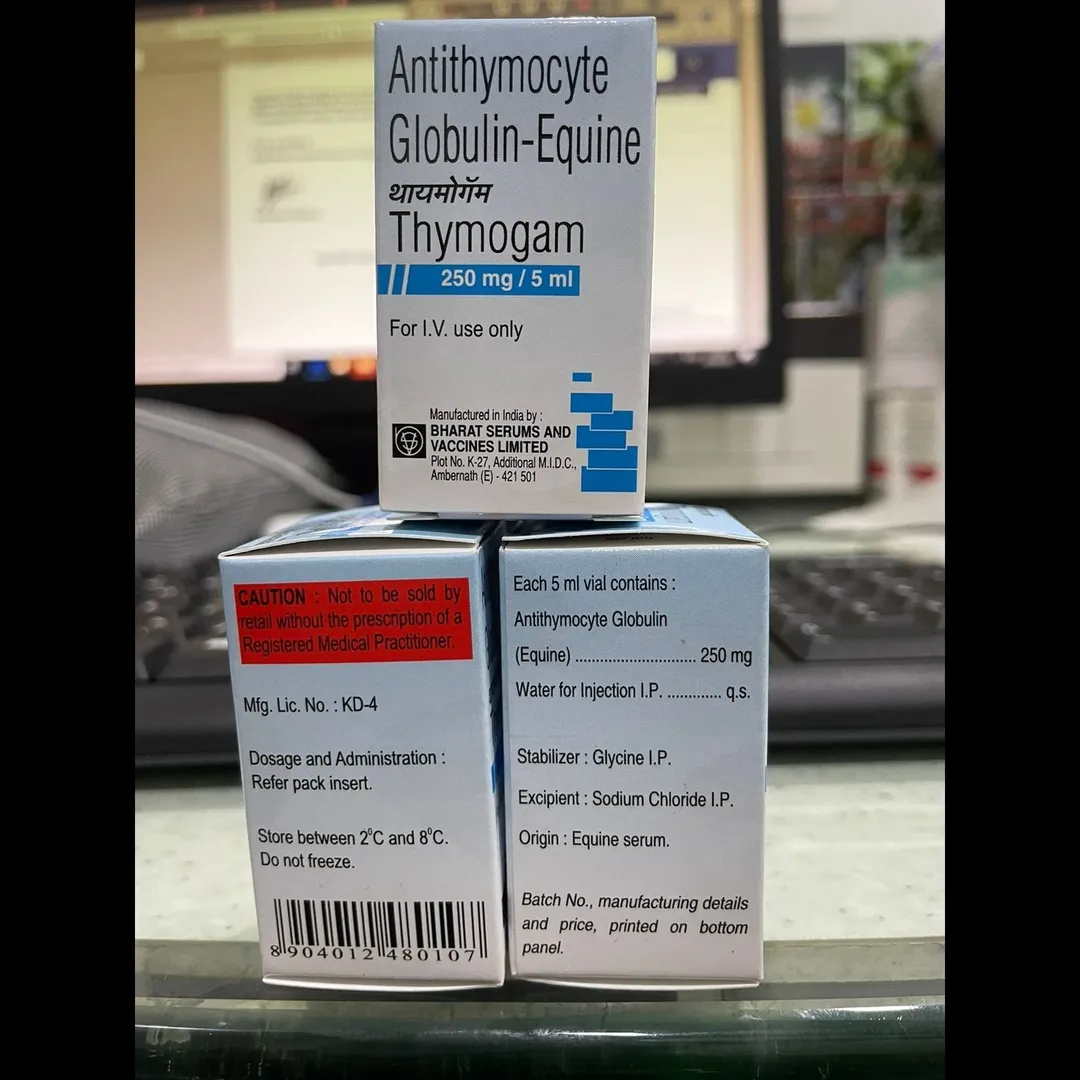
Thymogam 250 mg Injection belongs to the immunosuppressant/antithymocyte immunoglobulin group. It is used to suppress specific immune responses, particularly when the immune system could attack a transplanted organ.
Antithymocyte globulin preparations work primarily by reducing circulating T-lymphocytes, which are important cells involved in immune-mediated transplant rejection.
2. Product Information
| Product | Thymogam 250 mg Injection |
|---|---|
| Active ingredient | Antithymocyte immunoglobulins |
| Strength | 250 mg |
| Dosage form | Injection |
| Therapeutic class | Immunosuppressant |
| Main medical area | Organ transplantation |
| Route | Intravenous administration under medical supervision |
| Prescription | Prescription-only medicine |
| Storage | Refrigerated, generally 2–8°C; do not freeze |
The Indian product listing specifies refrigeration at 2–8°C and states that the product is prescription-only.
3. Uses of Thymogam 250 mg Injection
Thymogam may be used in specialist transplant settings for:
- Prevention of organ rejection following transplantation
- Reduction of immune-system activity during transplant induction therapy
- Management of certain episodes of acute transplant rejection, depending on the clinical protocol
Antithymocyte globulin (rabbit) products are specifically used for prophylaxis and treatment of acute rejection in kidney-transplant patients in conjunction with other immunosuppressive medicines.
4. Benefits of Thymogam 250 mg Injection
Potential clinical benefits include:
- Helps suppress excessive T-cell-mediated immune activity.
- Helps reduce the risk of immune-mediated transplant rejection.
- Can be used as part of induction immunosuppression following transplantation.
- May be used by transplant specialists when treatment of acute rejection is required.
- Allows transplant teams to use a targeted immunosuppressive approach as part of a broader treatment regimen.
The benefit depends on the patient's transplant type, immune risk and accompanying immunosuppressive therapy.
5. Side Effects of Thymogam
Because antithymocyte globulin strongly suppresses immune activity, it can cause significant adverse reactions.
Possible adverse effects include:
- Infusion-related reactions
- Fever and chills
- Headache
- Nausea
- Shortness of breath
- Abdominal discomfort
- Low white blood-cell counts
- Low platelet counts
- Increased susceptibility to infections
- Allergic or hypersensitivity reactions
Serious hypersensitivity and anaphylactic reactions are recognized risks with antithymocyte globulin products.
6. Common Side Effects
Some commonly reported reactions with antithymocyte globulin treatment include:
- Fever
- Chills
- Headache
- Nausea
- Abdominal pain
- Fatigue
- Changes in blood pressure
- Reduced white blood-cell count
- Reduced platelet count
- Increased risk of infections
The frequency and severity can vary considerably between patients. Blood counts and the patient's clinical condition are generally monitored during treatment.
7. How to Use Thymogam 250 mg Injection
Thymogam should not be self-administered.
It is given by intravenous infusion by trained healthcare professionals, generally in a hospital or specialist transplant setting.
The dose is calculated according to factors such as:
- Patient's body weight
- Type of transplant
- Whether it is being used for induction or rejection treatment
- Blood-cell counts
- Overall clinical condition
- Other immunosuppressive medicines being used
For example, the U.S. prescribing information for the 25-mg/vial rabbit ATG product uses weight-based dosing and specifies prolonged infusion times; these details should not be transferred directly to Thymogam 250 mg without checking its own approved product information and the treating specialist's protocol.
8. How Thymogam Works
Thymogam contains antithymocyte immunoglobulins, which target immune cells involved in transplant rejection.
The antibodies bind to lymphocyte-related targets and promote depletion/suppression of T lymphocytes. By reducing these immune cells, the medicine decreases the immune response against a transplanted organ.
In simple terms:
Thymogam → suppresses T-cell activity → reduces immune attack → helps protect the transplanted organ.
9. Safety Advice
- Use only under the supervision of a transplant physician or other qualified specialist.
- Inform the doctor about previous allergies, particularly reactions to immunoglobulin/antithymocyte preparations.
- Tell the healthcare team about any active infection before treatment.
- Blood counts should be monitored during therapy.
- Report breathing difficulty, severe rash, swelling, sudden low blood pressure or other signs of a serious allergic reaction immediately.
- Because the medicine suppresses immunity, infection monitoring is important.
- Vaccination decisions should be discussed with the treating physician; live vaccines may be inappropriate following significant immunosuppression.
- Keep the product within its recommended cold chain. The Indian listing specifies 2–8°C and do not freeze.
10. FAQs
Q1. What is Thymogam 250 mg Injection used for?
It is an antithymocyte immunoglobulin used as an immunosuppressive treatment, primarily in transplant medicine to help prevent or manage organ rejection.
Q2. Is Thymogam an antibiotic?
No. It is an immunosuppressive biological medicine, not an antibiotic.
Q3. Can Thymogam be taken at home?
No. It is an injectable prescription medicine that requires administration and monitoring by qualified healthcare professionals.
Q4. Does Thymogam suppress the immune system?
Yes. Its therapeutic action involves reducing specific immune-cell activity, particularly T lymphocytes.
Q5. Does Thymogam require refrigeration?
Yes. The Indian product listing states that it should be stored at 2–8°C and should not be frozen.
Q6. Can Thymogam cause low blood counts?
Yes. Antithymocyte globulin therapy can cause leukopenia and thrombocytopenia, so blood counts may need monitoring.
Q7. Can Thymogam cause allergic reactions?
Yes. Hypersensitivity and serious infusion-related reactions, including anaphylaxis, are recognized risks with antithymocyte globulin.
11. Substitute for Thymogam 250 mg Injection
Possible therapeutic alternatives depend on the indication and transplant protocol. Examples of antithymocyte globulin products include:
- Thymoglobulin / anti-thymocyte globulin (rabbit)
- Other locally approved antithymocyte globulin preparations
However, these products are not automatically interchangeable because formulations, concentrations, indications and dosing protocols can differ. A transplant specialist or pharmacist should select the appropriate alternative. The FDA-approved Thymoglobulin product, for example, is a rabbit anti-thymocyte globulin supplied as a 25-mg vial.
12. SEO & B2B Keywords
For Phoenix Exim – Nagpur, India, suitable informational/B2B keywords include:
- Thymogam 250 mg Injection supplier India
- Thymogam 250 mg Injection exporter from India
- Thymogam 250 mg Injection pharmaceutical exporter
- Thymogam 250 mg Injection supplier in Nagpur
- Thymogam 250 mg Injection wholesale supplier
- Thymogam 250 mg Injection for transplant medicine
- Thymogam antithymocyte immunoglobulin supplier
- Antithymocyte immunoglobulin 250 mg Injection exporter
- Thymogam 250 mg Injection international supplier
- Thymogam Injection export from India
- Thymogam 250 mg Injection supplier USA
- Thymogam 250 mg Injection supplier UK
- Thymogam 250 mg Injection supplier Australia
- Thymogam 250 mg Injection supplier Canada
- Thymogam 250 mg Injection supplier Singapore
- Thymogam 250 mg Injection supplier South Korea
- Thymogam 250 mg Injection supplier UAE
- Antithymocyte globulin pharmaceutical exporter India
- Transplant immunosuppressant medicine exporter
- Organ transplant medicines supplier India
- Immunosuppressive injection exporter India
- Thymogam injection bulk supplier
- Thymogam injection international pharmaceutical supply
- Thymogam 250 mg wholesale pharmaceutical supplier
- Phoenix Exim Thymogam supplier Nagpur India
Keywords