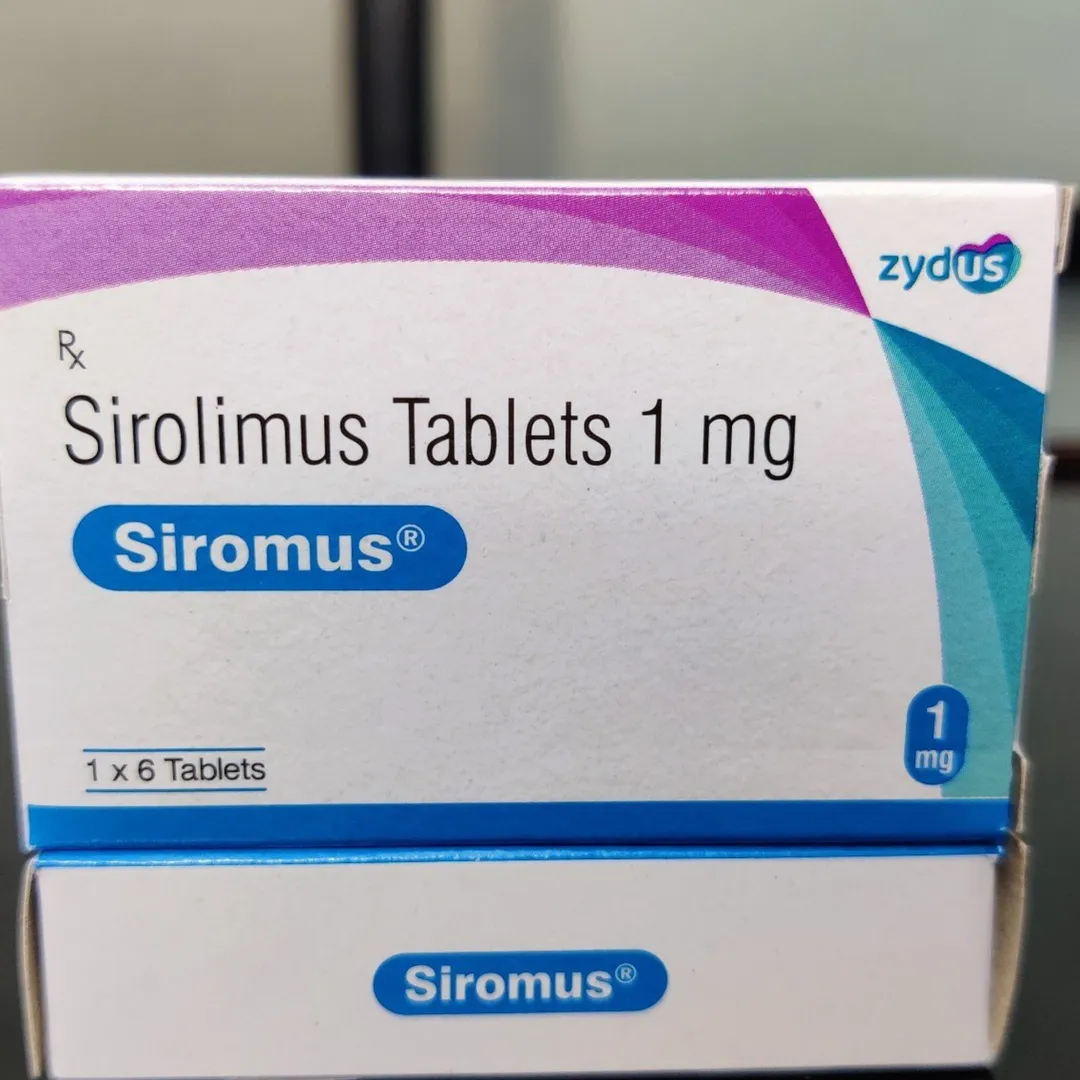
SIROMUS 1 MG contains sirolimus 1 mg, an immunosuppressant medicine that reduces immune-system activity. It is commonly used after certain organ transplants to help prevent the body's immune system from rejecting the transplanted organ. Sirolimus works by inhibiting the mTOR pathway, thereby reducing the activation and proliferation of certain immune cells. It may also be prescribed for selected medical conditions under specialist supervision. SIROMUS 1 MG requires careful dosing and regular monitoring because sirolimus has a narrow therapeutic range and can interact with several medicines. Blood levels may be monitored to help maintain the appropriate concentration. Patients should take it exactly as prescribed and should not stop treatment without medical advice. Possible adverse effects can include increased susceptibility to infections, mouth ulcers, changes in blood counts, and changes in cholesterol or triglyceride levels.
Uses of SIROMUS 1 MG
- Helps prevent organ rejection after transplantation
- Suppresses excessive immune-system activity
- Used as part of selected immunosuppressive treatment regimens
- May be prescribed for certain specialist-managed conditions
- Supports long-term transplant management under medical supervision
20 Frequently Asked Questions
1. What is SIROMUS 1 MG?
SIROMUS 1 MG is an immunosuppressant containing 1 mg of sirolimus.
2. What is SIROMUS 1 MG used for?
It is commonly used to help prevent organ rejection following certain organ transplants.
3. How does SIROMUS work?
Sirolimus inhibits the mTOR pathway, reducing the activation and proliferation of certain immune cells.
4. Is SIROMUS a transplant medicine?
Yes. Sirolimus is used as part of immunosuppressive therapy in selected transplant patients.
5. Can SIROMUS be used alone after transplantation?
The immunosuppressive regimen varies by patient. It should be used only according to the transplant specialist's treatment plan.
6. Should SIROMUS 1 MG be taken at the same time every day?
Taking it consistently at the prescribed time helps maintain stable drug levels. Follow your healthcare professional's instructions.
7. Can SIROMUS be stopped suddenly?
No. Stopping sirolimus without medical supervision may increase the risk of transplant rejection.
8. Does SIROMUS require blood tests?
Yes. Healthcare professionals may monitor sirolimus blood concentrations, blood counts, kidney function, and lipid levels.
9. What are common side effects of SIROMUS?
Possible adverse effects include mouth ulcers, headache, diarrhea, increased cholesterol or triglycerides, and changes in blood-cell counts.
10. Can SIROMUS increase infection risk?
Yes. Because it suppresses immune function, it can increase susceptibility to infections.
11. Can SIROMUS affect cholesterol?
Sirolimus can increase cholesterol and triglyceride levels in some patients, so lipid monitoring may be required.
12. Can SIROMUS affect wound healing?
Sirolimus may impair or delay wound healing in some patients. Inform your healthcare professional about planned surgery.
13. Can SIROMUS interact with other medicines?
Yes. Sirolimus has clinically important drug interactions. Tell your healthcare professional about all medicines, supplements, and herbal products you use.
14. Can grapefruit or grapefruit juice be taken with SIROMUS?
Grapefruit and grapefruit juice can affect sirolimus levels and are generally advised to be avoided unless specifically approved by the treating specialist.
15. Can SIROMUS be used during pregnancy?
Sirolimus may pose risks during pregnancy. Anyone who is pregnant, planning pregnancy, or breastfeeding should discuss its use with a healthcare professional.
16. Can children take SIROMUS 1 MG?
Pediatric use depends on the specific transplant situation and specialist assessment.
17. What should I do if I miss a SIROMUS dose?
Follow the missed-dose instructions provided by your transplant team or healthcare professional. Do not take extra doses unless instructed.
18. Can SIROMUS cause mouth ulcers?
Yes. Mouth ulcers are a recognized adverse effect of sirolimus.
19. Can SIROMUS affect blood counts?
Yes. It may cause changes in blood-cell counts, which is why regular laboratory monitoring may be required.
20. What should I do if I develop signs of infection while taking SIROMUS?
Contact your healthcare professional promptly if you develop fever, persistent cough, unusual weakness, or other signs of infection.
SEO Keywords
- SIROMUS 1 MG supplier from India
- Sirolimus 1 mg tablets exporter India
- SIROMUS immunosuppressant wholesale supplier
- Sirolimus 1 mg transplant medicine exporter
- SIROMUS 1 MG supplier USA
- Sirolimus tablets supplier UK
- SIROMUS 1 MG wholesale Canada
- Sirolimus transplant medicine Australia
- SIROMUS tablets supplier Singapore
- Sirolimus 1 mg exporter South Korea
- SIROMUS 1 MG supplier Japan
- Sirolimus immunosuppressive tablets supplier
- SIROMUS transplant medicine wholesale India
- Sirolimus 1 mg pharmaceutical exporter
- SIROMUS tablets export from India
- Sirolimus medicine international supplier
Keywords