1. General Information
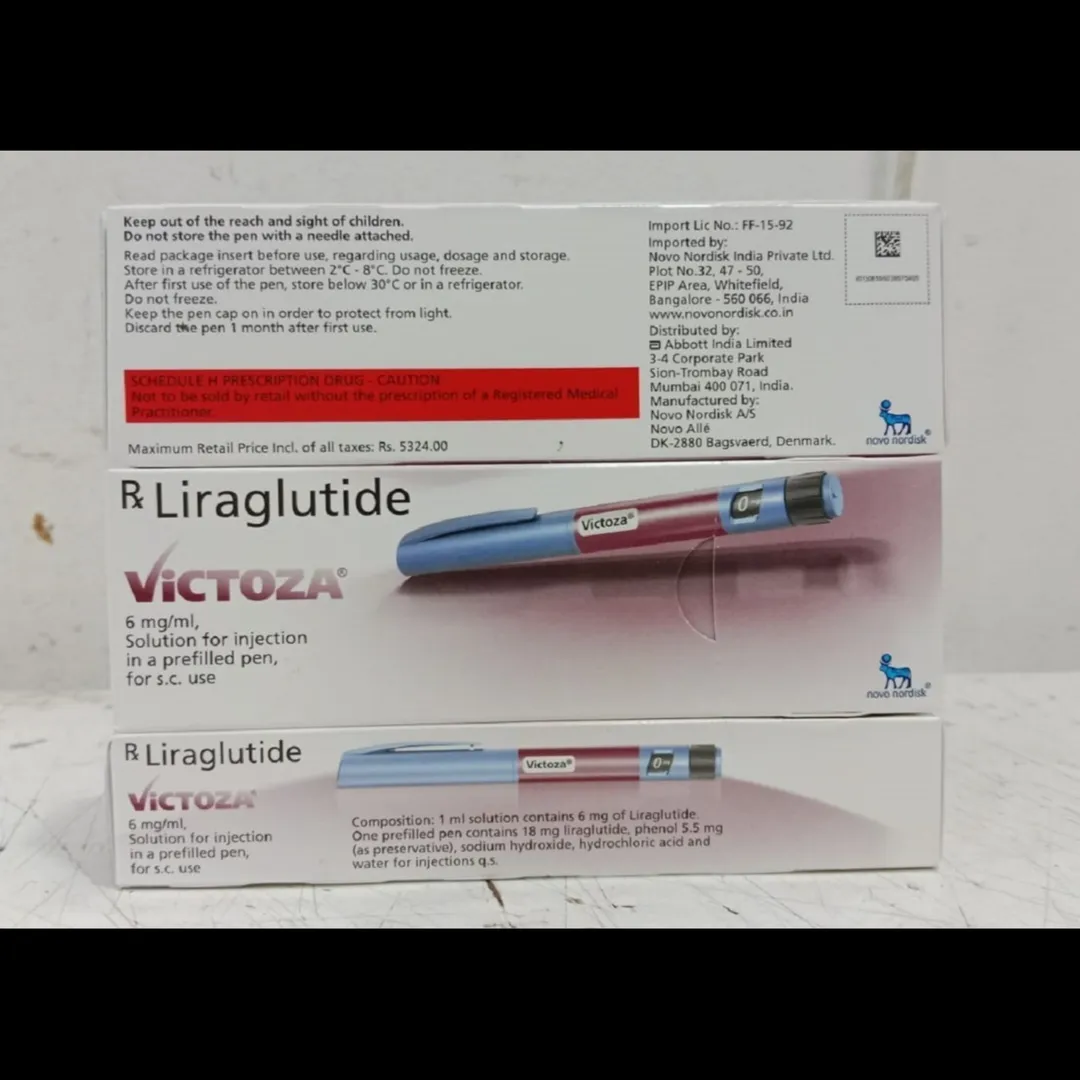
Victoza is a prescription medicine containing liraglutide 6 mg/ml. Liraglutide is a GLP-1 receptor agonist that helps regulate blood glucose by enhancing glucose-dependent insulin secretion and reducing inappropriate glucagon secretion. Victoza is used in patients with type 2 diabetes as an addition to diet and exercise.
2. Product Information
Brand: Victoza
Active ingredient: Liraglutide
Strength: 6 mg/ml
Dosage form: Solution for subcutaneous injection
Presentation: Pre-filled injection pen
Amount per pen: 18 mg liraglutide in 3 ml
Therapeutic class: GLP-1 receptor agonist
Primary therapeutic area: Type 2 diabetes mellitus
Route: Subcutaneous injection
The pen can deliver prescribed doses of 0.6 mg, 1.2 mg, or 1.8 mg.
3. Uses of Victoza
Victoza is used:
To improve blood-glucose control in adults with type 2 diabetes.
In children and adolescents aged 10 years and older with type 2 diabetes, according to applicable prescribing information.
Together with appropriate diet and physical activity.
Alone when metformin is inappropriate because of intolerance or contraindications.
In combination with other diabetes medicines when prescribed by a healthcare professional.
In the U.S., for adults with type 2 diabetes and established cardiovascular disease, it is also indicated to reduce the risk of major adverse cardiovascular events.
Victoza is not indicated for treating type 1 diabetes.
4. Benefits of This Medicine
When appropriately prescribed, Victoza may:
Help improve glycemic control.
Support better management of blood glucose together with diet and exercise.
Provide once-daily administration.
Be used alone or alongside selected diabetes treatments.
Provide cardiovascular risk reduction in the specific U.S.-approved population of adults with type 2 diabetes and established cardiovascular disease.
Individual response varies, and treatment should be monitored by a healthcare professional.
5. Side Effects of Victoza
Like other medicines, Victoza can cause side effects. Gastrointestinal reactions are particularly common when treatment is started or the dose is increased.
Potential adverse effects include:
Nausea
Diarrhea
Vomiting
Decreased appetite
Constipation
Indigestion/dyspepsia
Abdominal discomfort
More serious reactions can include pancreatitis, gallbladder problems, dehydration-related kidney problems, hypoglycemia when used with certain glucose-lowering medicines, and serious hypersensitivity reactions.
6. Common Side Effects
The commonly reported side effects include:
Nausea
Diarrhea
Vomiting
Reduced appetite
Constipation
Dyspepsia/indigestion
Nausea and diarrhea are among the most common reactions and may improve as the body becomes accustomed to treatment.
Seek urgent medical attention for symptoms suggesting a serious allergic reaction, severe abdominal pain that may indicate pancreatitis, or other severe or unusual symptoms.
7. How to Use Victoza
Victoza is administered once daily by subcutaneous injection. It may be injected into the abdomen, thigh, or upper arm and can generally be administered without regard to meals.
For adults, the U.S. prescribing information recommends starting at 0.6 mg once daily for one week, followed by 1.2 mg once daily. If additional glycemic control is needed, the dose may be increased to 1.8 mg once daily after at least one week at 1.2 mg.
The exact dose and titration schedule must be determined by the prescribing healthcare professional. Do not change the dose or injection schedule independently.
8. How Victoza Works
Liraglutide acts similarly to the naturally occurring gut hormone GLP-1. It activates GLP-1 receptors and helps the body release more insulin in response to food when blood glucose is elevated. It also suppresses inappropriate glucagon secretion, contributing to improved blood-glucose regulation.
9. Safety Advice for Victoza
Use Victoza only under medical supervision and according to the prescription.
Do not use it for type 1 diabetes unless specifically directed for another medically appropriate purpose.
Do not use Victoza if you have a personal or family history of medullary thyroid carcinoma (MTC) or Multiple Endocrine Neoplasia syndrome type 2 (MEN 2) under the U.S. labeling.
Tell your healthcare professional about previous pancreatitis, gallbladder disease, kidney problems, or serious allergies.
When used with insulin or sulfonylureas, the risk of hypoglycemia may increase and the doses of those medicines may need adjustment.
Never share a Victoza pen between patients.
Inspect the solution before injection; it should be clear and colorless and should not contain particles.
If Victoza is used with insulin, administer them as separate injections and never mix them in the same injection.
Store and handle the pen according to the product's official storage instructions.
Inform your doctor about all medicines and supplements you are taking.
Important: Victoza is a prescription medicine. The official prescribing information should be followed for contraindications, warnings, dosage, storage, and administration.
10. FAQs
Q1. What is Victoza 6 mg/ml Injection?
Victoza is a liraglutide-containing GLP-1 receptor agonist used with diet and exercise to improve blood-glucose control in type 2 diabetes.
Q2. What is the active ingredient in Victoza?
The active ingredient is liraglutide.
Q3. How often is Victoza taken?
Victoza is generally administered once daily by subcutaneous injection.
Q4. Can Victoza be taken with food?
It can be administered independently of meals.
Q5. Is Victoza used for type 1 diabetes?
No. Victoza is not indicated for treatment of type 1 diabetes.
Q6. Can Victoza cause nausea?
Yes. Nausea is one of the most frequently reported adverse effects, particularly during treatment initiation and dose escalation.
Q7. Can Victoza be used with other diabetes medicines?
It can be prescribed alongside certain diabetes medicines, but combinations should be determined and monitored by a healthcare professional.
Q8. Is Victoza available as a tablet?
Victoza itself is supplied as a solution for injection in a pre-filled pen.
11. Substitutes for Victoza
Possible alternatives depend on the patient's diagnosis, treatment history, cardiovascular status, kidney function, other medicines, and local approvals. Other liraglutide products may contain the same active ingredient, while other GLP-1 receptor agonists are different medicines and are not automatically interchangeable.
Examples of medicines within the broader GLP-1 receptor agonist class include semaglutide and dulaglutide. The appropriate alternative and dose should be selected by a qualified healthcare professional rather than substituted without medical advice.
The EMA also notes that alternatives to Victoza are available in the context of its EU supply situation.
12. SEO Keywords
Victoza 6 mg/ml Injection exporter from India
Victoza 6 mg/ml Injection supplier India
Victoza liraglutide injection exporter
Victoza injection wholesale supplier India
Liraglutide 6 mg/ml injection exporter
Victoza medicine exporter from Nagpur
Victoza pharmaceutical exporter India
Victoza injection supplier from Nagpur India
Buy Victoza 6 mg/ml injection from India
Victoza liraglutide medicine supplier
Victoza injection international supplier
Victoza 6 mg/ml pharma exporter
Liraglutide injection wholesale exporter
Victoza diabetes medicine exporter
Victoza injection supplier USA
Victoza injection supplier UK
Victoza injection supplier Australia
Victoza injection supplier Singapore
Victoza injection supplier Canada
Victoza injection supplier South Korea
Victoza injection supplier UAE
Type 2 diabetes medicine exporter India
GLP-1 receptor agonist supplier India
Liraglutide pharmaceutical supplier
Prescription diabetes injection exporter
Victoza pre-filled pen supplier
Genuine Victoza injection supplier
Victoza 6 mg/ml wholesale pharmaceutical supplier
Nagpur India medicine export company
Phoenix Exim pharmaceutical exporter
Keywords