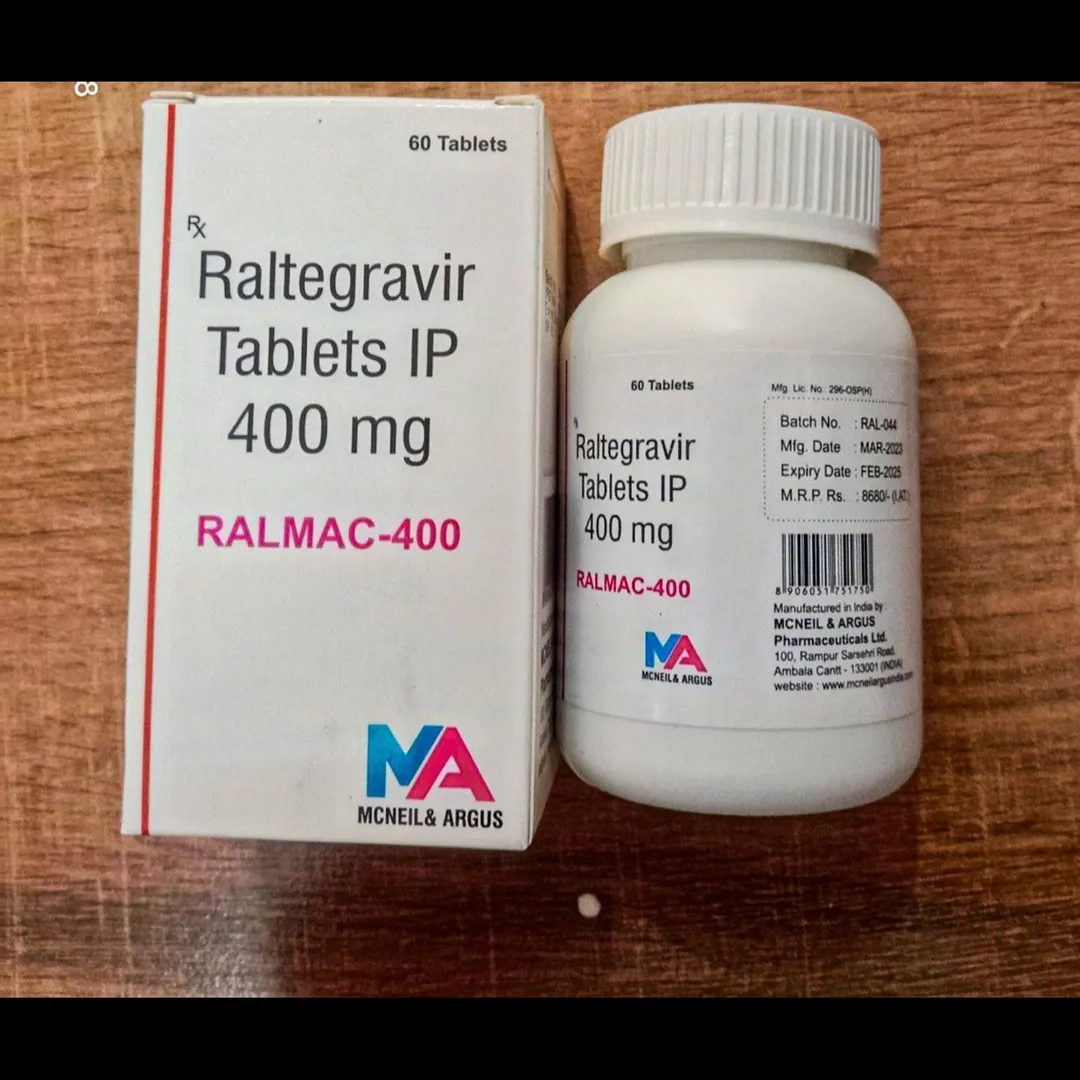
1. General Information
RALMAC 400 mg Tablets are an antiretroviral medicine containing Raltegravir. Raltegravir is used as part of combination antiretroviral therapy for the treatment of HIV-1 infection. It helps reduce the amount of HIV in the blood and supports recovery or maintenance of immune function.
RALMAC does not cure HIV or AIDS. It is intended to control HIV replication and should be taken regularly according to a healthcare professional's prescription.
2. Product Information
- Brand Name: RALMAC 400 mg
- Active Ingredient: Raltegravir
- Strength: 400 mg
- Dosage Form: Tablet
- Therapeutic Class: Antiretroviral / HIV-1 integrase inhibitor
- Common Packaging: 60 tablets per bottle
- Manufacturer/Marketer: McNeil & Argus Pharmaceuticals Ltd. is listed for Ralmac-400 in Indian medicine listings.
- Prescription Status: Prescription medicine.
3. Uses of RALMAC 400 mg
RALMAC 400 mg is primarily used:
- For the treatment and management of HIV-1 infection.
- As part of combination antiretroviral therapy (ART).
- To help reduce HIV viral load.
- To prevent or delay progression of HIV-related disease by maintaining viral suppression and supporting immune function.
It should generally be used with other HIV medicines as prescribed rather than as a standalone treatment.
4. Benefits of RALMAC 400 mg
The potential therapeutic benefits include:
- Reduces HIV replication: Raltegravir interferes with an essential step in the HIV replication cycle.
- Helps lower viral load: Effective antiretroviral treatment can reduce the quantity of HIV in the bloodstream.
- Supports immune function: Controlling HIV can help protect the immune system.
- Helps reduce HIV-related complications: Maintaining viral suppression can reduce the risk of HIV-associated illnesses.
- Useful as part of combination ART: Raltegravir can be combined with other antiretroviral medicines according to an individualized treatment regimen.
5. Side Effects of RALMAC 400 mg
Like other medicines, RALMAC may cause side effects in some patients. Reported or possible adverse effects include:
- Headache
- Nausea
- Dizziness
- Tiredness or fatigue
- Difficulty sleeping
- Stomach discomfort or abdominal pain
- Changes in appetite
Most mild effects may improve as the body adjusts, but persistent or troublesome symptoms should be discussed with a doctor.
6. Common Side Effects
Some commonly reported effects associated with Raltegravir-containing treatment include:
- Nausea
- Headache
- Dizziness
- Fatigue
- Insomnia
- Abdominal/stomach discomfort
Seek prompt medical attention for severe or unusual symptoms, particularly signs of a serious allergic reaction, severe skin reaction, significant muscle symptoms, or serious liver problems.
7. How to Use RALMAC 400 mg
- Take RALMAC exactly as prescribed by your doctor.
- It may generally be taken with or without food.
- Take the medicine at the prescribed times and try to maintain a consistent schedule.
- Swallow the tablet as directed; do not alter the dosage without medical advice.
- Do not stop antiretroviral therapy on your own, even if you feel well.
- If you miss a dose, follow your healthcare professional's instructions rather than taking extra tablets to compensate.
- Some product information advises avoiding aluminum- or magnesium-containing antacids around the time of raltegravir dosing; ask your doctor or pharmacist about the appropriate interval.
8. How RALMAC 400 mg Works
RALMAC contains Raltegravir, an HIV-1 integrase strand transfer inhibitor.
HIV uses an enzyme called integrase to insert its genetic material into the DNA of human cells. Raltegravir blocks this integrase-mediated step, making it harder for HIV to establish and reproduce itself inside cells. This helps decrease HIV replication and lower the viral load when used as part of an appropriate antiretroviral regimen.
9. Safety Advice
- Prescription use: Use RALMAC only under appropriate medical supervision.
- Do not discontinue suddenly: Stopping HIV treatment without medical advice can allow the virus to multiply and may contribute to treatment failure.
- Drug interactions: Tell your doctor about all prescription medicines, OTC medicines, vitamins and supplements you take.
- Antacids: Discuss aluminum- or magnesium-containing antacids with your doctor/pharmacist because they can interfere with raltegravir dosing.
- Allergies: Inform your healthcare professional if you have previously experienced an allergic reaction to raltegravir or any ingredient.
- Pregnancy/breastfeeding: Discuss treatment with your healthcare professional if you are pregnant, planning pregnancy or breastfeeding.
- Liver/kidney problems: Tell your doctor about existing medical conditions so your treatment can be appropriately monitored.
- Regular monitoring: HIV viral load, CD4 count and other laboratory tests may be required as part of ongoing HIV care.
- HIV transmission: Effective treatment can substantially reduce the risk of sexual transmission when viral suppression is maintained, but patients should follow their healthcare professional's advice regarding prevention.
10. FAQs
Q1. What is RALMAC 400 mg used for?
RALMAC 400 mg contains Raltegravir and is used with other antiretroviral medicines to treat HIV-1 infection.
Q2. Does RALMAC cure HIV?
No. RALMAC helps control HIV replication but does not cure HIV or AIDS.
Q3. Can RALMAC be taken alone?
Raltegravir is generally prescribed as part of a combination HIV treatment regimen. Follow the specific regimen prescribed by the HIV specialist.
Q4. Can RALMAC 400 mg be taken with food?
The tablet can generally be taken with or without food, according to product information.
Q5. Can I stop taking RALMAC if I feel better?
No. Do not stop or change your HIV treatment without consulting your doctor.
Q6. What happens if I miss a dose?
Take the missed dose according to your prescribed instructions. Do not double the dose unless your healthcare professional specifically tells you to do so.
Q7. What are common side effects?
Headache, nausea, dizziness, fatigue, insomnia and stomach discomfort can occur.
Q8. What is the active ingredient in RALMAC 400 mg?
The active ingredient is Raltegravir 400 mg.
Q9. Is RALMAC a prescription medicine?
Yes. RALMAC 400 mg is listed as a prescription medicine.
Q10. Is RALMAC the same as Isentress?
Both contain Raltegravir, but brands, manufacturers and formulations can differ. A healthcare professional should confirm whether a particular product is an appropriate replacement.
11. Substitute for RALMAC 400 mg
A commonly listed alternative is Isentress 400 mg, which also contains Raltegravir. Other Raltegravir 400 mg products may also be available.
Important: A substitute should not be selected solely on the basis of the brand name. The active ingredient, strength, dosage form, treatment regimen and patient's clinical circumstances should be checked by a qualified healthcare professional before switching.
12. SEO Keywords
- RALMAC 400 mg Tablets
- RALMAC 400 mg Tablets exporter
- RALMAC 400 mg supplier from India
- RALMAC 400 mg medicine exporter India
- RALMAC 400 mg Raltegravir Tablets
- Raltegravir 400 mg Tablets exporter
- Raltegravir 400 mg supplier India
- Raltegravir 400 mg HIV medicine
- RALMAC 400 mg pharmaceutical exporter
- RALMAC 400 mg wholesale supplier
- RALMAC 400 mg tablets from Nagpur India
- RALMAC 400 mg medicine supplier Nagpur
- HIV medicines exporter from India
- Antiretroviral medicines exporter India
- HIV treatment medicines supplier India
- Raltegravir tablets pharmaceutical supplier
- Raltegravir 400 mg wholesale exporter
- RALMAC 400 mg tablets for international supply
- RALMAC 400 mg exporter to USA
- RALMAC 400 mg exporter to UK
- RALMAC 400 mg exporter to Australia
- RALMAC 400 mg exporter to Singapore
- RALMAC 400 mg exporter to Canada
- RALMAC 400 mg exporter to South Korea
- RALMAC 400 mg exporter to UAE
- Raltegravir 400 mg exporter from Nagpur
- trusted pharmaceutical exporter India
- genuine Raltegravir 400 mg tablets supplier
- prescription HIV medicine exporter India
- antiretroviral tablet exporter from India
Keywords