1. General Information
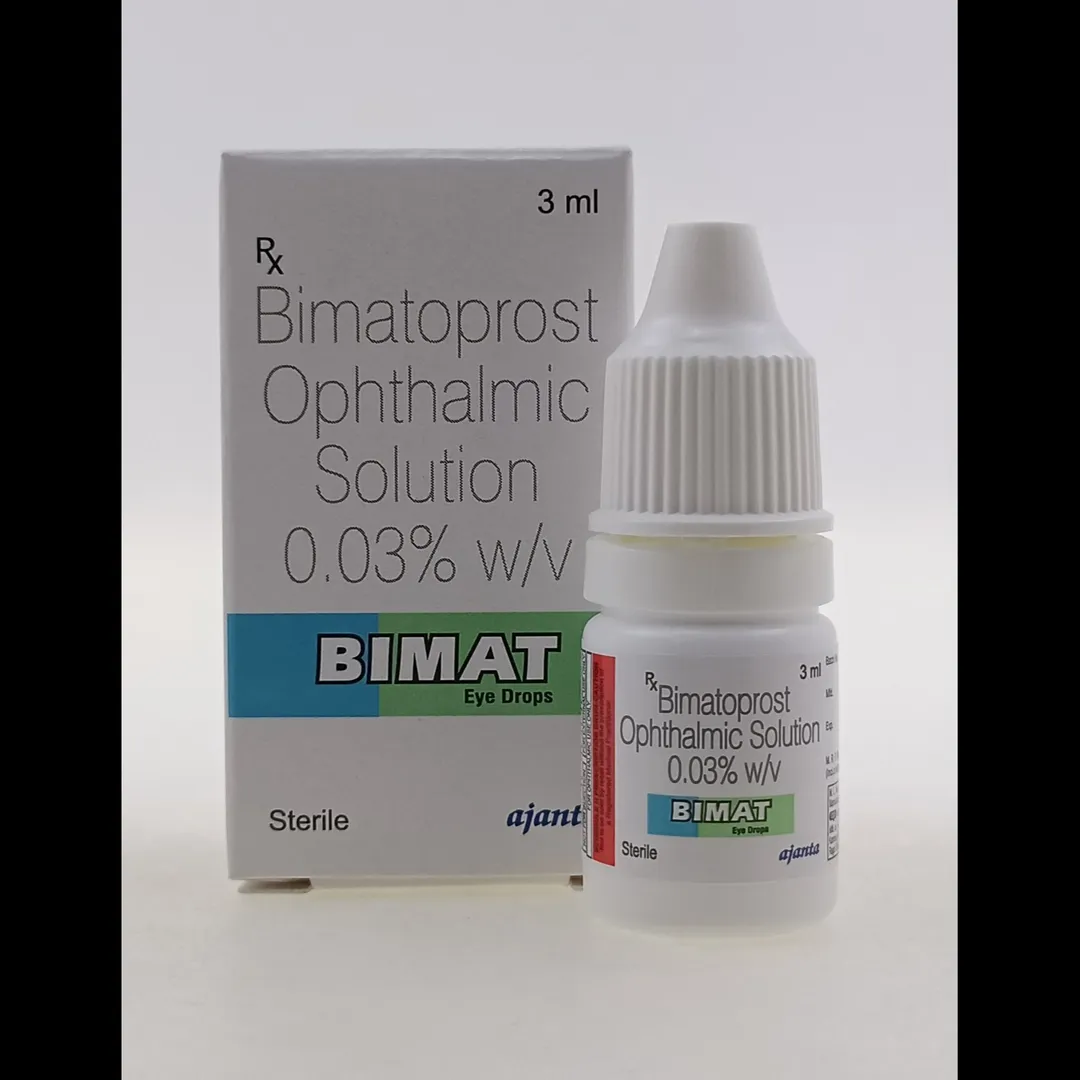
Bimat 0.03% Eye Drops contain bimatoprost 0.03% (0.3 mg/mL). Bimatoprost belongs to a class of medicines known as prostaglandin analogues. It is primarily used to reduce elevated pressure inside the eye in people with open-angle glaucoma or ocular hypertension.
High intraocular pressure can damage the optic nerve and may contribute to progressive vision loss. By lowering intraocular pressure, bimatoprost can help manage pressure-related eye conditions when prescribed by an ophthalmologist.
2. Product Information
Product Name: Bimat 0.03% Eye Drops
Active Ingredient: Bimatoprost
Strength: 0.03% / 0.3 mg/mL
Dosage Form: Ophthalmic solution
Therapeutic Class: Prostaglandin analogue
Route: Ophthalmic
Primary Use: Reduction of elevated intraocular pressure
Prescription Status: Use under medical supervision
Bimatoprost 0.03% ophthalmic solution is available as an eye-drop formulation.
3. Uses of Bimat 0.03% Eye Drops
Bimatoprost 0.03% may be prescribed for:
Open-angle glaucoma
Ocular hypertension
Reduction of elevated intraocular pressure (IOP)
Long-term management of pressure-related eye conditions as directed by an ophthalmologist
The medicine is intended to control elevated eye pressure and should be used according to the prescribed treatment plan.
4. Benefits of This Medicine
When appropriately prescribed, Bimat 0.03% Eye Drops may:
Help reduce elevated intraocular pressure
Support the management of open-angle glaucoma
Help control ocular hypertension
Provide once-daily dosing in the evening for the approved IOP-lowering indication
Help protect the optic nerve from pressure-related damage by controlling intraocular pressure
The recommended IOP-lowering regimen for bimatoprost 0.03% is generally one drop in the affected eye(s) once daily in the evening.
5. Side Effects of This Medicine
Like other ophthalmic medicines, Bimat 0.03% can cause side effects. Possible effects include:
Eye redness
Eye irritation or itching
Changes in eyelash growth
Darkening of the skin around the eyes
Increased pigmentation of the iris
Eye discomfort
Dry-eye symptoms
Temporary blurred vision
Pigmentation changes involving the iris may be permanent, while some eyelash changes may gradually reverse after treatment is discontinued.
6. Common Side Effects
Commonly reported adverse effects can include:
Conjunctival hyperemia (eye redness)
Eye itching
Skin hyperpigmentation
Eyelash changes
Eye irritation
The prescribing information identifies conjunctival hyperemia as a commonly reported adverse reaction.
If severe eye pain, significant vision changes, pronounced swelling, or symptoms suggesting an allergic reaction occur, seek medical attention promptly.
7. How to Use Bimat 0.03% Eye Drops
Use Bimat 0.03% exactly as prescribed by your doctor.
For the IOP-lowering indication, the usual labeled dosage is one drop in the affected eye(s) once daily in the evening. Do not use it more frequently than prescribed because increasing the frequency may reduce its pressure-lowering effect.
General administration steps:
Wash your hands before using the drops.
Remove contact lenses if instructed by your healthcare professional.
Tilt your head back and gently pull down the lower eyelid.
Place the prescribed number of drops into the affected eye without touching the eye or eyelashes with the bottle tip.
Close the eye gently after administration.
Replace the cap securely after use.
If using another ophthalmic medicine, follow your doctor's instructions regarding the interval between products; some topical ophthalmic medicines should be separated by at least 5 minutes.
Do not increase the dose or frequency without medical advice.
8. How Bimat 0.03% Works
Bimatoprost is a prostaglandin analogue. It lowers intraocular pressure primarily by increasing the outflow of aqueous humor from the eye.
After administration, the reduction in intraocular pressure begins within several hours, with the maximum effect occurring approximately 8–12 hours after administration according to prescribing information.
Regular use helps maintain control of intraocular pressure over time.
9. Safety Advice for This Medicine
Use Bimat 0.03% only according to your healthcare professional's instructions.
Do not use it if you have a known hypersensitivity to bimatoprost or any ingredient in the formulation.
Inform your ophthalmologist about all other eye medicines you use.
Tell your doctor if you have a history of eye surgery or other significant eye conditions.
Bimatoprost may cause darkening of the iris, eyelid skin, or eyelashes; iris pigmentation can be permanent.
Do not use more frequently than prescribed.
Keep the bottle clean and avoid touching the dropper tip to the eye or other surfaces.
Keep out of reach of children.
Discuss pregnancy or breastfeeding with your healthcare professional before use.
Pediatric use should follow specialist medical advice; some labeling does not recommend use below 16 years because of safety concerns related to pigmentation with long-term use.
10. Frequently Asked Questions (FAQs)
Q1. What is Bimat 0.03% Eye Drops used for?
Bimat 0.03% contains bimatoprost and is used to reduce elevated intraocular pressure in conditions such as open-angle glaucoma and ocular hypertension.
Q2. How often should Bimat 0.03% be used?
For the IOP-lowering indication, the labeled dosage is generally one drop in the affected eye(s) once daily in the evening. Follow your doctor's specific instructions.
Q3. Can Bimat 0.03% change the color of the eye?
Yes. Bimatoprost can cause increased iris pigmentation, and this change may be permanent.
Q4. Can Bimat 0.03% affect eyelashes?
Yes. Bimatoprost can cause changes in eyelash length, thickness, number, or appearance. These changes are generally reversible after discontinuation for the IOP-lowering formulation.
Q5. Can Bimat 0.03% be used with other eye drops?
It may be used with other ophthalmic medicines when prescribed. If multiple topical eye medicines are being used, your doctor may recommend separating their administration by at least 5 minutes.
Q6. What happens if I use more drops than prescribed?
Do not intentionally use extra doses. If you accidentally use too much or experience concerning symptoms, contact a healthcare professional for advice.
Q7. Can I stop Bimat 0.03% when my eye pressure improves?
Do not stop glaucoma or ocular-hypertension treatment without consulting your ophthalmologist. Eye pressure can rise again when treatment is discontinued.
Q8. Is Bimat 0.03% suitable for everyone?
No. People with allergies to bimatoprost or formulation ingredients should not use it, and people with certain eye conditions or other medical circumstances may require additional monitoring.
11. Substitute for Bimat 0.03% Eye Drops
A direct substitute should contain the same active ingredient and strength—bimatoprost 0.03% ophthalmic solution—and should only be selected with advice from an ophthalmologist or pharmacist.
Other medicines such as latanoprost, travoprost, or tafluprost are also prostaglandin-related glaucoma medicines, but they are not identical substitutes because they contain different active ingredients and may have different dosing, contraindications, and clinical considerations.
Do not switch glaucoma medicines without professional advice.
12. Keywords
Primary Keywords:
Bimat 0.03% Eye Drops
Bimatoprost 0.03% Eye Drops
Bimatoprost Ophthalmic Solution
Bimatoprost 0.03% exporter
Bimatoprost 0.03% supplier
Bimat 0.03% Eye Drops exporter from India
Bimatoprost medicine exporter India
Bimatoprost ophthalmic solution supplier
Bimatoprost glaucoma eye drops
Bimatoprost ocular hypertension treatment
Long-Tail SEO Keywords:
Bimat 0.03% Eye Drops exporter from Nagpur India
Bimatoprost 0.03% Eye Drops pharmaceutical exporter India
Bimatoprost ophthalmic solution wholesale supplier from India
Bimat 0.03% Eye Drops supplier for international markets
Bimatoprost 0.03% medicine exporter from India to USA
Bimatoprost 0.03% Eye Drops exporter to UK
Bimatoprost 0.03% Eye Drops supplier to Australia
Bimatoprost 0.03% pharmaceutical supplier to Canada
Bimatoprost 0.03% Eye Drops exporter to Singapore
Bimatoprost 0.03% medicine supplier to South Korea
Bimatoprost 0.03% Eye Drops exporter to UAE
Bimatoprost ophthalmic solution wholesale exporter from Nagpur
Bimatoprost 0.03% glaucoma medicine supplier India
Bimatoprost 0.03% ocular hypertension medicine exporter
Bimatoprost eye drops pharmaceutical wholesale supplier India
Bimatoprost ophthalmic medicine international exporter
Bimat 0.03% Eye Drops wholesale pharmaceutical supplier
Bimatoprost 0.03% eye pressure medicine exporter
Bimatoprost eye drops bulk pharmaceutical supplier India
Bimatoprost 0.03% ophthalmic solution export supplier
Keywords