1. General Information
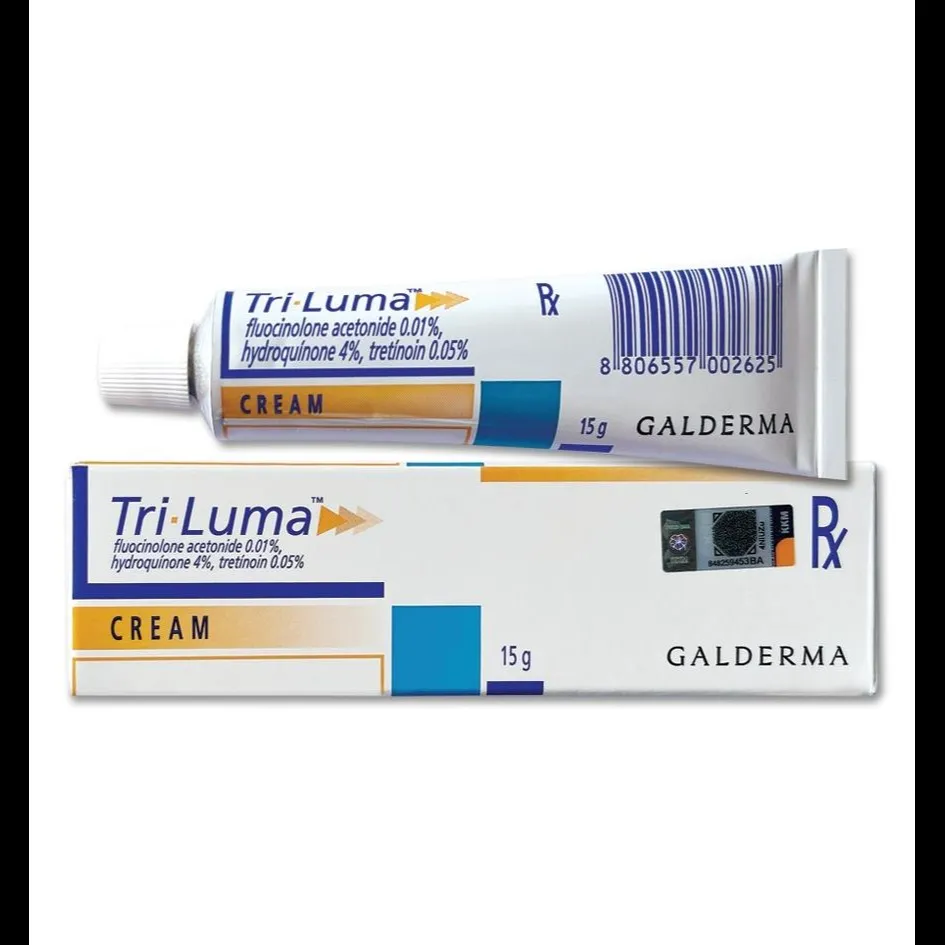
TRILUMA Cream is a prescription topical medicine used for the short-term treatment of moderate-to-severe melasma of the face. It contains a combination of fluocinolone acetonide, hydroquinone, and tretinoin, which work through complementary actions to help reduce the appearance of facial dark patches and uneven pigmentation.
TRILUMA Cream should be used only as directed by a qualified healthcare professional. It is intended for external use on the skin and is generally used alongside appropriate sun-avoidance measures and sunscreen.
2. Product Information
Product: TRILUMA Cream
Dosage Form: Topical cream
Active Ingredients:
- Fluocinolone acetonide – 0.01%
- Hydroquinone – 4%
- Tretinoin – 0.05%
Each gram contains approximately 0.1 mg fluocinolone acetonide, 40 mg hydroquinone, and 0.5 mg tretinoin.
Primary therapeutic use: Facial melasma
Route: Topical/external application
Prescription status: Prescription medicine
3. Uses of TRILUMA Cream
TRILUMA Cream is primarily used for:
- Moderate-to-severe facial melasma
- Dark or brown patches associated with melasma
- Uneven facial pigmentation associated with melasma
The approved U.S. indication is short-term treatment, up to 8 weeks, of moderate-to-severe facial melasma, together with sun-avoidance measures.
It should not be used for other skin conditions unless specifically recommended by a healthcare professional.
4. Benefits of TRILUMA Cream
When appropriately prescribed, TRILUMA Cream may help:
- Reduce the appearance of melasma-related dark patches
- Improve the appearance of uneven facial pigmentation
- Promote skin cell turnover
- Reduce inflammation associated with treatment
- Support a more even-looking skin tone
Its three active ingredients have different actions: hydroquinone helps inhibit melanin production, tretinoin is a retinoid that supports epidermal turnover, and fluocinolone acetonide is a topical corticosteroid that reduces inflammation.
5. Side Effects of TRILUMA Cream
Some people may experience local skin reactions, particularly during the initial stages of treatment. Possible side effects include:
- Skin redness
- Burning or stinging
- Dryness
- Peeling
- Itching
- Irritation
- Increased sensitivity of the skin
- Acne or small bumps
More serious reactions can occur rarely. Hydroquinone has been associated with blue-black skin discoloration (exogenous ochronosis), while prolonged or excessive exposure to the corticosteroid component may cause systemic steroid effects.
Stop using the medicine and seek medical advice if severe burning, blistering, marked swelling, severe irritation, or significant skin changes occur.
6. Common Side Effects
The commonly reported application-site effects include:
- Redness
- Peeling
- Burning
- Dryness
- Itching
- Skin irritation
These effects may be more noticeable when treatment is first started. If irritation becomes severe or persistent, consult the prescribing healthcare professional.
7. How to Use TRILUMA Cream
Use TRILUMA Cream exactly as prescribed.
Typical labeled directions:
- Cleanse the affected facial area gently and pat it dry.
- Wash your hands before application.
- Apply a thin layer to the affected area.
- It is generally applied once daily, at least 30 minutes before bedtime.
- Avoid the eyes, lips, nostrils, and other sensitive areas.
- Wash your hands after application.
- During the day, use broad-spectrum sunscreen with SPF 30 or higher and minimize sun exposure.
Do not apply more than prescribed. Using excessive amounts does not necessarily produce faster results and can increase irritation and other risks.
8. How TRILUMA Cream Works
TRILUMA combines three active ingredients:
Hydroquinone 4%: Helps reduce melanin production by inhibiting melanin synthesis, thereby helping fade areas of excess pigmentation.
Tretinoin 0.05%: A topical retinoid that promotes skin-cell turnover and may facilitate removal of pigmented epidermal cells.
Fluocinolone acetonide 0.01%: A topical corticosteroid with anti-inflammatory activity that helps reduce inflammatory effects associated with the other ingredients.
The exact mechanism by which the combination treats melasma is not fully established.
9. Safety Advice
- For external use only.
- Use only according to your doctor's instructions.
- Avoid unnecessary sunlight and UV exposure.
- Use SPF 30 or higher sunscreen during treatment.
- Avoid abrasive cleansers, scrubs and other products that may irritate or dry the skin.
- Do not apply to broken, irritated or sunburned skin unless instructed by your doctor.
- Avoid contact with the eyes, mouth and nose.
- Tell your doctor about any allergies, especially sulfite allergy, because the product contains sulfites.
- Do not use during pregnancy, while trying to become pregnant, or while nursing unless specifically directed by a healthcare professional. The U.S. product information advises against use in these circumstances.
- Do not use continuously or for longer than prescribed.
- Long-term or excessive use may increase the risk of corticosteroid-related adverse effects and hydroquinone-associated skin discoloration.
Important: Hydroquinone-containing products are regulated differently across countries. For U.S. supply, hydroquinone products are prescription products rather than OTC skin-lightening products.
10. Frequently Asked Questions (FAQs)
Q1. What is TRILUMA Cream used for?
TRILUMA Cream is primarily prescribed for the short-term treatment of moderate-to-severe facial melasma.
Q2. What are the ingredients in TRILUMA Cream?
It contains fluocinolone acetonide 0.01%, hydroquinone 4%, and tretinoin 0.05%.
Q3. How often is TRILUMA Cream applied?
The U.S. labeling recommends a thin film once daily, at least 30 minutes before bedtime, unless your healthcare professional gives different instructions.
Q4. Can I use TRILUMA Cream during the day?
The labeled regimen is nighttime application. During the daytime, sun protection and sun avoidance are important.
Q5. Can TRILUMA Cream be used for every type of dark spot?
No. It is specifically indicated for facial melasma and should not be used for other pigmentation conditions without medical advice.
Q6. Can I use TRILUMA Cream during pregnancy?
The U.S. product information advises against use if pregnant, nursing, or trying to become pregnant. Discuss alternatives with your healthcare professional.
Q7. Does TRILUMA Cream permanently cure melasma?
No. It is intended to improve the appearance of facial melasma during short-term treatment; sun exposure can contribute to recurrence.
Q8. Do I need sunscreen while using TRILUMA?
Yes. Sun avoidance and sunscreen are an important part of treatment because UV exposure can worsen melasma.
11. Substitutes for TRILUMA Cream
Because TRILUMA contains a specific three-drug combination, a substitute should be selected based on the patient's condition and doctor's recommendation rather than simply choosing another pigmentation cream.
Products or treatment approaches containing hydroquinone, tretinoin, or alternative topical agents for melasma may be considered by a dermatologist depending on the patient's skin type, severity, medical history, pregnancy status, and tolerance.
Do not automatically substitute one prescription-strength combination for another without professional guidance.
12. SEO Keywords
TRILUMA Cream, Triluma Cream 15g, Triluma Cream exporter, Triluma Cream supplier from India, Triluma Cream pharmaceutical exporter, Triluma Cream manufacturer India, Triluma Cream for melasma, Triluma Cream for facial melasma, hydroquinone tretinoin fluocinolone cream, hydroquinone 4 tretinoin 0.05 fluocinolone 0.01 cream, melasma treatment cream supplier, facial pigmentation treatment cream, prescription melasma cream, Indian pharmaceutical exporter, pharma medicine exporter from Nagpur India, genuine Triluma Cream supplier India, Triluma Cream export from India, pharmaceutical export supplier India, medicine exporter Nagpur, Triluma Cream supplier USA, Triluma Cream supplier UK, Triluma Cream supplier Australia, Triluma Cream supplier Canada, Triluma Cream supplier Singapore, Triluma Cream supplier South Korea, Triluma Cream supplier UAE, Indian pharma export company, Phoenix Exim pharmaceutical exporter, Phoenix Exim Nagpur India.
Keywords