1. General Information
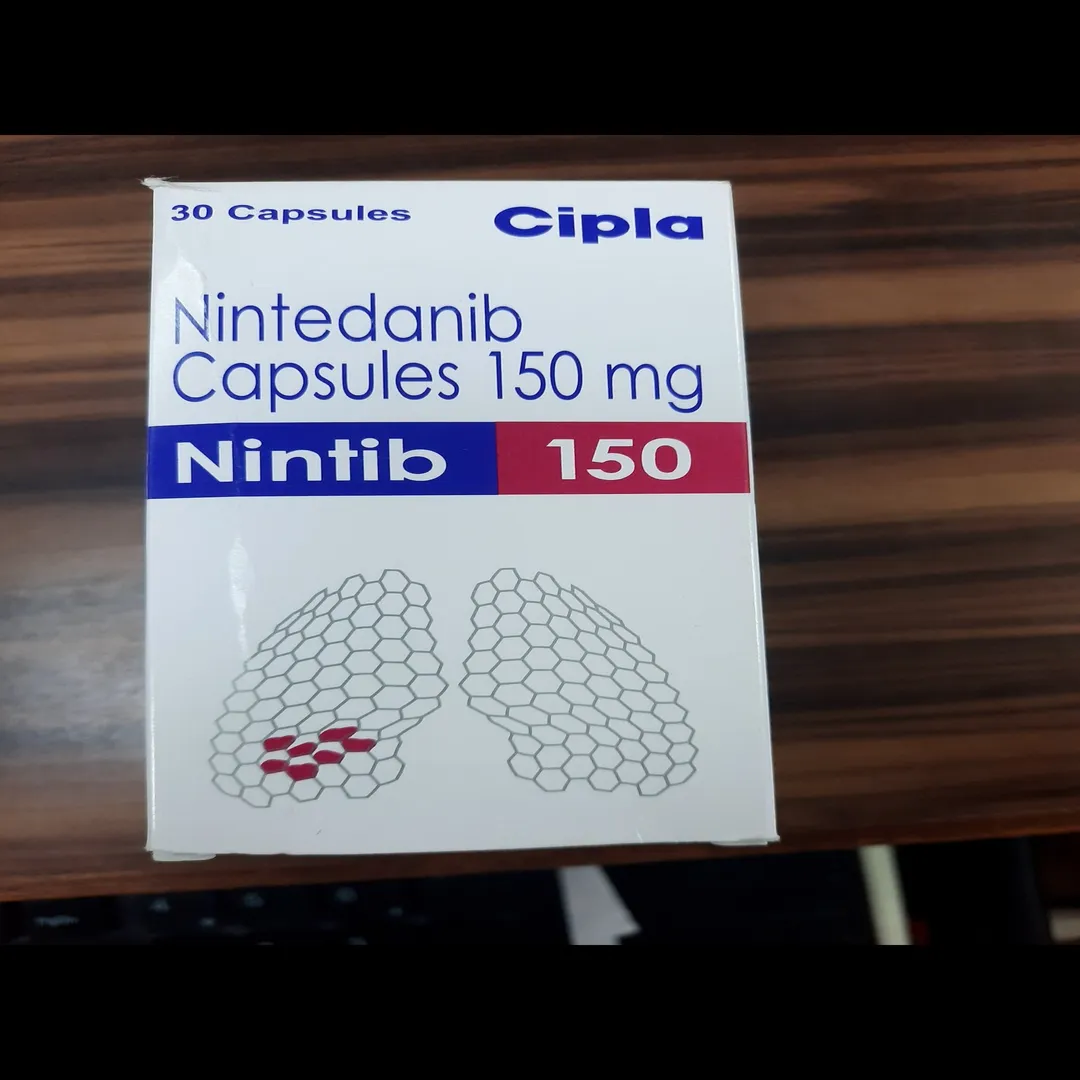
NINTIB 150 MG is a prescription medicine containing nintedanib, which belongs to the kinase inhibitor class. Nintedanib works by blocking several signaling pathways involved in fibrosis and abnormal cell growth.
It is primarily used to help slow deterioration of lung function in adults with conditions such as idiopathic pulmonary fibrosis (IPF), progressive fibrosing interstitial lung disease (ILD), and systemic-sclerosis-associated ILD.
2. Product Information
- Brand: NINTIB
- Strength: 150 mg
- Active ingredient: Nintedanib
- Dosage form: Soft gelatin capsule
- Route: Oral
- Manufacturer/Marketer: Cipla Ltd.
- Drug class: Kinase inhibitor
- Prescription status: Prescription medicine
Each NINTIB 150 capsule contains nintedanib equivalent to 150 mg.
3. Uses of NINTIB 150 MG
NINTIB 150 MG may be prescribed for:
- Idiopathic pulmonary fibrosis (IPF)
- Chronic fibrosing interstitial lung diseases with a progressive phenotype
- Systemic sclerosis-associated interstitial lung disease (SSc-ILD)
- In certain approved settings, in combination with docetaxel for adult patients with locally advanced, metastatic or recurrent NSCLC of adenocarcinoma histology after first-line chemotherapy.
The exact indication and approved use can vary by country, so treatment should follow the prescribing information applicable in the patient's country.
4. Benefits of NINTIB 150 MG
The potential benefits of nintedanib include:
- Helps slow the decline of lung function in certain progressive fibrosing lung diseases.
- Helps reduce the progression of abnormal fibrotic processes in the lungs.
- Provides an oral treatment option for eligible patients.
- In its approved oncology use, nintedanib is used with docetaxel for certain advanced NSCLC patients.
NINTIB is generally intended to slow disease progression rather than provide an immediate cure.
5. Side Effects of NINTIB 150 MG
Like other prescription medicines, NINTIB may cause side effects. Important adverse effects include:
- Diarrhea
- Nausea
- Vomiting
- Abdominal pain
- Reduced appetite
- Weight loss
- Headache
- Increased liver enzymes
- Hypertension
More serious risks can include liver injury, bleeding, arterial thromboembolic events, gastrointestinal perforation and significant proteinuria.
6. Common Side Effects
The commonly reported side effects include:
- Diarrhea
- Nausea
- Abdominal discomfort or pain
- Vomiting
- Decreased appetite
- Weight loss
- Headache
- Elevated liver enzymes
- High blood pressure
Persistent or severe diarrhea, vomiting, abdominal symptoms, unusual bleeding, jaundice or other concerning symptoms should be reported promptly to a healthcare professional.
7. How to Use NINTIB 150 MG
NINTIB should be taken exactly as prescribed by a doctor.
For the standard adult dosing of nintedanib for IPF, progressive fibrosing ILD and SSc-ILD, the recommended dosage is 150 mg twice daily, approximately 12 hours apart, taken with food. The capsule should be swallowed whole with liquid and should not be chewed, opened or crushed.
If a dose is missed, patients should generally take the next dose at the scheduled time rather than taking an extra dose to compensate.
Important: The appropriate dose can differ depending on the indication, tolerability, liver function and other clinical factors. A physician should determine the individual treatment regimen.
8. How NINTIB 150 MG Works
Nintedanib is a multi-target tyrosine kinase inhibitor. It blocks signaling through receptors including VEGFR, FGFR and PDGFR, along with other kinases involved in fibrotic and cellular processes.
By inhibiting these signaling pathways, nintedanib helps reduce processes associated with abnormal fibroblast activity and fibrosis, thereby helping slow the progression of certain fibrosing lung diseases.
9. Safety Advice for NINTIB 150 MG
- Use NINTIB only with a valid medical prescription and under healthcare supervision.
- Liver function tests should be performed before treatment and monitored regularly, particularly during the initial months of therapy.
- Patients with moderate or severe hepatic impairment generally should not use nintedanib; dose adjustments may be necessary in mild hepatic impairment.
- Nintedanib can cause fetal harm. Women who can become pregnant should discuss effective contraception with their healthcare provider.
- Inform the doctor about anticoagulants, medicines affecting CYP3A4/P-glycoprotein, NSAIDs and other medicines being taken.
- Patients with a history of bleeding, cardiovascular disease, recent abdominal surgery or gastrointestinal problems should inform their doctor.
- Breastfeeding is not recommended during treatment according to the U.S. prescribing information.
- Do not change the dose, stop treatment or restart treatment without medical advice.
10. FAQs
Q1. What is NINTIB 150 MG used for?
NINTIB contains nintedanib and is used for certain progressive fibrosing lung diseases, including IPF, progressive fibrosing ILD and SSc-ILD. It also has an approved oncology use in certain countries/settings when combined with docetaxel for eligible NSCLC patients.
Q2. Is NINTIB 150 MG a prescription medicine?
Yes. NINTIB is a prescription medicine and should be used under the supervision of a qualified healthcare professional.
Q3. How often is NINTIB 150 MG taken?
For several approved ILD indications, the standard recommended adult dose is 150 mg twice daily, approximately 12 hours apart, with food.
Q4. Should NINTIB be taken with food?
Yes. Nintedanib capsules should be taken with food and swallowed whole with liquid.
Q5. Can NINTIB 150 MG be used during pregnancy?
Nintedanib may cause fetal harm. Patients who can become pregnant should discuss appropriate contraception and pregnancy precautions with their doctor.
Q6. Does NINTIB cure pulmonary fibrosis?
Nintedanib is not considered a cure for pulmonary fibrosis. Its purpose in approved ILD indications is to slow the decline in lung function and disease progression.
Q7. What is the most common side effect?
Diarrhea is among the most frequently reported adverse reactions. Nausea, abdominal pain, vomiting and liver enzyme elevations are also commonly reported.
Q8. Are liver tests required while taking NINTIB?
Yes. Liver function should be assessed before treatment and monitored during therapy because liver enzyme elevations and liver injury can occur.
11. Substitutes for NINTIB 150 MG
NINTIB 150 MG contains nintedanib 150 mg, so products containing the same active ingredient and strength may be considered alternatives in markets where they are approved.
Examples include:
- Nintedanib 150 mg capsules – generic equivalent products
- OFEV 150 mg capsules – branded nintedanib product
- Other locally approved nintedanib 150 mg products
A substitute should not be selected or switched automatically. The physician or pharmacist should confirm that the alternative has the same active ingredient, strength, dosage form and appropriate regulatory approval for the patient's indication.
12. SEO Keywords
- NINTIB 150 MG Capsules exporter from India
- NINTIB 150 MG Capsules supplier from Nagpur India
- Nintedanib 150 mg capsules exporter
- Nintedanib 150 mg medicine supplier India
- NINTIB 150 mg pharmaceutical exporter
- NINTIB 150 mg capsules wholesale supplier
- Nintedanib 150 mg capsules international supplier
- NINTIB 150 mg capsules for IPF
- Nintedanib 150 mg for pulmonary fibrosis
- Nintedanib capsules for interstitial lung disease
- NINTIB 150 mg progressive fibrosing ILD medicine
- Nintedanib 150 mg SSc-ILD treatment
- NINTIB 150 mg capsules supplier USA
- NINTIB 150 mg capsules supplier UK
- NINTIB 150 mg capsules supplier Australia
- NINTIB 150 mg capsules supplier Singapore
- NINTIB 150 mg capsules supplier Canada
- NINTIB 150 mg capsules supplier South Korea
- NINTIB 150 mg capsules supplier UAE
- Nintedanib pharmaceutical exporter India to USA
- Nintedanib pharmaceutical exporter India to UK
- Nintedanib medicine exporter from Nagpur
- NINTIB 150 mg bulk pharmaceutical supplier
- NINTIB 150 mg wholesale medicine exporter
- Genuine NINTIB 150 mg capsules supplier India
- Nintedanib 150 mg prescription medicine exporter
- NINTIB 150 mg soft gelatin capsules supplier
- Cipla NINTIB 150 mg supplier India
- NINTIB 150 mg international pharma supplier
- Nintedanib 150 mg global pharmaceutical exporter
Keywords