1. General Information
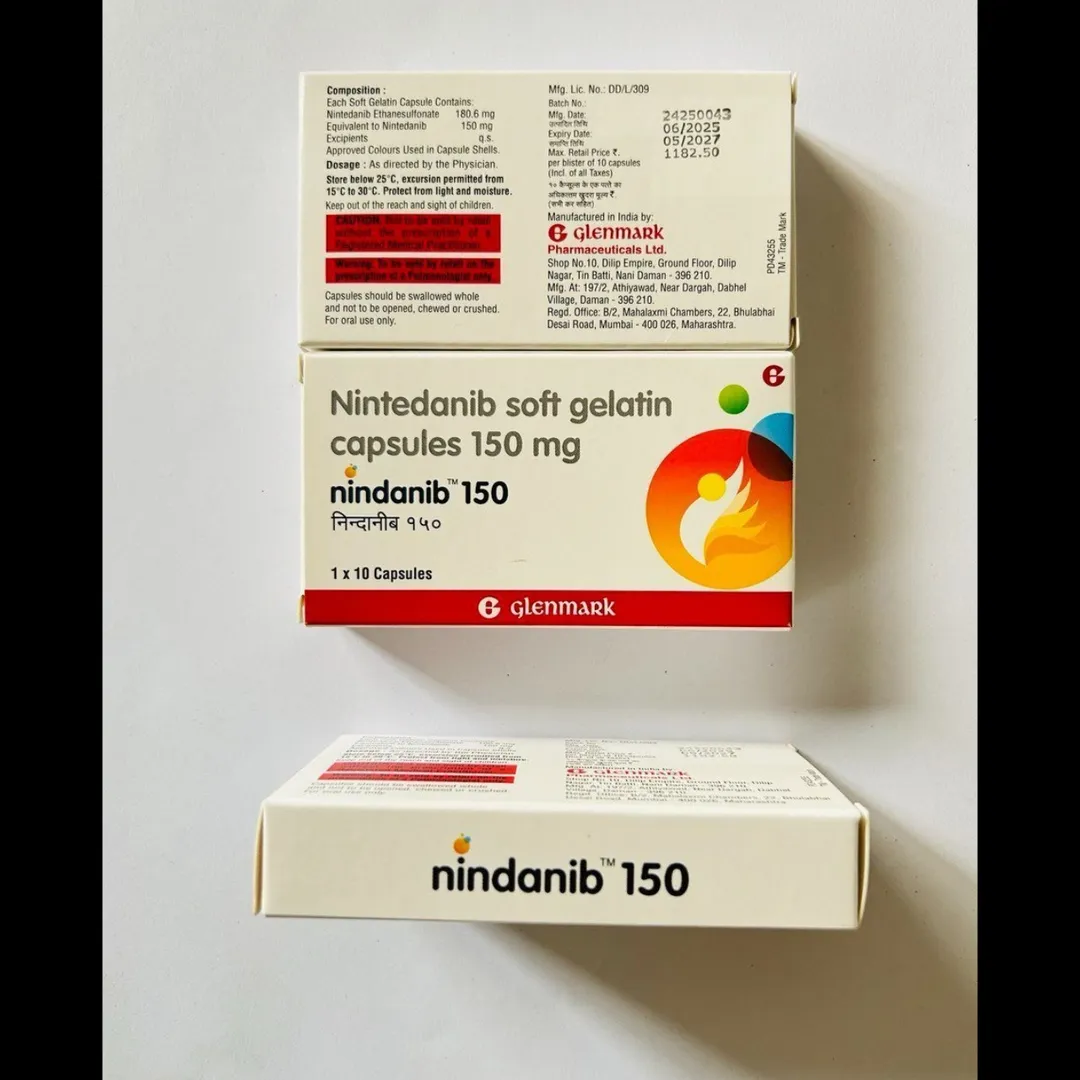
NINDANIB 150 mg is an oral soft-capsule formulation containing 150 mg of nintedanib. Nintedanib belongs to the tyrosine kinase inhibitor (TKI) class. It is primarily used to help slow the progression of lung fibrosis in conditions such as idiopathic pulmonary fibrosis (IPF), progressive fibrosing interstitial lung disease (ILD), and systemic-sclerosis-associated ILD.
It is a prescription medicine and should be used under the supervision of a qualified healthcare professional.
2. Product Information
- Product: NINDANIB 150 mg Capsules
- Active ingredient: Nintedanib
- Strength: 150 mg per capsule
- Dosage form: Soft capsule
- Route: Oral
- Drug class: Tyrosine kinase inhibitor
- Typical adult regimen for fibrosing lung diseases: 150 mg twice daily, approximately 12 hours apart, with food, when prescribed at the standard dose.
The exact dosage and treatment duration depend on the patient's condition, tolerability, liver function, other medicines, and physician's assessment.
3. Uses of NINDANIB 150 mg
Nintedanib is used in adults for:
- Idiopathic pulmonary fibrosis (IPF)
- Chronic fibrosing interstitial lung diseases with a progressive phenotype
- Systemic sclerosis-associated interstitial lung disease (SSc-ILD), where it helps slow the decline in pulmonary function.
- In some approved formulations/countries, certain advanced non-small-cell lung cancer (NSCLC) is treated with nintedanib in combination with docetaxel after previous chemotherapy.
4. Benefits of NINDANIB 150 mg
The principal therapeutic benefit of nintedanib is slowing disease progression, rather than immediately reversing existing lung scarring.
Potential benefits include:
- Helps slow the decline in lung function associated with certain progressive fibrosing lung diseases.
- Helps reduce the rate at which pulmonary fibrosis progresses.
- May help preserve respiratory function for longer in appropriate patients.
- In approved NSCLC treatment settings, it may be used with docetaxel to help manage certain previously treated adenocarcinoma-type NSCLC.
Individual response varies, and treatment should be monitored by a physician.
5. Side Effects
Nintedanib can cause side effects. Important reported adverse effects include:
- Diarrhoea
- Nausea
- Vomiting
- Abdominal pain
- Reduced appetite
- Weight loss
- Headache
- Increased liver enzymes
- Hypertension
More serious risks can include liver injury, bleeding, arterial thromboembolic events, gastrointestinal perforation, and significant proteinuria. Patients should contact their healthcare professional promptly if concerning symptoms occur.
6. Common Side Effects
The commonly reported side effects include:
- Diarrhoea
- Nausea
- Abdominal pain
- Vomiting
- Decreased appetite
- Weight loss
- Headache
- Raised liver enzymes
- High blood pressure
Diarrhoea is particularly common and can result in dehydration, so adequate fluid intake and medical advice are important if it becomes persistent or severe.
7. How to Use NINDANIB 150 mg
Take NINDANIB exactly as prescribed by the doctor.
For the standard adult regimen used for fibrosing lung diseases:
- Take one 150 mg capsule twice daily.
- Take the doses approximately 12 hours apart.
- Take the capsule with food.
- Swallow the capsule whole with water.
- Do not chew, crush, open, or break the capsule.
If a dose is missed, patients should generally not take two doses together; the next dose should be taken at the scheduled time according to the prescribing instructions.
Do not change the dose or discontinue treatment without consulting the prescribing doctor.
8. How NINDANIB Works
Nintedanib works by inhibiting several tyrosine kinases, including receptors involved in signalling pathways that contribute to fibrosis and abnormal blood-vessel formation.
In fibrosing lung disease, these pathways contribute to the development and progression of scar tissue. By blocking these signals, nintedanib helps slow further fibrotic changes and decline in lung function.
In certain NSCLC settings, its anti-angiogenic activity can interfere with signalling involved in the formation of blood vessels that support tumour growth.
9. Safety Advice
- Use only under medical supervision.
- Liver function should be assessed before treatment and monitored during treatment as clinically appropriate.
- Tell your doctor if you have a history of liver disease, kidney problems, bleeding problems, cardiovascular disease, or recent surgery.
- Inform your doctor if you take blood-thinning medicines, because bleeding risk may be increased.
- Nintedanib may affect wound healing, so the doctor should know about planned or recent surgery.
- Pregnancy should be discussed with a healthcare professional because nintedanib can harm an unborn baby; pregnancy testing is recommended before initiation in females of reproductive potential according to U.S. prescribing information.
- Breastfeeding is not recommended during treatment according to U.S. prescribing information.
- Patients with a soya or peanut allergy should check the formulation because some nintedanib capsules contain soya lecithin.
- Avoid self-medication and do not alter the prescribed dose.
10. FAQs
Q1. What is NINDANIB 150 mg used for?
It is primarily used for certain progressive fibrosing lung diseases, including IPF, progressive fibrosing ILD and systemic-sclerosis-associated ILD. Some approved products also have an indication in combination with docetaxel for certain NSCLC patients.
Q2. What is the active ingredient?
The active ingredient is nintedanib, generally supplied as nintedanib esilate equivalent to 150 mg nintedanib.
Q3. How often is 150 mg taken?
For the standard adult fibrosing-lung-disease regimen, it is taken twice daily, approximately 12 hours apart, with food.
Q4. Can I chew the capsule?
No. The capsule should be swallowed whole with water and should not be chewed, crushed, or opened.
Q5. What is the most common side effect?
Diarrhoea is one of the most common side effects and may sometimes be significant.
Q6. Does NINDANIB cure pulmonary fibrosis?
Nintedanib is not generally described as a cure. Its main role is to slow the progression of certain fibrosing lung diseases.
Q7. Can the dose be reduced?
If side effects occur, a doctor may reduce the dose, commonly to 100 mg twice daily in appropriate patients. Patients should never make this change themselves.
Q8. Is regular monitoring required?
Yes. Liver function monitoring is particularly important, and additional monitoring may be appropriate depending on the patient's condition and risk factors.
11. Substitute for NINDANIB 150 mg
The appropriate substitute depends on the disease being treated, patient's medical history, tolerance, and local approvals. Possible alternatives in the broader treatment of pulmonary fibrosis may include other antifibrotic therapies such as pirfenidone, but it is not a direct equivalent substitute and should only be selected by the treating physician.
For procurement or export purposes, potential nintedanib alternatives may also include other brands containing nintedanib 150 mg, provided they are legally approved and meet the destination country's regulatory requirements.
Important: A substitute should not be selected solely on the basis of the same strength. The physician should confirm the active ingredient, indication, formulation, dosage and regulatory status.
12. Keywords
NINDANIB 150 mg Capsules, Nintedanib 150 mg, Nintedanib Capsules, Nintedanib 150 mg exporter, Nintedanib 150 mg supplier India, Nintedanib capsules exporter India, Nintedanib 150 mg pharmaceutical exporter, Nintedanib medicine supplier, Nintedanib capsules supplier, Nintedanib 150 mg manufacturer India, Nintedanib for pulmonary fibrosis, Nintedanib for IPF, Nintedanib for interstitial lung disease, Nintedanib antifibrotic medicine, Nintedanib 150 mg capsules export, Nintedanib medicine exporter Nagpur, Nintedanib supplier Nagpur India, Nintedanib 150 mg to USA, Nintedanib 150 mg to UK, Nintedanib 150 mg to Australia, Nintedanib 150 mg to Singapore, Nintedanib 150 mg to Canada, Nintedanib 150 mg to South Korea, Nintedanib 150 mg to UAE, pharmaceutical exporter India, medicine exporter Nagpur India, international pharmaceutical supplier, Nintedanib bulk supplier, Nintedanib wholesale supplier, Nintedanib 150 mg international supplier.
Keywords