1. General Information
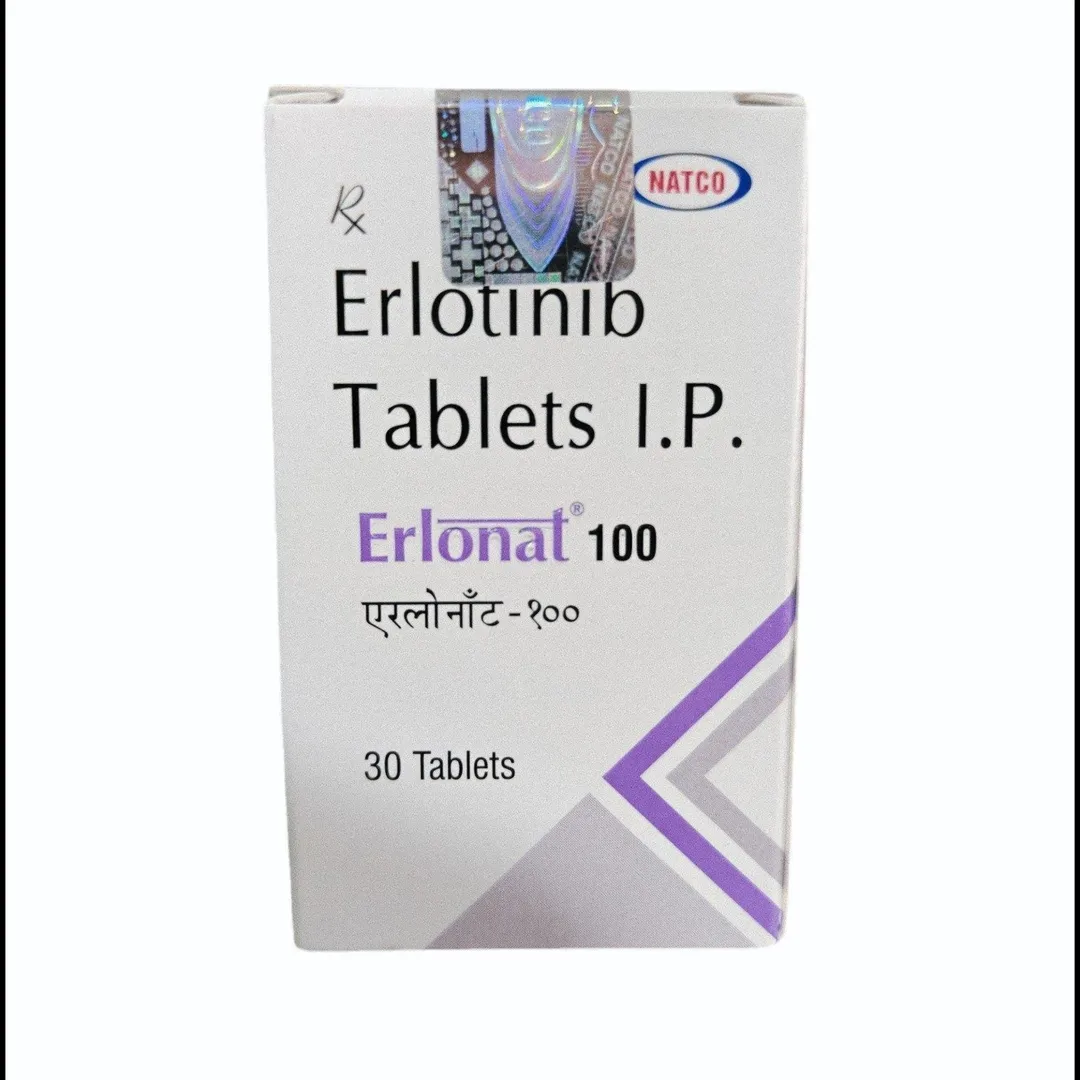
Erlonat 100 mg Tablet contains erlotinib 100 mg, an anticancer medicine belonging to the tyrosine kinase inhibitor (TKI) class. It is used primarily in the treatment of certain types of non-small cell lung cancer (NSCLC) and, in specific treatment settings, pancreatic cancer. Erlotinib works by targeting signals that cancer cells need for growth and multiplication.
Erlonat 100 mg is a prescription medicine and should be used only under the supervision of a qualified oncologist.
2. Product Information
- Brand: Erlonat 100 mg
- Active Ingredient: Erlotinib
- Strength: 100 mg
- Dosage Form: Tablet
- Medicine Class: Anticancer / Tyrosine Kinase Inhibitor
- Primary therapeutic area: Oncology
- Route: Oral
- Prescription: Yes
3. Uses of Erlonat 100 mg
Erlonat 100 mg may be prescribed for:
- Certain types of non-small cell lung cancer (NSCLC)
- Advanced or metastatic NSCLC with appropriate EGFR mutations
- Certain cases of pancreatic cancer, usually in combination with gemcitabine, when appropriate
Treatment selection depends on the cancer type, stage, molecular characteristics and the patient's overall condition.
4. Benefits of Erlonat 100 mg
Erlotinib can help slow down or inhibit the growth of certain cancer cells by blocking EGFR-related signaling. In patients whose tumors have specific EGFR mutations, EGFR-targeted treatment can provide meaningful disease control.
The benefits and expected response vary from patient to patient and should be assessed by an oncologist.
5. Side Effects of Erlonat 100 mg
Like other anticancer medicines, Erlonat may cause side effects. Possible effects include:
- Skin rash
- Diarrhea
- Loss of appetite
- Nausea
- Vomiting
- Fatigue
- Dry skin
- Abdominal discomfort
- Eye irritation
Some side effects can be serious. Patients should contact their healthcare professional promptly if they develop severe or persistent symptoms.
6. Common Side Effects
Some of the more frequently reported side effects include:
- Acne-like skin rash
- Diarrhea
- Dry or itchy skin
- Reduced appetite
- Tiredness
- Nausea
- Mouth irritation
- Abdominal discomfort
The severity of side effects varies between patients.
7. How to Use Erlonat 100 mg
Take Erlonat exactly as prescribed by your oncologist.
- Swallow the tablet whole with water.
- Do not crush or chew it unless specifically instructed by your healthcare professional.
- Erlotinib is generally taken on an empty stomach, at least 1 hour before or 2 hours after food.
- Take it at approximately the same time each day.
- Do not change the dose or stop treatment without consulting your doctor.
If you miss a dose, follow your doctor's instructions rather than taking an extra dose to compensate.
8. How Erlonat 100 mg Works
Erlotinib blocks the activity of the epidermal growth factor receptor (EGFR) tyrosine kinase.
Some cancer cells have abnormal EGFR signaling that promotes cell growth and multiplication. By inhibiting this signaling pathway, erlotinib can interfere with cancer-cell growth and survival.
Its effectiveness is particularly associated with tumors containing certain activating EGFR mutations.
9. Safety Advice
Pregnancy: Erlotinib may harm an unborn baby. Discuss pregnancy prevention and family-planning considerations with your healthcare professional.
Breastfeeding: Breastfeeding is generally not recommended during treatment and for an appropriate period afterward as advised by the treating physician.
Liver problems: Tell your doctor if you have liver disease. Erlotinib can affect liver function.
Kidney problems: Inform your healthcare professional about existing kidney problems.
Smoking: Smoking can reduce erlotinib exposure and may decrease its effectiveness. Patients should discuss smoking with their oncologist.
Medicines and supplements: Erlotinib has important drug interactions. Tell your doctor about all prescription medicines, OTC medicines, vitamins and herbal products you take.
Acid-reducing medicines: Some medicines that alter stomach acidity can affect erlotinib absorption. Ask your doctor before taking antacids, H2 blockers or proton-pump inhibitors.
Eye problems: Report new or worsening eye irritation, pain, redness or vision changes.
Severe symptoms: Seek medical attention for severe breathing problems, significant skin reactions, persistent diarrhea, severe abdominal pain, unusual bleeding, or yellowing of the skin or eyes.
10. Frequently Asked Questions
Q1. What is Erlonat 100 mg used for?
Erlonat 100 mg contains erlotinib and is used for certain cancers, particularly appropriately selected cases of NSCLC and, in some settings, pancreatic cancer.
Q2. Is Erlonat 100 mg a chemotherapy medicine?
It is an anticancer targeted therapy rather than conventional cytotoxic chemotherapy. It belongs to the tyrosine kinase inhibitor class.
Q3. Can everyone with lung cancer take Erlonat?
No. Erlotinib is appropriate only for specific clinical situations. Molecular testing and oncologist assessment may be required, particularly when EGFR-targeted treatment is being considered.
Q4. Can Erlonat be taken with food?
Erlotinib is generally taken on an empty stomach because food can affect its absorption.
Q5. What happens if I miss a dose?
Follow your oncologist's instructions. Do not take a double dose unless specifically instructed.
Q6. Can Erlonat cause skin rash?
Yes. Skin rash is a common adverse effect of erlotinib. Inform your healthcare professional if it becomes severe or persistent.
Q7. Can I stop Erlonat when I feel better?
No. Cancer treatment should not be stopped or changed without the treating oncologist's advice.
Q8. Is Erlonat 100 mg available for export?
Availability and export requirements depend on the destination country, prescription requirements and applicable pharmaceutical-import regulations.
11. Substitute for Erlonat 100 mg
The appropriate substitute depends on the active ingredient, cancer type, EGFR status, treatment plan and physician's recommendation.
Products containing erlotinib may be considered alternatives to Erlonat, but they should not be substituted or interchanged without approval from the treating oncologist. Other EGFR-targeted medicines, such as gefitinib, afatinib, osimertinib or dacomitinib, are not automatically equivalent substitutes and have different indications and dosing considerations.
12. SEO Keywords
- Erlonat 100 mg Tablet exporter from India
- Erlonat 100 mg supplier from India
- Erlonat 100 mg tablets wholesale supplier
- Erlonat 100 mg erlotinib tablets exporter
- Erlonat 100 mg oncology medicine exporter
- Erlonat 100 mg pharmaceutical exporter India
- Erlonat 100 mg tablets supplier Nagpur India
- Erlonat 100 mg medicine exporter Nagpur
- Erlotinib 100 mg tablet exporter India
- Erlotinib 100 mg wholesale supplier
- Erlotinib 100 mg oncology medicine supplier
- Erlotinib tablets exporter to USA
- Erlonat 100 mg exporter to UK
- Erlotinib 100 mg supplier to Australia
- Erlonat 100 mg supplier to Singapore
- Erlotinib 100 mg exporter to Canada
- Erlonat 100 mg supplier to South Korea
- Erlotinib 100 mg exporter to UAE
- Erlonat 100 mg B2B pharmaceutical supplier
- Erlonat 100 mg international medicine supplier
- Erlonat 100 mg cancer medicine exporter
- Erlotinib 100 mg lung cancer medicine supplier
- Erlonat 100 mg EGFR targeted therapy supplier
- Erlonat 100 mg pharmaceutical wholesale exporter
- Phoenix Exim Erlonat 100 mg exporter
- Phoenix Exim Erlotinib 100 mg supplier
- Phoenix Exim oncology medicine exporter Nagpur
- Trusted Erlotinib 100 mg pharmaceutical exporter
- Erlonat 100 mg global pharmaceutical supply
- Erlotinib 100 mg international B2B supplier
Keywords