1. General Information
Enclomiphene is the trans-isomer of clomiphene and belongs to the selective estrogen receptor modulator (SERM) class. It has been investigated primarily in adult men with secondary/hypogonadotropic hypogonadism, particularly where preservation of sperm production is an important consideration.
Clinical studies have shown that enclomiphene can increase endogenous testosterone together with LH and FSH levels.
2. Product Information
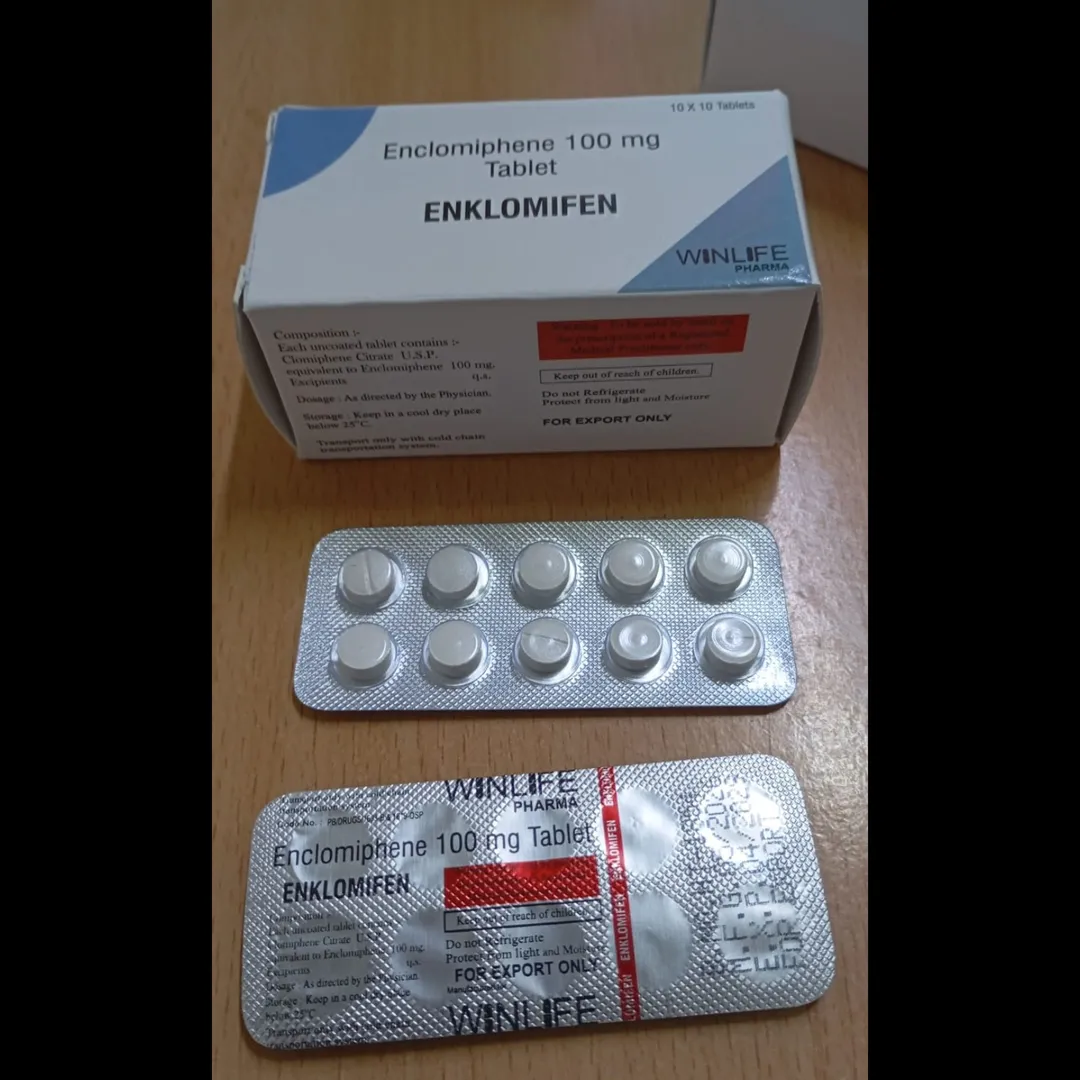
- Product: Enclomiphene Tablet
- Stated strength: 100 mg
- Active ingredient: Enclomiphene
- Drug class: Selective Estrogen Receptor Modulator (SERM)
- Route: Oral
- Primary area studied: Male secondary hypogonadism
- Prescription status: Should be used only under appropriate medical supervision.
- Important: The 100 mg strength is substantially higher than the doses evaluated in the cited clinical studies, so the strength should be independently verified against applicable regulatory and product documentation.
3. Uses of Enclomiphene
Enclomiphene has been investigated for:
- Male secondary/hypogonadotropic hypogonadism
- Low testosterone associated with an inadequately functioning hypothalamic-pituitary-gonadal axis
- Supporting endogenous testosterone production
- Maintaining sperm production in appropriate patients
Clinical trials found increases in testosterone, LH and FSH, with sperm production being preserved compared with testosterone treatment in the studied population.
4. Potential Benefits
Under appropriate medical supervision, potential benefits may include:
- Increasing naturally produced testosterone
- Stimulating LH and FSH production
- Supporting the body's own testosterone-producing pathway
- Potentially preserving sperm production compared with exogenous testosterone therapy
- Avoiding direct testosterone replacement in selected patients
However, increased testosterone levels do not automatically establish improvement in symptoms or quality of life. The FDA has noted that clinical trials of enclomiphene did not establish clinically meaningful improvement in hypogonadal symptoms or quality of life.
5. Side Effects
Reported or potentially associated adverse effects include:
- Headache
- Abdominal discomfort
- Changes in hormone levels, including estradiol
- Mood-related changes
- Fatigue or reduced energy
- Decreased libido
- Dizziness
A 2024 retrospective study reported fewer documented adverse events with enclomiphene than with clomiphene, but the authors emphasized that additional research is needed, particularly regarding long-term effects.
6. Common Side Effects
Possible side effects may include:
- Headache
- Fatigue
- Dizziness
- Mood changes
- Changes in libido
- Abdominal discomfort
- Hormonal changes
Patients should contact a healthcare professional if symptoms are persistent, severe or unusual.
7. How to Use
Enclomiphene should be taken only according to a qualified healthcare professional's prescription and the approved product information applicable in the patient's country.
Do not assume that 100 mg is an appropriate dose based solely on the strength printed on a product. Published clinical studies have evaluated substantially lower doses, including 6.25–25 mg.
Before treatment, clinicians may evaluate testosterone levels and other relevant hormonal parameters and investigate the underlying cause of low testosterone.
8. How Enclomiphene Works
Enclomiphene acts as a selective estrogen receptor modulator. By interfering with estrogen-mediated negative feedback in the hypothalamic-pituitary-gonadal axis, it can stimulate the release of LH and FSH.
In men with appropriate secondary hypogonadism, increased LH can stimulate the testes to produce more endogenous testosterone, while FSH contributes to the process involved in sperm production. Clinical studies have demonstrated increases in testosterone, LH and FSH with enclomiphene.
9. Safety Advice
- Use only under medical supervision.
- Do not self-medicate for low testosterone.
- Confirm the cause of low testosterone before treatment.
- Discuss existing hormonal, liver, cardiovascular or visual problems with your doctor.
- Report significant visual disturbances promptly.
- Do not increase or decrease the dose without medical advice.
- Inform your doctor about all medicines and supplements being taken.
- Testosterone and other relevant laboratory parameters may need monitoring.
- The safety and effectiveness of 100 mg enclomiphene cannot be assumed from studies using lower doses.
- Regulatory status differs between countries and should be checked before manufacture, distribution, import or use.
For India specifically, current regulatory information is particularly important because CDSCO has recently directed action concerning unapproved enclomiphene-containing products.
10. FAQs
Q1. What is Enclomiphene used for?
It has primarily been studied for male secondary/hypogonadotropic hypogonadism and increasing endogenous testosterone production.
Q2. Does Enclomiphene increase testosterone?
Clinical studies have shown increases in testosterone along with LH and FSH in appropriately selected men.
Q3. Can Enclomiphene preserve sperm production?
Studies have reported preservation of sperm production compared with testosterone treatment, making the mechanism potentially relevant for selected men concerned about fertility.
Q4. Is Enclomiphene the same as Clomiphene?
No. Enclomiphene is the trans-isomer of clomiphene, while clomiphene contains both enclomiphene and zuclomiphene isomers.
Q5. Is 100 mg a standard Enclomiphene dose?
No standard clinical dose of 100 mg can be established from the cited clinical evidence. Published studies evaluated considerably lower doses, including 6.25, 12.5 and 25 mg.
Q6. Can women take Enclomiphene?
It should not be promoted for female use without a specific, medically supervised indication. Its studied use discussed here is primarily in men.
Q7. Does Enclomiphene work like testosterone replacement therapy?
No. Testosterone replacement supplies exogenous testosterone, whereas enclomiphene attempts to stimulate the body's own hormonal pathway.
Q8. Is Enclomiphene approved everywhere?
No. Regulatory status varies by jurisdiction. Current Indian regulatory developments require particular caution regarding unapproved enclomiphene products.
11. Substitute / Alternatives
There is no universal one-to-one substitute for enclomiphene. Depending on the patient's diagnosis, fertility goals and regulatory availability, a physician may consider:
- Clomiphene citrate — related SERM and commonly discussed alternative, but not identical to enclomiphene.
- hCG — may be considered in selected situations involving stimulation of testicular testosterone production.
- Testosterone replacement therapy — an established treatment option for appropriately diagnosed hypogonadism, but it can suppress sperm production and therefore may not be suitable for men actively seeking fertility.
The appropriate alternative depends on the underlying cause of hypogonadism and the patient's fertility objectives.
12. SEO / B2B Keywords
For compliant product-information content, you can use educational keywords such as:
- Enclomiphene 100 mg Tablet
- Enclomiphene Tablet information
- Enclomiphene citrate information
- Enclomiphene for male hypogonadism
- Enclomiphene testosterone research
- Enclomiphene SERM
- Enclomiphene mechanism of action
- Enclomiphene side effects
- Enclomiphene safety information
- Enclomiphene clinical studies
- Enclomiphene and testosterone
- Enclomiphene and LH
- Enclomiphene and FSH
- Enclomiphene male hypogonadism research
- Enclomiphene fertility research
- Enclomiphene sperm preservation research
- Enclomiphene vs clomiphene
- Enclomiphene alternative information
- Enclomiphene pharmaceutical information
- Enclomiphene product information India
- Enclomiphene medicine exporter India
- Enclomiphene pharmaceutical exporter
- Enclomiphene supplier India
- Enclomiphene tablet manufacturer information
- Enclomiphene export information
- Enclomiphene pharmaceutical supply
- Enclomiphene medicine sourcing
- Enclomiphene wholesale pharmaceutical information
- Enclomiphene international pharmaceutical supply
- Enclomiphene regulatory information
Keywords