1. General Information
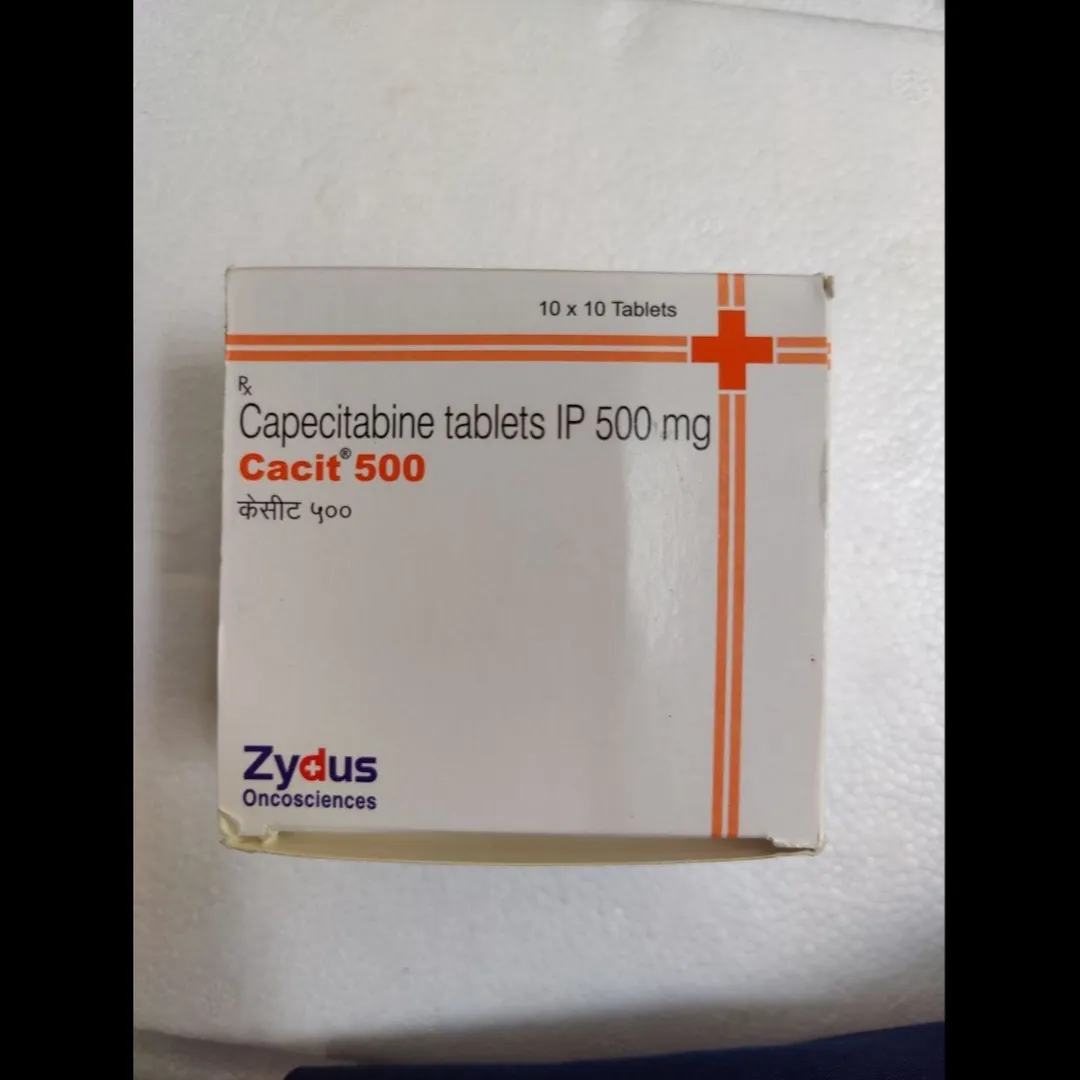
Cacit 500 mg Tablet contains Capecitabine 500 mg as its active ingredient. Capecitabine is an oral chemotherapy medicine that is converted by the body into 5-fluorouracil (5-FU), an active anticancer compound.
It is primarily used in the treatment of certain cancers, particularly colorectal and breast cancer. Depending on the cancer type and treatment plan, it may be prescribed alone or together with other chemotherapy medicines.
Cacit 500 mg is a prescription medicine and should be used only under the supervision of an oncologist or other qualified healthcare professional.
2. Product Information
- Brand name: Cacit 500 mg Tablet
- Active ingredient: Capecitabine
- Strength: 500 mg
- Dosage form: Oral tablet
- Therapeutic category: Anticancer / antineoplastic medicine
- Drug class: Antimetabolite
- Route of administration: Oral
- Primary uses: Certain breast and colorectal cancers
- Prescription status: Prescription medicine
The exact treatment regimen varies according to the cancer type, stage, combination therapy, kidney function, overall health, and the patient's response to treatment.
3. Uses of Cacit 500 mg Tablet
Cacit 500 mg may be prescribed for:
- Colorectal cancer
- Colon cancer
- Rectal cancer
- Certain forms of breast cancer
- Other approved indications determined by an oncologist
- Use as part of combination chemotherapy in appropriate patients
The precise indication and treatment protocol should always be determined by the treating oncologist.
4. Benefits of Cacit 500 mg Tablet
The principal therapeutic benefit of capecitabine is its ability to interfere with cancer-cell growth.
Potential treatment benefits include:
- Helps slow the growth and multiplication of certain cancer cells.
- Can be used to control or reduce cancer progression in appropriate patients.
- May help shrink tumors in some treatment settings.
- Can be used as an oral chemotherapy option instead of certain intravenous chemotherapy regimens.
- May be used alone or alongside other anticancer medicines depending on the treatment protocol.
The expected benefit depends on the type and stage of cancer and the individual's response to treatment.
5. Side Effects of Cacit 500 mg Tablet
Capecitabine can cause side effects, and their severity varies between patients.
Possible adverse effects include:
- Diarrhea
- Nausea
- Vomiting
- Abdominal pain
- Fatigue or weakness
- Stomatitis or mouth sores
- Hand-foot syndrome
- Loss of appetite
- Dehydration
- Changes in blood-cell counts
- Skin reactions
- Hair loss
- Changes in liver-related blood tests
Some adverse reactions can be serious. Patients should contact their healthcare professional promptly if they develop severe diarrhea, persistent vomiting, significant mouth sores, fever or signs of infection, chest pain, severe skin reactions, or other concerning symptoms.
6. Common Side Effects
Commonly reported side effects may include:
- Nausea
- Vomiting
- Diarrhea
- Abdominal discomfort or pain
- Fatigue
- Reduced appetite
- Stomatitis
- Hand-foot syndrome
- Dehydration
- Anemia
- Changes in white blood-cell or platelet counts
Not every patient experiences these effects, and their severity can vary. Regular medical monitoring is important during treatment.
7. How to Use Cacit 500 mg Tablet
Cacit 500 mg should be taken exactly according to the oncologist's prescription.
General administration guidance:
- Take the tablet by mouth with food, according to the prescribed schedule.
- Swallow the tablet whole with water.
- Do not crush, chew, or break the tablet unless specifically instructed by a healthcare professional.
- Take doses at approximately the prescribed times each day.
- Do not take an extra dose to compensate for a missed dose without medical advice.
- The dose and treatment duration depend on the cancer being treated and the patient's medical condition.
Capecitabine dosing can require adjustment according to kidney function, adverse effects, and other factors, so patients should not change the dose themselves.
8. How Cacit 500 mg Works
Cacit 500 mg contains capecitabine, which is an oral prodrug.
After absorption, capecitabine undergoes several enzymatic conversions in the body and is ultimately converted into 5-fluorouracil (5-FU). The active compound interferes with processes required for cancer-cell DNA and RNA production.
This disruption can inhibit cancer-cell multiplication and contribute to cancer-cell death.
9. Safety Advice for Cacit 500 mg
- Use only under the supervision of a qualified oncologist.
- Inform your doctor about all medicines, supplements, and treatments you are taking.
- Tell your doctor if you have kidney or liver problems.
- Regular blood tests may be required to monitor blood-cell counts and organ function.
- Report severe or persistent diarrhea or vomiting promptly.
- Seek medical advice for severe mouth ulcers or difficulty eating/drinking.
- Report redness, swelling, pain, or peeling of the palms and soles.
- Immediately report chest pain, unusual shortness of breath, or other symptoms suggesting a cardiac problem.
- Pregnancy should be avoided during treatment because capecitabine can harm an unborn baby.
- Discuss breastfeeding with your doctor before treatment.
- Do not stop chemotherapy or change the dose without your oncologist's advice.
Capecitabine can interact with other medicines, and appropriate monitoring is important during treatment.
10. Frequently Asked Questions
Q1. What is Cacit 500 mg Tablet?
Cacit 500 mg Tablet is an anticancer medicine containing capecitabine 500 mg.
Q2. What is Cacit 500 mg used for?
It is primarily prescribed for certain types of breast and colorectal cancer and may be used in combination with other anticancer medicines.
Q3. Is Cacit 500 mg a chemotherapy medicine?
Yes. Capecitabine is an oral chemotherapy medicine classified as an antimetabolite.
Q4. How should Cacit 500 mg be taken?
It should be taken exactly as prescribed, generally with food and swallowed whole with water.
Q5. Can I change the Cacit 500 mg dose myself?
No. The dose should only be changed by the treating healthcare professional.
Q6. What are common side effects?
Diarrhea, nausea, vomiting, fatigue, abdominal discomfort, mouth sores, and hand-foot syndrome are among the reported side effects.
Q7. Does Cacit 500 mg require regular monitoring?
Yes. Doctors may monitor blood counts and kidney and liver function during treatment.
Q8. Can Cacit 500 mg be used during pregnancy?
Capecitabine can cause fetal harm. Patients who are pregnant, planning pregnancy, or could become pregnant should discuss this with their doctor before treatment.
Q9. Can Cacit 500 mg be taken with other medicines?
Some medicines can interact with capecitabine. Provide your doctor with a complete list of all medicines and supplements you use.
Q10. Is Cacit 500 mg available as an injection?
Cacit 500 mg is an oral tablet containing capecitabine. It should not be confused with injectable chemotherapy medicines.
Q11. Can Cacit 500 mg cure cancer?
It is used to treat and control certain cancers, but whether treatment can achieve remission or cure depends on the cancer type, stage, treatment plan, and individual response.
Q12. What should I do if I experience severe side effects?
Contact your treating healthcare professional promptly. Severe diarrhea, persistent vomiting, fever, severe skin reactions, chest pain, or other serious symptoms require urgent medical assessment.
11. Substitute for Cacit 500 mg Tablet
Cacit 500 mg contains capecitabine 500 mg, so potential alternatives may include other capecitabine 500 mg tablets. However, a substitute should be selected based on the active ingredient, strength, dosage form, manufacturer, regulatory status, and the oncologist's prescription.
Do not replace Cacit with another chemotherapy medicine without medical advice. Pharmacy references list generic capecitabine products as alternatives, but the appropriate product should be confirmed by the prescribing healthcare professional.
12. SEO Keywords
- Cacit 500 mg Tablet exporter from India
- Cacit 500 mg Tablet supplier from Nagpur India
- Cacit 500 mg Capecitabine exporter India
- Capecitabine 500 mg Tablet exporter
- Capecitabine 500 mg pharmaceutical supplier India
- Cacit 500 mg wholesale pharmaceutical supplier
- Cacit 500 mg medicine exporter from Nagpur
- Cacit 500 mg international medicine supplier
- Capecitabine 500 mg oncology medicine exporter
- Cacit 500 mg cancer medicine supplier India
- Cacit 500 mg Tablet supplier USA
- Cacit 500 mg Tablet supplier UK
- Cacit 500 mg Tablet supplier Australia
- Cacit 500 mg Tablet supplier Canada
- Cacit 500 mg Tablet supplier Singapore
- Cacit 500 mg Tablet supplier South Korea
- Cacit 500 mg Tablet supplier UAE
- Capecitabine 500 mg exporter to USA
- Capecitabine 500 mg exporter to UK
- Capecitabine 500 mg exporter to Australia
- Capecitabine 500 mg exporter to Canada
- Capecitabine 500 mg exporter to Singapore
- Capecitabine 500 mg exporter to South Korea
- Capecitabine 500 mg exporter to UAE
- Cacit 500 mg colorectal cancer medicine supplier
- Cacit 500 mg breast cancer medicine exporter
- Capecitabine oncology pharmaceutical exporter India
- Prescription cancer medicine exporter from India
- Pharmaceutical oncology products exporter Nagpur India
- Trusted pharmaceutical exporter from Nagpur India
- Capecitabine 500 mg international pharmaceutical supplier
- Cacit 500 mg B2B pharmaceutical supplier India
- Cacit 500 mg bulk pharmaceutical supplier
- Capecitabine 500 mg wholesale exporter India
- Phoenix Exim Cacit 500 mg exporter
- Phoenix Exim Capecitabine supplier India
- Phoenix Exim oncology medicine exporter
- Nagpur India pharmaceutical medicine exporter
- Indian oncology medicine exporter for international markets
- Capecitabine 500 mg B2B medicine supplier
Keywords