1. General Information
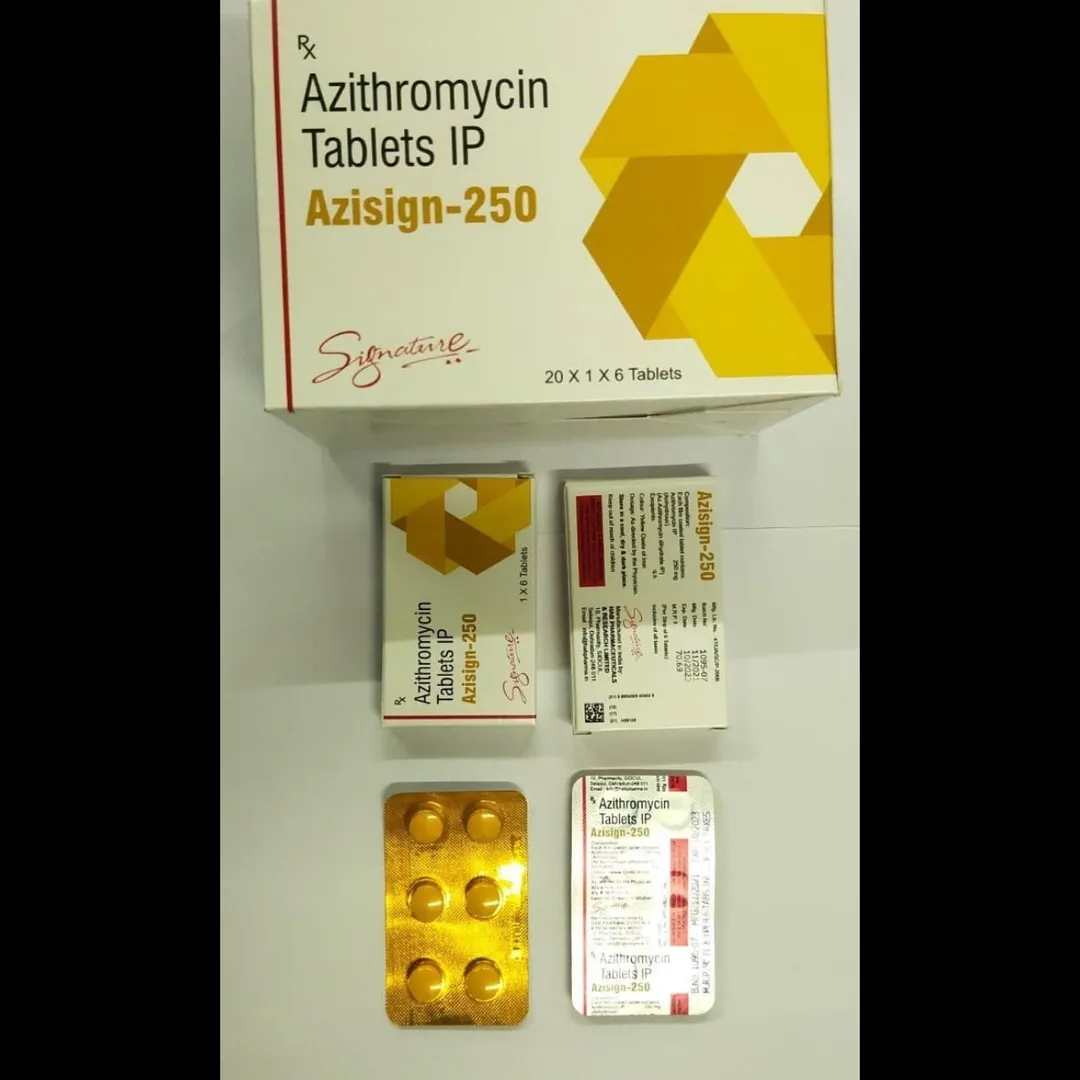
AZISIGN 250MG is an antibiotic containing azithromycin. It belongs to the macrolide class of antibacterial medicines and works against susceptible bacteria by interfering with bacterial protein production. It is a prescription medicine and should be used under the direction of a qualified healthcare professional.
It is not effective against viral infections, such as the common cold or influenza.
2. Product Information
Brand: AZISIGN 250MG
Generic name: Azithromycin
Strength: 250 mg
Dosage form: Tablet
Drug class: Macrolide antibiotic
Active ingredient: Azithromycin
Route: Oral
Prescription status: Prescription medicine
Origin: India
Available product listings identify AZISIGN 250MG as an azithromycin tablet, with packaging varying by supplier and market.
3. Uses of AZISIGN 250MG
Azithromycin may be prescribed for susceptible bacterial infections such as:
Certain respiratory tract infections
Acute bacterial sinusitis
Certain cases of pneumonia
Certain throat and tonsil infections
Certain skin and skin-structure infections
Certain ear infections
Selected bacterial infections of the urethra or cervix
The exact indication depends on the infecting organism, patient factors, and local prescribing guidance.
4. Benefits of AZISIGN 250MG
When appropriately prescribed for a susceptible bacterial infection, azithromycin can:
Help eliminate susceptible bacteria
Treat certain respiratory and ENT bacterial infections
Provide an oral treatment option for appropriate patients
Offer antibacterial activity with a macrolide mechanism of action
Be used in selected bacterial infections where azithromycin is clinically appropriate
Antibiotics should only be used when a bacterial infection is suspected or confirmed and the medicine is appropriate for that infection.
5. Side Effects of AZISIGN 250MG
Possible adverse effects include:
Diarrhea
Nausea
Abdominal pain
Vomiting
Headache or other gastrointestinal symptoms
Less common but potentially serious reactions include severe allergic reactions, serious skin reactions, liver injury, abnormal heart rhythm associated with QT prolongation, and antibiotic-associated diarrhea including Clostridioides difficile infection.
Seek urgent medical attention for symptoms such as difficulty breathing, swelling of the face or throat, severe skin rash or blistering, yellowing of the skin or eyes, fainting, or severe/persistent diarrhea.
6. Common Side Effects
The commonly reported adverse reactions to azithromycin include:
Diarrhea
Nausea
Abdominal pain
Vomiting
Reported frequencies vary between studies and formulations.
7. How to Use AZISIGN 250MG
Take AZISIGN 250MG only according to your doctor's prescription.
Swallow the tablet with water.
Follow the prescribed dose and treatment duration.
Do not change the dose or stop treatment early unless advised by your healthcare professional.
Do not share antibiotics with another person.
If you miss a dose, follow your healthcare professional's or product leaflet's instructions rather than taking extra medicine.
The appropriate azithromycin regimen varies according to the infection, age, medical condition, and other factors; therefore, a fixed dosing schedule should not be recommended without clinical assessment.
8. How AZISIGN 250MG Works
Azithromycin is a macrolide antibacterial. It acts on susceptible bacteria by interfering with bacterial protein synthesis, which inhibits bacterial growth and helps the body's immune system control the infection.
It does not treat infections caused by viruses.
9. Safety Advice
Allergies: Do not use azithromycin if you have previously experienced a serious allergic reaction to azithromycin, erythromycin, another macrolide, or a related ketolide medicine.
Heart conditions: Tell your doctor if you have a prolonged QT interval, a history of certain abnormal heart rhythms, or take medicines that can prolong the QT interval. Azithromycin has been associated with QT prolongation and potentially serious arrhythmias.
Liver problems: Inform your doctor about liver disease or previous liver problems associated with azithromycin. Serious liver injury has been reported.
Drug interactions: Inform your healthcare professional about all medicines you take. For example, azithromycin can interact with medicines such as warfarin, requiring appropriate monitoring.
Pregnancy and breastfeeding: Consult a healthcare professional before use so that the potential benefits and risks can be assessed for your individual situation.
Antibiotic resistance: Do not use azithromycin for viral infections or without appropriate medical advice. Unnecessary antibiotic use can contribute to antimicrobial resistance.
10. FAQs
Q1. What is AZISIGN 250MG?
AZISIGN 250MG is a tablet containing 250 mg of azithromycin, a macrolide antibiotic.
Q2. What is AZISIGN 250MG used for?
It is used for certain bacterial infections when the causative bacteria are susceptible to azithromycin.
Q3. Is AZISIGN 250MG effective for the common cold?
No. Azithromycin is an antibacterial medicine and does not treat viral infections such as the common cold.
Q4. Can I take AZISIGN 250MG without a prescription?
It should be used under the supervision of a qualified healthcare professional.
Q5. What are the most common side effects?
Diarrhea, nausea, abdominal pain, and vomiting are among the most commonly reported adverse reactions.
Q6. Can AZISIGN 250MG cause allergic reactions?
Yes. Serious allergic reactions are possible, although uncommon. Seek immediate medical attention if signs of a severe allergic reaction occur.
Q7. Can AZISIGN 250MG affect the heart?
Azithromycin can prolong the QT interval in susceptible patients and may increase the risk of serious abnormal heart rhythms. Patients with relevant heart conditions should discuss this with their doctor.
Q8. Can I stop AZISIGN 250MG when I feel better?
Follow the treatment duration prescribed by your healthcare professional. Do not alter antibiotic treatment without medical advice.
11. Substitute for AZISIGN 250MG
The appropriate substitute should contain the same active ingredient, azithromycin, and should match the required strength and dosage form. Possible alternatives include other azithromycin 250 mg tablets, but brand availability varies by country.
Examples of brands or generic products may differ between markets, so patients should not switch products without confirmation from a doctor or pharmacist. The correct substitute should be selected based on the patient's prescription, manufacturer, regulatory status, and local availability.
12. SEO & B2B Keywords
AZISIGN 250MG Tablets exporter from India
AZISIGN 250MG Tablets supplier from India
AZISIGN 250MG Azithromycin Tablets exporter
AZISIGN 250MG wholesale supplier India
Azithromycin 250MG Tablets exporter
Azithromycin 250MG medicine supplier India
Azithromycin Tablets wholesale exporter
AZISIGN 250MG pharmaceutical exporter
AZISIGN 250MG medicine manufacturer supplier
AZISIGN 250MG Tablets international supplier
AZISIGN 250MG exporter from Nagpur India
AZISIGN 250MG Tablets supplier to USA
AZISIGN 250MG Tablets supplier to UK
AZISIGN 250MG Tablets supplier to Australia
AZISIGN 250MG Tablets supplier to Singapore
AZISIGN 250MG Tablets supplier to Canada
AZISIGN 250MG Tablets supplier to South Korea
AZISIGN 250MG Tablets supplier to UAE
Azithromycin 250MG pharmaceutical products India
Azithromycin 250MG B2B medicine supplier
AZISIGN 250MG bulk medicine supplier
AZISIGN 250MG global pharmaceutical exporter
AZISIGN 250MG prescription antibiotic supplier
AZISIGN 250MG tablets wholesale India
Phoenix Exim pharmaceutical exporter Nagpur
Phoenix Exim medicine exporter India
Phoenix Exim Azithromycin supplier
AZISIGN 250MG international medicine supplier
AZISIGN 250MG export pharmaceutical company
AZISIGN 250MG tablets bulk supply
Keywords